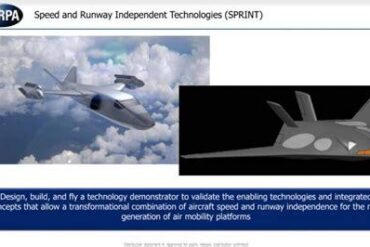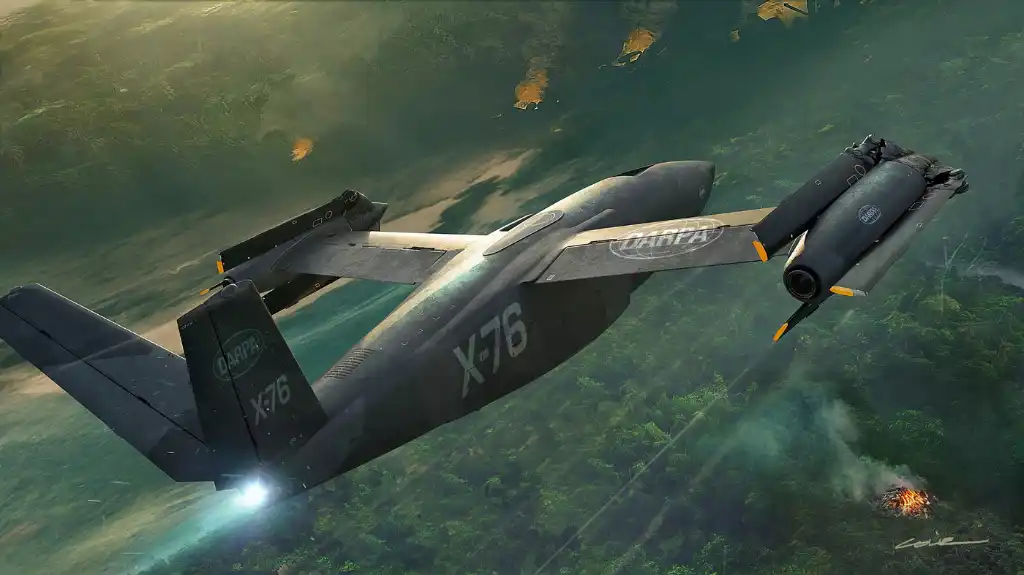
The dream of combining the vertical agility of a helicopter with the raw speed of a jet aircraft has haunted aerospace engineers for decades. Traditional helicopters can take off almost anywhere, but they crawl through the sky compared to fixed-wing aircraft. Jets, meanwhile, slice through the atmosphere at tremendous speed but remain chained to long runways. DARPA’s newest experimental aircraft, the Bell X-76, aims to break that trade-off entirely. Designed under the SPeedy Runway Independent Technologies (SPRINT) program, this radical aircraft promises something military planners have wanted for generations: jet-like speed without the runway dependency.
Officially designated on March 9, 2026, the X-76 carries symbolic weight as well as technological ambition. The number intentionally references 1776, marking the 250th anniversary of the founding of the United States. DARPA often assigns X-plane numbers that highlight breakthrough technologies, and the X-76 fits squarely in that tradition. With its prototype phase now approved, construction of the demonstrator aircraft is moving forward as the Pentagon explores a future where aircraft can deploy from rough fields, remote islands, or improvised landing zones without sacrificing high-speed transit.
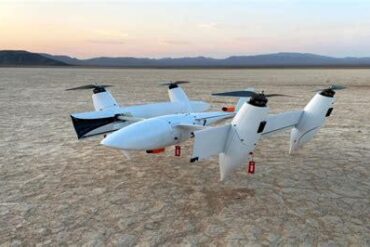
The concept is deceptively simple but mechanically intricate. The X-76 begins its flight like a helicopter using large wingtip proprotors. Once airborne and accelerating, those rotors perform a trick no operational aircraft has ever mastered at this scale: they stop spinning, fold away, and allow a jet engine to take over propulsion. This so-called “Stop/Fold” rotor system lies at the heart of the aircraft’s engineering revolution.
The SPRINT Program’s Vision: Speed Without Runways
DARPA’s SPRINT initiative emerged from a tactical problem that military planners increasingly worry about. Runways are both essential and vulnerable. In modern warfare, particularly across vast ocean regions like the Indo-Pacific, airbases can be targeted by missiles or disrupted quickly. When that happens, even the fastest aircraft become useless if they cannot take off.
The X-76 attempts to eliminate that vulnerability. Commander Ian Higgins, the U.S. Navy officer managing the SPRINT program, described the dilemma bluntly: runways enable speed but simultaneously create a strategic tether. If aircraft could launch from austere terrain, small clearings, or temporary pads, they could disperse widely and remain operational even when traditional airfields are compromised.
The SPRINT design therefore merges two propulsion philosophies into one airframe. Turboshaft power drives the vertical-lift rotors during takeoff and landing, providing the hovering capability normally associated with helicopters. After the aircraft accelerates into forward flight, turbofan propulsion takes over, pushing the aircraft to jet-like speeds far beyond what rotorcraft can achieve.
How the Stop/Fold Rotor System Works
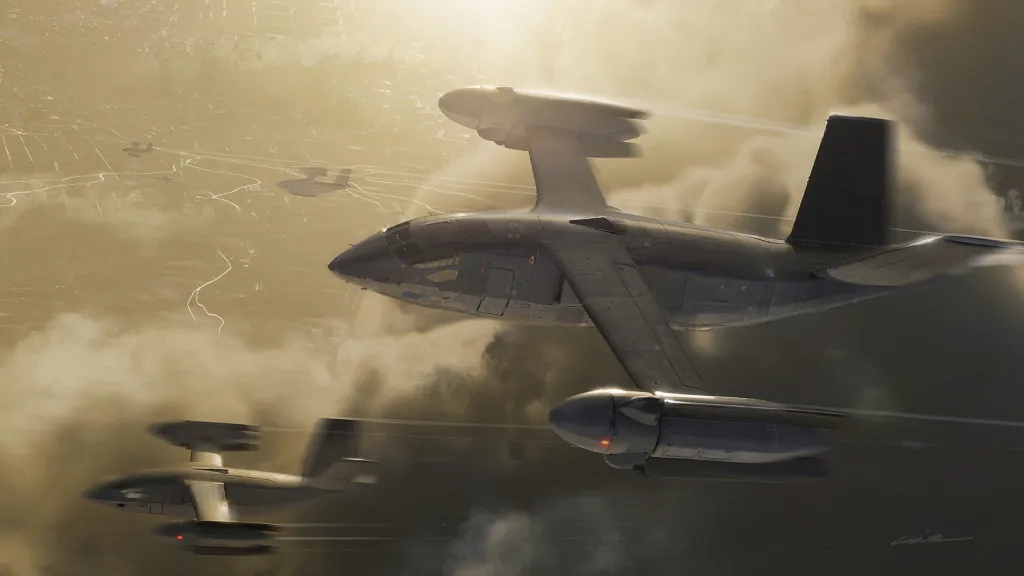
At first glance, the X-76 resembles a tiltrotor aircraft such as the Bell Boeing V-22 Osprey, but the similarities fade once the aircraft begins accelerating. Tiltrotors keep their large propellers spinning during cruise flight, simply tilting them forward to provide thrust. While effective, that approach creates aerodynamic drag and limits top speed.
The X-76 solves the problem through a carefully choreographed sequence. As the aircraft climbs and accelerates to roughly 150 to 200 knots, the wings begin generating most of the lift. At that point, a clutch mechanism disengages the rotor drive shafts. The blades then feather—aligning with the airflow—and fold backward into streamlined pods at the wingtips.
Once folded, the aircraft transitions fully into jet propulsion. Power that once spun the rotors is redirected through a rear-mounted jet nozzle, effectively transforming the aircraft from a rotorcraft into a sleek fixed-wing jet. Without spinning rotor disks creating drag, the aircraft can accelerate dramatically.
DARPA expects the X-76 to cruise at 400 to 450 knots, equivalent to roughly 460–518 mph. That would place it far beyond the V-22 Osprey’s 280-knot top speed and even faster than the advanced Bell V-280 Valor, currently being developed for the U.S. Army’s future assault aircraft program.
The aerodynamic elegance here is almost mischievous: use rotors when physics demands them, then remove them from the equation entirely when speed becomes the priority.
Scaling Up the Concept
Bell engineers designed the system with scalability in mind. According to program statements, the core technology could eventually support aircraft weighing up to 100,000 pounds at maximum takeoff weight. That puts the concept squarely within the range of medium military transport platforms, capable of carrying troops, supplies, or specialized mission equipment.
Such scalability hints at a broader strategic goal. If the folding-rotor concept proves reliable, it could enable a whole family of runway-independent aircraft, ranging from compact autonomous drones to large troop transports. The ability to deploy rapidly from unprepared surfaces while maintaining jet-class transit speeds would transform logistical planning across widely dispersed battlefields.
Autonomous Flight and Optional Crewing
Another intriguing aspect of the X-76 program is its dual operational philosophy. Early renderings suggest at least two variants: one with a cockpit and flight deck, and another that appears to be fully unmanned.

This suggests the aircraft may be optionally crewed, capable of flying with human pilots for complex missions while also operating autonomously when risk or endurance becomes a factor. Military aviation is steadily moving toward this hybrid model, where automation handles routine navigation and flight tasks while human operators focus on strategy and decision-making.
For special operations forces, this flexibility is especially valuable. An unmanned variant could deliver cargo or surveillance equipment into dangerous territory, while a crewed version might insert or extract personnel under extreme time pressure.
Why Special Operations Forces Want the X-76
The U.S. Special Operations Command (SOCOM) is one of the primary partners in the SPRINT program, and the reason is simple: speed saves lives. Many special operations missions depend on rapid insertion and extraction in remote locations where traditional runways do not exist.
A platform capable of launching vertically from a jungle clearing, racing across hundreds of miles at jet speed, and landing again without infrastructure would provide an extraordinary operational advantage. It could shorten response times, reduce exposure to enemy defenses, and expand the geographic reach of elite units.
The Indo-Pacific theater illustrates this need perfectly. Thousands of small islands scatter across vast ocean distances, and many lack the infrastructure required for conventional aircraft. An aircraft like the X-76 could hop between these islands with minimal preparation, turning geography from a logistical nightmare into a strategic advantage.
The Road to the First Flight
While the concept sounds futuristic, several critical technologies have already undergone testing. In 2023, Bell conducted experiments with the folding rotor and integrated propulsion system using a high-speed sled at Holloman Air Force Base in New Mexico. These tests validated the mechanics required for stopping, feathering, and folding the rotors safely at high speed.
Ground validation of the full demonstrator airframe is expected to continue through 2027, after which the X-76 is scheduled to attempt its maiden flight in early 2028. That flight will represent a pivotal moment for the SPRINT program. If the transition between rotor flight and jet propulsion works reliably in the real world, the X-76 could mark one of the most significant shifts in vertical-lift aviation since the invention of the helicopter itself.
The aerospace world has spent decades chasing the elusive blend of helicopter freedom and jet performance. The X-76’s folding-rotor design suggests that the solution might not be choosing between the two—but using each exactly when physics demands it, then stepping aside for the other to take over. In the strange and endlessly inventive ecosystem of experimental aircraft, that kind of elegant compromise sometimes ends up changing everything.