What becomes of a jetliner when its engines fall silent for the last time? For decades, the answer was predictable: storage in a desert boneyard, part-out for spares, or reduction to anonymous scrap metal. Yet in a bright workshop in Cologne, Germany, retired aircraft are experiencing an altogether different fate. They are being cut apart—deliberately, meticulously—and transformed into tactile artifacts that carry aviation history in the palm of a hand.
The company orchestrating this unlikely afterlife is Aviationtag, a German brand that has spent the past decade turning decommissioned aircraft fuselage into collectible baggage tags. At first glance, the idea sounds like clever merchandising. In practice, it is an intricate blend of industrial engineering, material science, brand storytelling, and logistical precision. Each tag begins its journey thousands of meters above the Earth and ends clipped to a traveler’s suitcase, still bearing the original aircraft skin and paint.
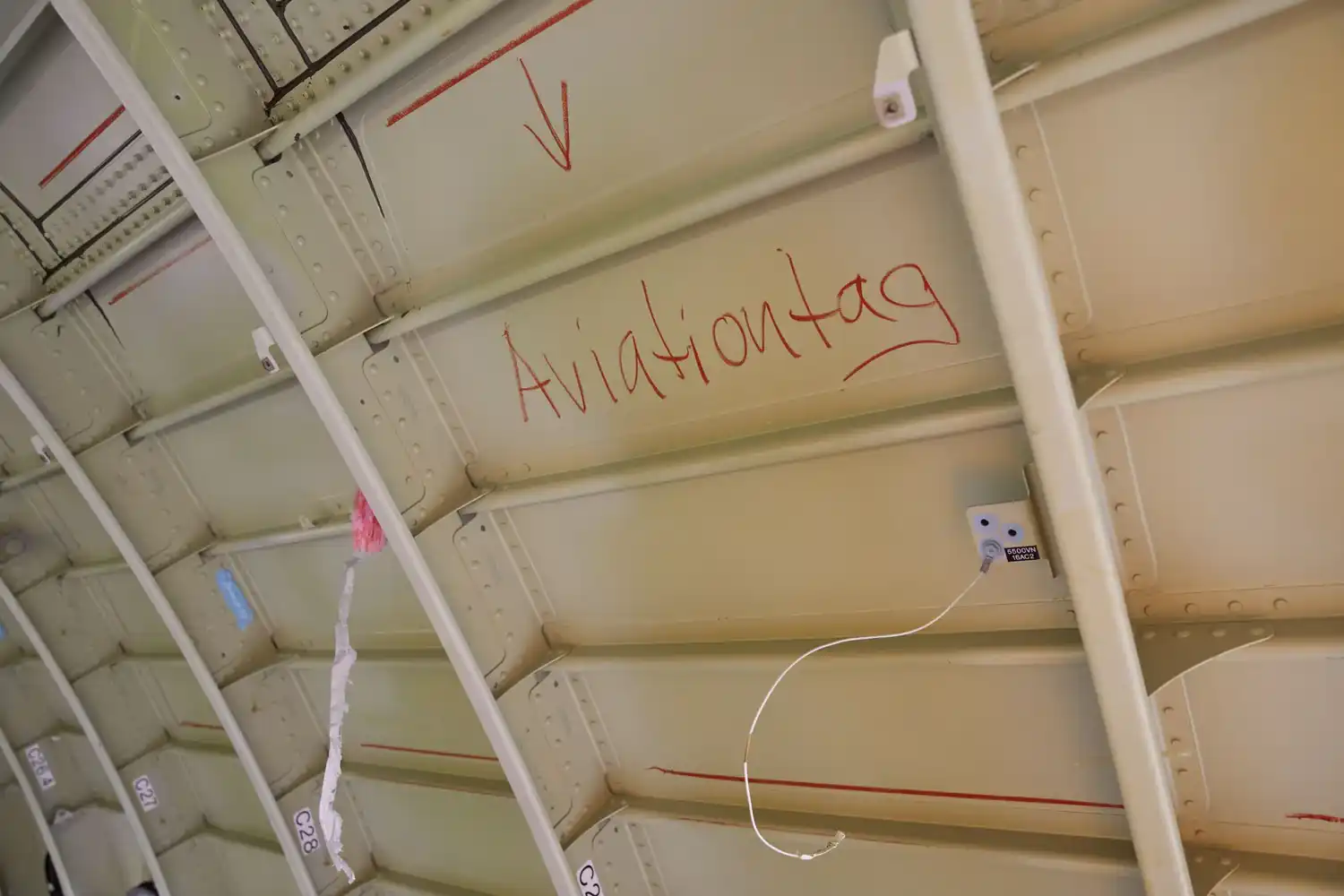
Aviationtag’s workshop does not resemble a souvenir factory. It feels closer to a hybrid between a metal fabrication lab and a curator’s studio. Sheets of aluminum, still curved from their former aerodynamic life, arrive bearing rivet lines, faded airline livery, and the subtle scars of service. Before any cutting begins, a different kind of selection process takes place—one rooted in narrative and rarity.
The Strategic Hunt for Iconic Aircraft
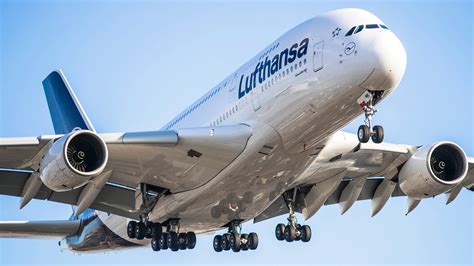
Not every aircraft qualifies for resurrection. The market appetite for aviation memorabilia is shaped by emotion as much as by engineering pedigree. A commonplace narrowbody jet from an unremarkable fleet may struggle to ignite collector excitement. By contrast, a Lufthansa Airbus A380, an Etihad A380, or the legendary Iron Maiden Boeing 747 carries cultural gravity. These aircraft are not merely machines; they are symbols of eras, airlines, and even personalities.
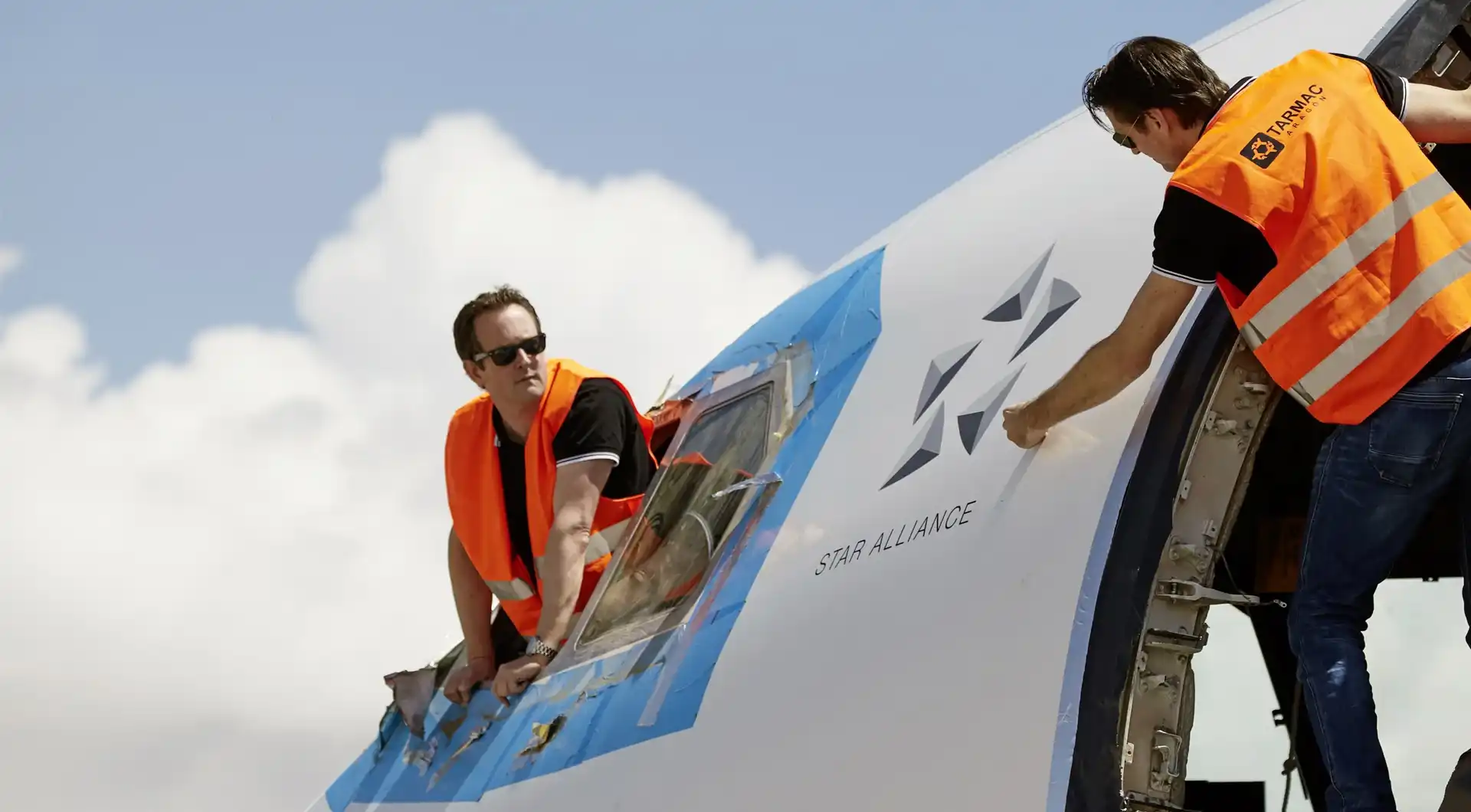
Securing material is a negotiation-intensive process. Aviationtag must strike agreements with aircraft owners or dismantling firms. Sometimes the dismantlers remove fuselage sections and ship them to Cologne. Other times, Aviationtag’s team travels to aircraft graveyards in France or Spain to cut the skin themselves. The logistics are not trivial. Aircraft fuselage panels are large, curved, and structurally integrated with frames and supports. Extracting them cleanly requires experience and planning.
Interest factor is paramount. The company has learned that collectors crave diversity: widebodies and regional jets, freighters and private aircraft, modern composites and classic aluminum builds. Over ten years, Aviationtag has produced tags from 140 different aircraft types, from the modest four-seat Piper PA-28 to the double-deck, 500-plus-seat Airbus A380. Each edition becomes a time capsule.
From Fuselage Frame to Precision Cut
When fuselage sections arrive in Cologne, they are far from product-ready. The metal still carries structural framing, insulation remnants, and the complex curvature that once contributed to pressurization integrity. The first transformation is mechanical: technicians cut rectangular sections of aircraft skin from between the internal supports. What remains after this step is currently treated as waste, though the company is exploring ways to upcycle even these remnants.
The extracted panels are then subdivided into the familiar tag shape. The curvature of the aircraft skin introduces subtle challenges. No two sections are perfectly identical; paint thickness varies, weathering differs, and aluminum alloys respond uniquely to machining. Precision cutting must balance efficiency with respect for material integrity. Every incision is irreversible. Once a piece of a retired A380 is cut, there is no second chance.
At this stage, the tags are blank metal canvases—recognizable in color but anonymous in identity. Their transformation into authenticated collectibles hinges on a single technological process: laser engraving.
Laser Engraving: The Art and Science of Permanence
Laser engraving is not decorative flourish. It is the defining moment in which raw aircraft skin becomes a numbered, limited-edition artifact. The laser removes layers of paint to reveal contrast, etching the aircraft silhouette, airline name, and edition serial number directly into the metal surface.
Achieving consistency is complex. Laser systems require exact calibration of power, speed, and DPI—dots per inch, the measure of resolution. Too much power and the engraving scorches; too little and the details fade. Paint color plays a decisive role. Dark liveries absorb energy differently than light ones. Metallic finishes can reflect the beam unpredictably.
The Airbus A380 presents particular difficulty, especially when the fuselage section includes GLARE—glass fiber reinforced aluminum laminate. GLARE is a layered composite material that combines aluminum sheets with fiberglass layers, designed for strength and weight efficiency. Its thickness can vary depending on location within the aircraft structure. For engraving, that variability means the laser must be precisely tuned. What works on standard aluminum may fail on GLARE.
A single batch allows 80 tags in the machine at once. For a large edition such as 22,000 Lufthansa A380 tags, production unfolds in 275 batches. Each batch can require two engraving runs, roughly three hours each. Multiply that across the entire edition and the engraving time approaches 1,650 hours—nearly 69 continuous days. Multiple machines operate in parallel, yet the scale underscores the industrial commitment behind what might otherwise appear to be a novelty item.
Industrial Scale Meets Craftsmanship
After engraving, the tags undergo sanding and polishing. This step refines the edges and enhances the tactile quality of the metal. The aim is not to erase the aircraft’s past but to make it durable for its new role. Minor surface variations remain, reminding the holder that this aluminum once endured altitude cycles, temperature extremes, and intercontinental journeys.
The tags are then mounted onto branded cardboard backings and organized into labeled boxes. The operational tempo is striking. Thousands of orders move through the facility each month, dispatched worldwide within a single working day. In 2025 alone, Aviationtag shipped to 111 countries. What began as a niche German project now operates as a globally recognized aviation memorabilia brand.
Yet despite the scale, the emotional core remains intact. Each tag carries a unique serial number. The coveted 0001 of every edition is never sold. Instead, it is mounted on a wall inside the company’s office—a growing mosaic of aviation history. The unintended challenge is spatial: the wall is filling up.
A Decade of Aircraft Upcycling Leadership
Founded in 2016 with the purchase of an entire Piper PA-28, Aviationtag has evolved from a one-person initiative into a structured, passionate team. The anniversary of ten years marks more than business survival; it reflects the maturation of aircraft upcycling as a recognized niche within the broader sustainability movement.
Upcycling differs from recycling in both value and philosophy. Recycling reduces material to raw form for reintegration into manufacturing streams. Upcycling preserves form and story, enhancing perceived value. In the case of Aviationtag, the aluminum does not melt into anonymity. It retains its airline livery, its rivet patterns, and often its weathered charm. The object is not just metal; it is memory.
The broader aviation industry faces increasing scrutiny over environmental impact. While cutting up aircraft might initially sound destructive, the alternative is often disposal or storage decay. By intercepting fuselage sections before they become scrap, Aviationtag extends the lifecycle narrative of the aircraft. It converts decommissioning into storytelling.
Why Cutting Up Massive Aircraft Makes Strategic Sense
From a commercial standpoint, dismantling iconic aircraft into thousands of small artifacts diversifies value extraction. A retired A380 no longer generates passenger revenue. Its engines and avionics may be sold, but the fuselage skin typically has limited resale value. By transforming that skin into tens of thousands of serialized collectibles, Aviationtag creates a secondary economic ecosystem around aircraft retirement.
Collectors, aviation enthusiasts, airline staff, and even passengers seek tangible connections to aviation milestones. When a flagship aircraft type is scrapped—such as the A380 during fleet downsizing—it marks the end of an era. Owning a fragment of that machine satisfies both nostalgia and historical preservation.
The strategy also leverages scarcity. Limited editions ranging from 500 to over 35,000 units create tiered accessibility. Smaller runs drive exclusivity; larger ones enable broader participation. Every tag, regardless of edition size, carries authentication through engraving and numbering.
Preserving Aviation History in the Palm of a Hand
The fascination with aircraft fragments is not purely sentimental. Aviation represents technological ambition at scale. Widebody jets embody decades of aerodynamic research, materials innovation, and international collaboration. When those aircraft retire, they risk fading into data tables and archival photographs. Physical artifacts counter that erasure.
Aviationtag’s vision centers on making aviation tangible. Holding a piece of fuselage skin invites reflection on pressurized cabins, transcontinental routes, and the engineering ballet required for sustained flight. The metal once endured 35,000 feet of altitude and the stresses of repeated takeoff cycles. Now it serves as a conversation piece, a keepsake, a reminder that even the largest machines eventually transition into history.
Behind the scenes in Cologne, cutting up massive aircraft is neither spectacle nor waste. It is a deliberate act of transformation. Where others see scrap, Aviationtag identifies narrative density embedded in aluminum. The saw blades, lasers, and polishing wheels are tools of reinterpretation. The result is not merely a product but a preserved fragment of the jet age—proof that even grounded giants can continue their journeys in unexpected forms.