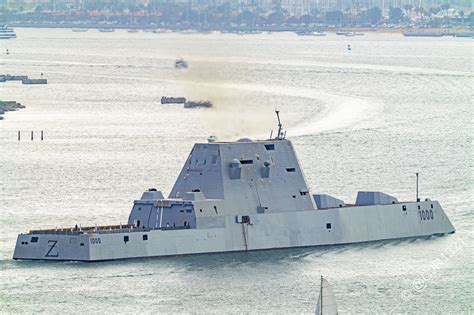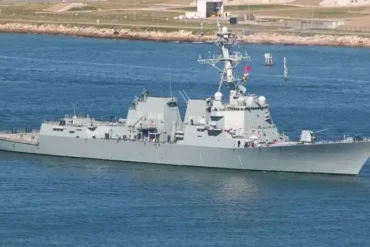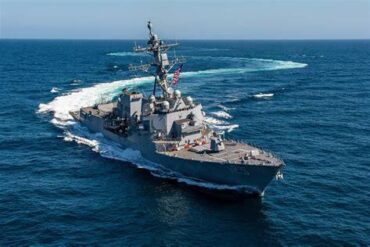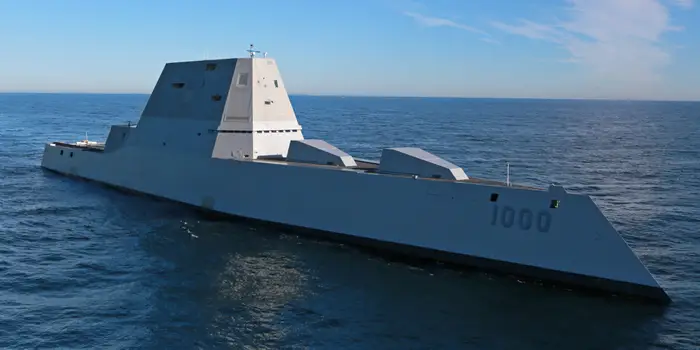
The USS Zumwalt (DDG-1000) is unlike any warship ever launched by the United States Navy. Its radical hull shape, ghost-like radar signature, and cutting-edge propulsion system distinguish it visually and technologically from traditional destroyers. At 610 feet long and displacing nearly 16,000 tons, this massive vessel is a study in contrasts—larger than any Arleigh Burke-class destroyer, yet designed to look like a mere blip on an enemy’s radar. Its distinct silhouette isn’t just an aesthetic deviation; it’s a stealth-driven innovation that represents a dramatic reimagining of naval warfare.
The Tumblehome Hull: Engineering the Invisible
At the heart of the Zumwalt’s distinctive look is the tumblehome hull design, a deliberate departure from the conventional flare-hull geometry of modern surface combatants. The tumblehome shape, where the ship’s hull narrows above the waterline, was originally seen on 19th-century wooden warships, but its revival has everything to do with 21st-century stealth warfare.
Unlike traditional hulls that expand outward above the waterline to enhance stability, the Zumwalt’s inward-sloping sides deflect radar waves away from enemy sensors. This design, combined with the ship’s angular superstructure and composite materials, dramatically reduces its radar cross-section. In fact, despite being 40% larger than an Arleigh Burke destroyer, the USS Zumwalt appears on radar as small as a fishing boat.
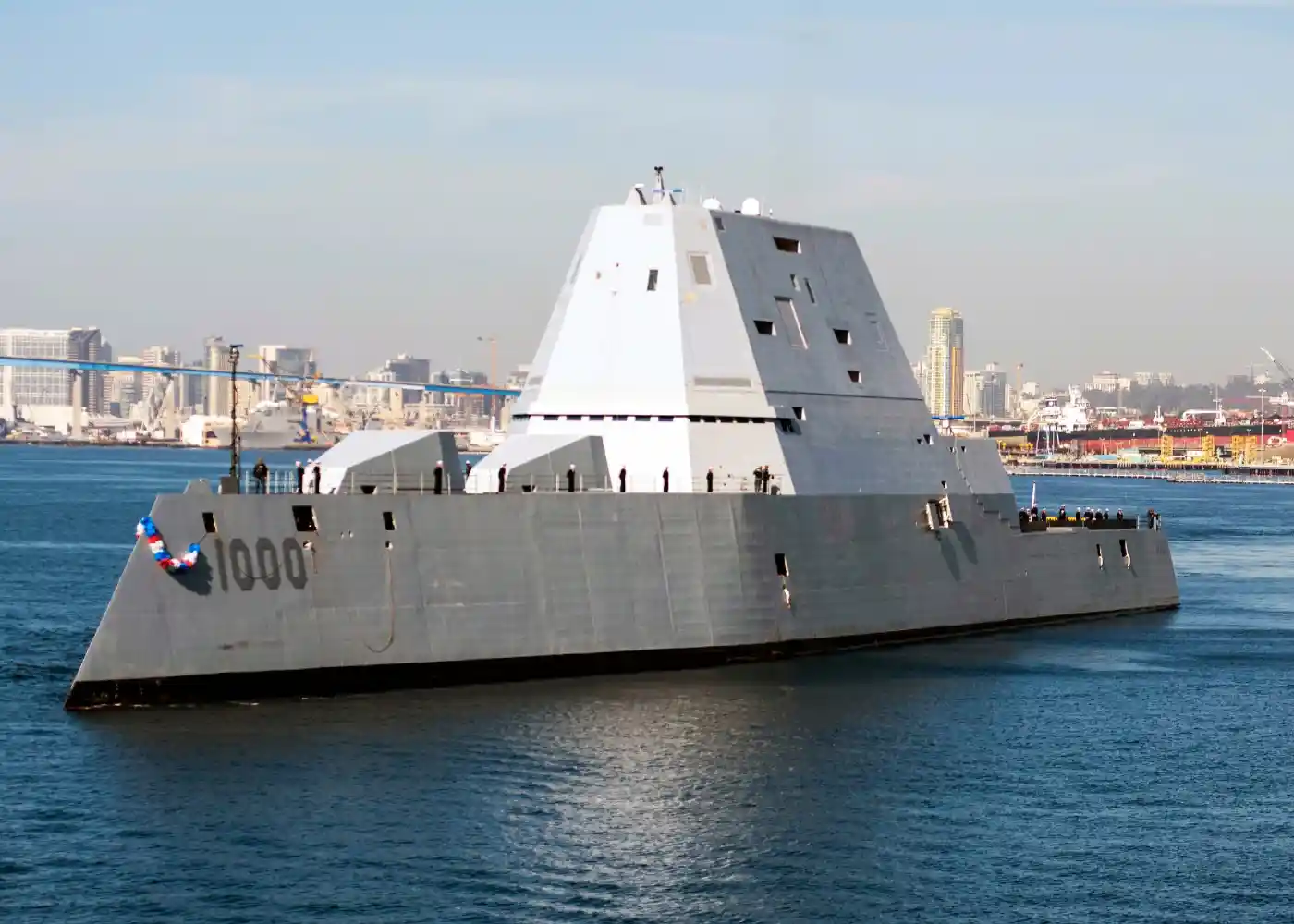
This stealth optimization is complemented by its wave-piercing bow, which cuts through rough seas rather than riding over them. This contributes not only to radar evasion but also to improved seakeeping and reduced hull stress in turbulent conditions. The hull also enables the ship to operate closer to shorelines—a key capability for littoral combat and land attack missions.
Revolutionary Electrical Propulsion and Composite Deckhouse
Beneath its stealthy shell lies an Integrated Power System (IPS) that represents another engineering leap. The IPS allows the Zumwalt to generate 78 megawatts of power—enough to power a small town—from its gas turbines, which can be distributed flexibly between propulsion and weapons systems. This all-electric architecture is a first for destroyers and positions the Zumwalt for future integration with energy-intensive technologies like railguns or directed-energy weapons.
The ship’s deckhouse, made from carbon-fiber composite materials, is another radical innovation. This structure absorbs radar waves while remaining lightweight, further reducing the Zumwalt’s overall detectability. Later versions, such as the USS Lyndon B. Johnson (DDG-1002), switched to steel deckhouses to cut costs, sacrificing some stealth for budgetary considerations.
Design Meets Reality: The Zumwalt-Class Struggles to Deliver
Despite its ambitious blueprint, the Zumwalt program has been mired in cost overruns, delays, and operational compromises. Originally envisioned as a fleet of 32 ships, escalating costs and shifting mission requirements saw that number slashed to just three. Each destroyer now carries a price tag approaching $8 billion—more than an aircraft carrier’s construction cost on a per-ship basis.
One of the biggest setbacks came from the ship’s main armament. The Advanced Gun System (AGS)—two 155 mm cannons—was designed to fire Long Range Land Attack Projectiles (LRLAP). However, the LRLAP program was terminated after unit costs soared beyond $800,000 per round following the production scale-back. This rendered the AGS effectively unusable, stripping the ship of its intended shore bombardment role.
The Zumwalt’s stealth was meant for near-shore engagement, where precision strikes would be conducted with minimal enemy detection. But without its precision guns, its ability to operate in these zones was sharply reduced. Even its stealth advantage could be nullified in coastal areas where visual detection is easy—radar evasion offers little defense against binoculars on a hostile shoreline.
From Failed Gunships to Hypersonic Missile Platforms
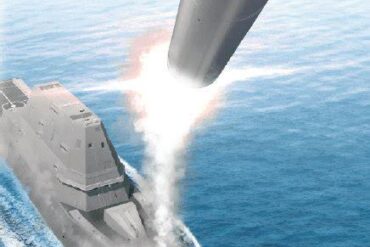
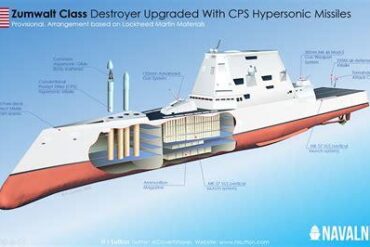
In a bid to salvage the Zumwalt-class from irrelevance, the U.S. Navy reoriented its mission profile. The most transformative change is the integration of the Conventional Prompt Strike (CPS) system—an arsenal of hypersonic missiles designed to replace the failed AGS systems.
The CPS program represents a paradigm shift in naval warfare. With speeds exceeding Mach 5, hypersonic missiles offer global strike capabilities with unprecedented reaction times. The Zumwalt will carry four missile modules, each housing three hypersonic missiles, making it the first U.S. surface ship with hypersonic launch capabilities.
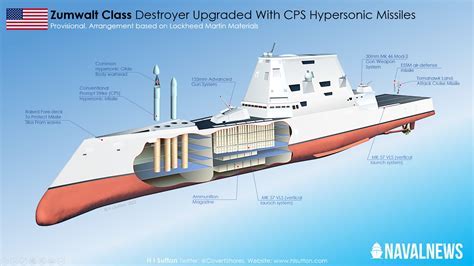
This conversion is already underway aboard the USS Zumwalt, with the USS Michael Monsoor and USS Lyndon B. Johnson set to follow. The transformation into long-range strike platforms not only redefines the Zumwalt-class’s strategic utility but also justifies its stealth and power systems in a way the original gun-focused design never did.
A Symbol of Ambition, Complexity, and Compromise
The USS Zumwalt is not simply shaped differently—it embodies a fundamentally different philosophy of naval combat. Its design choices reflect a Navy preparing for threats that are invisible, rapid, and highly advanced. In many ways, the Zumwalt was ahead of its time. Its failures were not necessarily in vision, but in the difficulty of integrating so many groundbreaking technologies into a single, cohesive combat platform.
Critics argue that the Navy should have pursued incremental upgrades instead of all-at-once innovation, but even so, the Zumwalt provides invaluable data and operational lessons. Its stealth hull may influence future destroyer designs. Its power system might become the standard architecture for future warships. And its hypersonic upgrade marks a definitive shift in offensive naval capability.
Looking Ahead: Legacy or Launchpad?
What the Zumwalt-class becomes in the next decade will shape its legacy. If its hypersonic capabilities prove reliable and effective, it could redefine surface warfare for decades. If not, it may remain a cautionary tale of overly ambitious procurement.
Still, the fact remains: no other ship in the U.S. fleet looks like the Zumwalt, and none has pushed the boundaries of naval design further. From its stealth silhouette slicing through waves to its silent electric drive and soon-to-be hypersonic arsenal, the Zumwalt is both a monument to innovation and a mirror of modern military complexity.