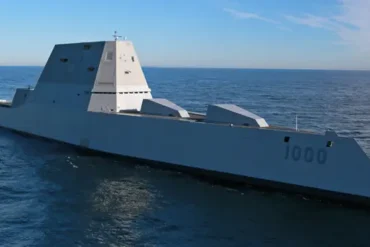
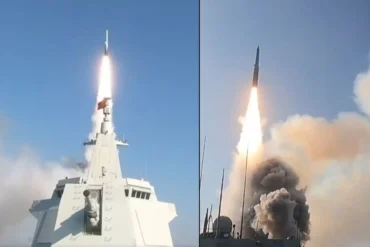
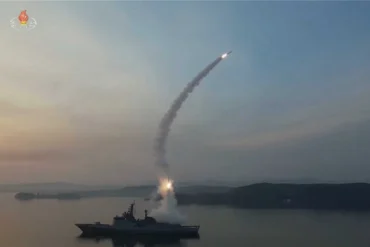
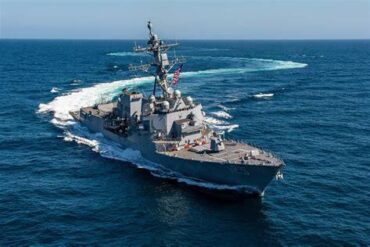
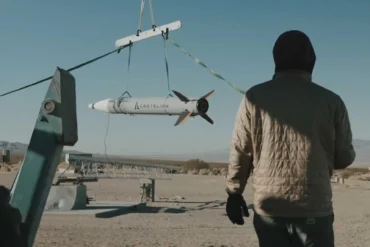
The U.S. Navy’s cutting-edge Zumwalt-class destroyer, once envisioned as a revolutionary multi-mission platform, is undergoing a dramatic transformation. In a landmark decision that redefines its strategic trajectory, the Navy is converting its lead ship, USS Zumwalt (DDG 1000), into the fleet’s first surface-based hypersonic missile launch platform. This shift marks a new era in American naval warfare, with the first live-fire test of the Conventional Prompt Strike (CPS) system now officially slated for 2027.
Recasting Zumwalt’s Role in 21st Century Warfare
When the Zumwalt-class program was conceived, it was pitched as a multi-role destroyer with superior stealth, automated systems, and long-range land-attack firepower. However, a combination of budget overruns, reduced fleet size, and the premature cancellation of its primary munitions—the Long-Range Land Attack Projectile (LRLAP)—rendered its Advanced Gun Systems (AGS) ineffective. Since 2016, the Navy has sought ways to reimagine the vessel’s utility within the fleet.
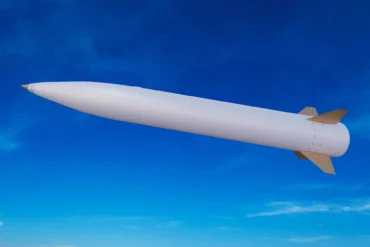
Now, that reimagination has crystallized into a focused mission: delivering hypersonic strike capability from sea. The CPS missile—a joint development by the U.S. Navy and Army—will be integrated through a massive redesign of the ship’s weapons architecture. This shift not only revitalizes the DDG 1000’s combat relevance but places it at the forefront of strategic deterrence in the Indo-Pacific and beyond.
A Technological Leap: Installing the LMVLS System
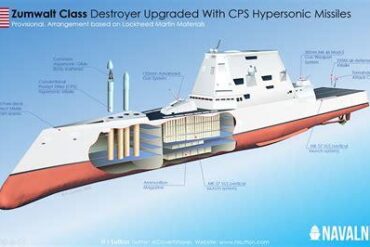
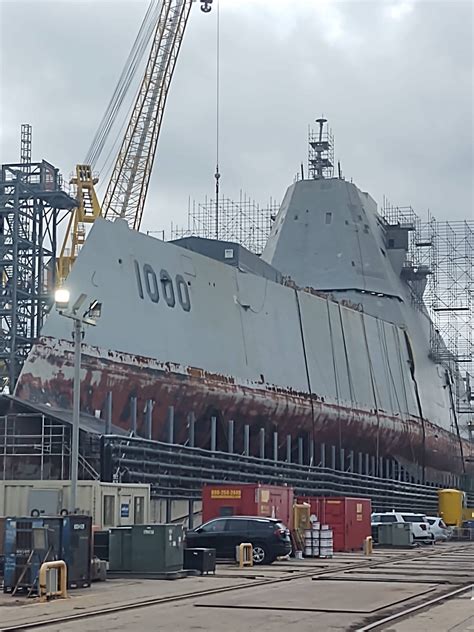
The most dramatic change lies in the removal of the twin 155mm AGS units, clearing space on the forward deckhouse for the Large Missile Vertical Launch System (LMVLS). This newly designed launcher is tailored to house the much larger CPS missile canisters, far surpassing the capacity of the Mk 41 VLS cells found on Arleigh Burke-class destroyers.
- Wider and deeper vertical launch cells to accommodate the CPS system
- Structural reinforcement of the forward deck to manage launch stresses
- Electrical and thermal infrastructure upgrades to support missile launch cycles
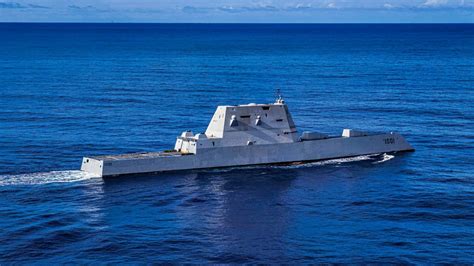
This architectural overhaul, according to the Government Accountability Office (GAO) June 2025 report, is one of the most significant warship conversions in modern Navy history. It underscores a decisive shift in naval thinking—from presence-based deterrence to rapid-reaction, first-strike capability.
Software and Fire Control: The Digital Backbone
Equally critical is the development of a new fire control suite. While the physical launch systems are essential, they’re ineffective without the software backbone capable of calculating hypersonic trajectories, integrating real-time intelligence, and coordinating with joint-strike assets.
The Total Ship Computing Environment (TSCE)—the digital nerve center of the Zumwalt-class—is being extensively modified. Software packages being integrated include:
- Advanced targeting algorithms for hypersonic missile routing
- Real-time data fusion from joint ISR (Intelligence, Surveillance, Reconnaissance) networks
- Trajectory planning modules optimized for high-speed maneuvering strike assets
Program officials confirmed that early developmental versions of the payload module—a critical component for fire control integration—are on schedule for delivery by spring 2025.
However, challenges remain. The software integration phase is acknowledged as a high-risk segment of the modernization. Delays in systems interoperability or data synchronization could affect the 2027 live-fire milestone. Redundancy, rigorous simulations, and coordinated testing with Army CPS teams are in place to mitigate these risks.
Retaining Legacy Systems While Prioritizing Hypersonics
Even as Zumwalt’s new mission dominates the spotlight, the ship retains several original systems, albeit in redefined roles. The Mk 57 Peripheral Vertical Launch System (PVLS), for instance, will still accommodate Tomahawk Land Attack Missiles (TLAMs) and Standard Missiles, but these are now secondary tools supporting the ship’s main strike capability.
In support of CPS targeting, the AN/SPY-3 Multi-Function Radar is also receiving software updates to enhance long-range detection, high-speed tracking, and low-probability-of-intercept emissions. This aligns with the Navy’s distributed lethality doctrine, where each node operates as a semi-autonomous offensive unit.
Strategic Relevance in the Indo-Pacific Era
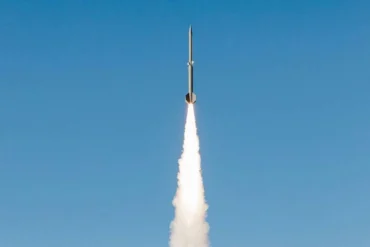
As peer adversaries like China and Russia expand their anti-access/area denial (A2/AD) umbrellas, the U.S. Navy’s ability to project power inside contested zones is increasingly tested. The CPS-armed Zumwalt-class offers a breakthrough solution. Hypersonic weapons traveling at speeds of Mach 5 and beyond can defeat traditional missile defenses, penetrate hardened targets, and dramatically shorten the decision-to-action cycle.
This capability is especially relevant in the Western Pacific, where islands, naval bases, and military infrastructure are spread across thousands of nautical miles. A stealthy destroyer with hypersonic missiles becomes a strategic enabler of prompt strike and anti-ship operations, whether in support of Taiwan, defending freedom of navigation through the South China Sea, or deterring aggression in the East China Sea.
A Broader Hypersonic Roadmap
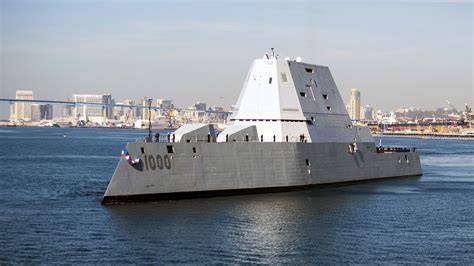
The USS Zumwalt’s transformation is only the beginning. Navy officials have already hinted at similar conversions for the two remaining Zumwalt-class ships: USS Michael Monsoor (DDG 1001) and USS Lyndon B. Johnson (DDG 1002). If funding and testing remain on track, the Navy could field a three-ship hypersonic task group before the end of the decade.
Moreover, the CPS program is jointly coordinated with the U.S. Army, which is concurrently deploying the weapon system aboard Typhon land-based launchers. The synergy across services offers flexibility in basing, command, and target allocation.
The hypersonic race also carries geopolitical weight. As the People’s Liberation Army Navy (PLAN) continues expanding its hypersonic arsenal, particularly with DF-17 and potentially ship-launched variants, maintaining credible parity is no longer optional—it is essential for deterrence.
Conclusion: A Destroyer Reborn
The conversion of USS Zumwalt into a hypersonic strike vessel represents a confluence of urgency, innovation, and strategic recalibration. Far from being a sunken cost or relic of past miscalculations, the DDG 1000-class is reemerging as a powerful tool of 21st-century naval warfare.
By harnessing stealth, automation, and hypersonic lethality, the Navy is demonstrating its intent to not only adapt but to lead in the most consequential domains of modern conflict. When the 2027 CPS test launch lights up the horizon, it won’t just be the debut of a new weapon—it will mark the rebirth of a destroyer and a new phase in U.S. maritime dominance.