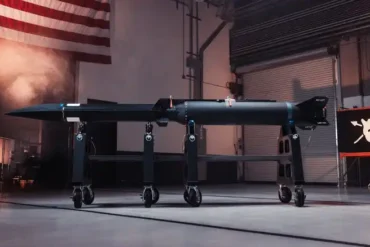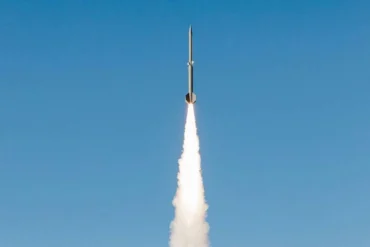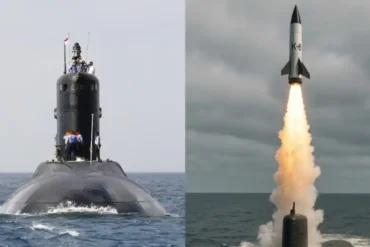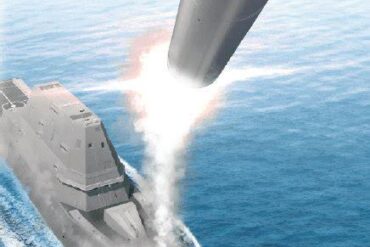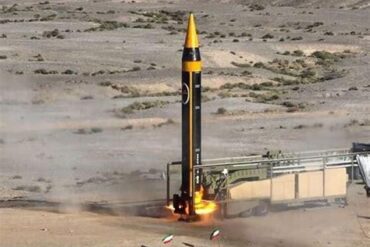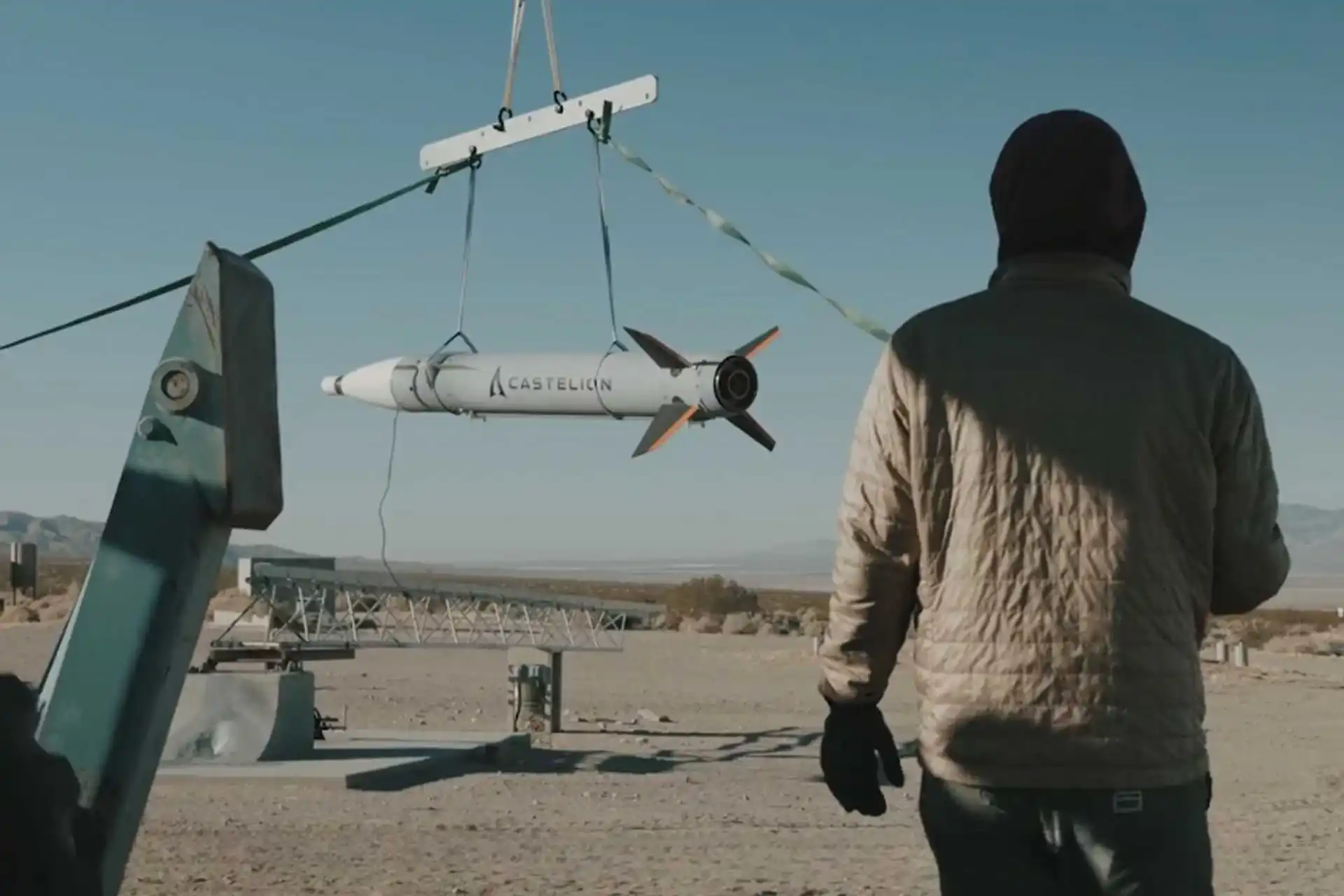
The United States is moving closer to operationalizing a new generation of ultra-fast strike weapons as plans emerge to test the Blackbeard hypersonic missile from an F/A-18 fighter jet, a step that could dramatically compress the time adversaries have to detect, track, and intercept incoming attacks. Developed by aerospace startup Castelion under a U.S. Navy contract, the missile represents an effort to combine hypersonic speed with relatively low manufacturing costs, potentially enabling the large-scale deployment of weapons capable of traveling faster than Mach 5, or more than 6,100 kilometers per hour.
This upcoming flight test marks the first known attempt to integrate the Blackbeard system with a carrier-capable combat aircraft, a significant milestone in the evolution of the program. Hypersonic technology has become a focal point of global defense competition as major powers race to field weapons that move so rapidly and unpredictably that traditional air defense systems struggle to react in time.
In this context, the Blackbeard initiative represents more than just another missile project. It embodies a broader transformation in military strike doctrine—one that prioritizes speed, precision, and survivability in heavily contested environments.
Blackbeard Hypersonic Missile: A New Era of Rapid Strike Capability
The Blackbeard missile is engineered as an air-launched hypersonic strike weapon capable of exceeding Mach 5 while maneuvering within the atmosphere. Hypersonic flight introduces complex aerodynamic and thermal challenges, requiring specialized propulsion systems, heat-resistant materials, and highly responsive guidance algorithms. When these elements are combined effectively, the result is a weapon that can reach its target at extraordinary speed while making mid-course adjustments that complicate interception.
The central objective of Blackbeard is simple but strategically powerful: reduce the enemy’s reaction window to near zero. Traditional cruise missiles and glide weapons often travel at subsonic or low-supersonic speeds, which gives radar networks and interceptor systems valuable minutes to respond. Hypersonic weapons, by contrast, compress this timeline dramatically. A target hundreds of kilometers away may have only seconds to respond after detection.
For modern air defense systems designed around predictable ballistic trajectories or slower cruise missiles, such speed introduces a fundamental challenge. Tracking a maneuvering object moving several kilometers per second requires sensor networks, interceptors, and command systems that operate at unprecedented speed and precision.
Blackbeard seeks to exploit exactly that vulnerability.
F/A-18 Integration Expands Operational Flexibility
The planned test flight will place the Blackbeard missile aboard an F/A-18 Hornet, a twin-engine multirole fighter long used by U.S. naval aviation for both air-to-air combat and precision ground attack missions. Although the U.S. Navy retired its legacy Hornets in 2019, the aircraft remains operational with the U.S. Marine Corps, which continues to rely on F/A-18C and F/A-18D variants until the transition to the F-35B Lightning II is complete.
Integrating a hypersonic weapon onto the F/A-18 platform could significantly extend the aircraft’s strike envelope. Traditionally, Hornet aircraft deploy guided bombs, anti-ship missiles, and air-to-air weapons that operate at supersonic speeds at most. Introducing a missile capable of hypersonic flight would dramatically alter the fighter’s tactical role.
Instead of closing within range of enemy defenses, an F/A-18 equipped with Blackbeard could potentially launch from several hundred kilometers away, striking high-value or time-sensitive targets before defensive systems even complete their engagement sequence.
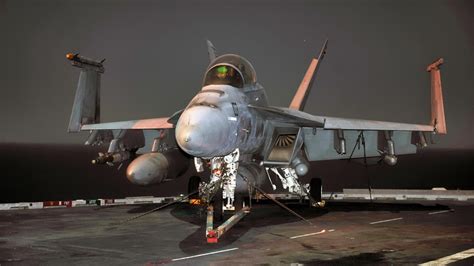
Such a capability would be particularly valuable in high-intensity conflict scenarios where adversaries deploy integrated air defense systems (IADS) composed of layered radars, surface-to-air missiles, and electronic warfare assets. Hypersonic strike weapons offer a way to penetrate or bypass those defenses through sheer speed and unpredictable flight paths.
The Navy Contract Driving Blackbeard’s Development
The push toward operational testing accelerated in February 2026, when the U.S. Navy awarded Castelion a $49,998,005 firm-fixed-price contract. The agreement funds the production of full-scale prototypes, continued flight testing, and development work aimed at establishing an early operational capability.
The contracting activity is managed by the Naval Air Warfare Center Aircraft Division in Lakehurst, New Jersey, a facility responsible for integrating advanced technologies into naval aviation platforms. Funding comes from the Navy’s research, development, test, and evaluation budget for fiscal year 2026, indicating that the project has progressed beyond purely experimental stages.
Most development activities are taking place in Torrance, California, with the program expected to continue through November 2027. The contract operates under a Small Business Innovation Research Phase III program, a mechanism designed to transition promising technologies from experimental prototypes into operational systems while supporting innovative startups within the defense industry.
The involvement of a relatively young company highlights a shift in Pentagon procurement strategy. Instead of relying solely on traditional defense giants, the Department of Defense increasingly partners with agile, engineering-focused startups capable of rapidly iterating new technologies.
Castelion’s Vision for Affordable Hypersonic Weapons
Founded in 2022 by a group of aerospace engineers, Castelion entered the defense sector with a specific mission: make hypersonic strike weapons more affordable and scalable. Early hypersonic programs have often been criticized for their enormous costs and slow development cycles. Castelion’s approach attempts to address those issues by tightly integrating propulsion, guidance, and structural components into a streamlined manufacturing pipeline.
The Blackbeard missile reflects this philosophy. Instead of pursuing the most technologically ambitious design possible, engineers focused on achieving roughly 80 percent of the capability of advanced systems like the Precision Strike Missile Increment 4, while dramatically lowering production costs.
The result is a weapon designed to occupy a middle ground between conventional rocket artillery and strategic hypersonic systems such as the Long Range Hypersonic Weapon (LRHW).
With a projected range approaching 800 kilometers, Blackbeard could engage moving targets, hardened facilities, or maritime threats from distances well beyond the reach of many existing tactical weapons. This range, combined with hypersonic speed, creates a strike profile that emphasizes rapid engagement and minimal exposure to enemy defenses.
Testing Campaigns Pushing Toward Mach 5
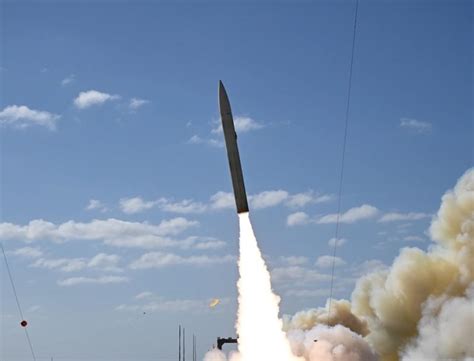
The Blackbeard development program has already conducted an extensive series of experimental flights. According to program details, more than twenty developmental test launches have been completed to evaluate the missile’s propulsion system, flight stability, guidance software, and thermal protection architecture.
High-speed flight creates extreme heat as air molecules compress against the vehicle’s surface. Temperatures can exceed those experienced during spacecraft re-entry, requiring specialized materials and cooling strategies to prevent structural failure.
Testing campaigns have included launches near Mojave, California, and at the Dugway Proving Ground in Utah, locations frequently used for experimental aerospace programs due to their large restricted airspace corridors.
Early tests reportedly achieved speeds around Mach 4, equivalent to roughly 4,900 kilometers per hour. Engineers expect upcoming trials to push the missile beyond Mach 5, crossing the threshold that officially defines hypersonic flight.
Each test flight contributes data used to refine the missile’s flight control algorithms and aerodynamic design, gradually building confidence in its reliability and operational potential.
Ground-Launched Variant Expands Battlefield Applications
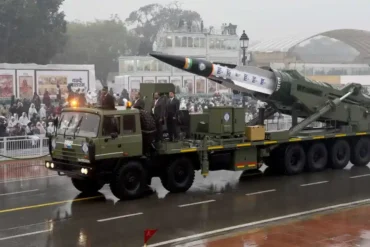
While the F/A-18 integration represents a key milestone, the Blackbeard system is not limited to aerial launch platforms. The program also includes a ground-launched configuration compatible with the M142 High Mobility Artillery Rocket System (HIMARS).
In this configuration, the missile would be deployed using a modified munition pod similar to those already used by the Multiple Launch Rocket System (MLRS) family. This approach allows the weapon to integrate with existing fire control systems, reducing the need for entirely new infrastructure.
The HIMARS variant could deliver precision hypersonic strikes against moving or fortified targets, expanding the role of rocket artillery beyond its traditional mission profile. Such flexibility would allow commanders to deploy the same missile across multiple platforms, increasing operational adaptability in rapidly evolving combat environments.
Industrial Expansion and Mass Production Plans
Hypersonic weapons have historically been produced in small quantities due to their complexity and cost. Castelion aims to change that equation through a massive new manufacturing initiative known as Project Ranger.
The project involves the construction of a 1,000-acre production campus in Rio Rancho, New Mexico, near Albuquerque in Sandoval County. Plans call for twenty-one industrial buildings dedicated to propulsion manufacturing, system integration, and final assembly of hypersonic missiles.
Once operational, the complex is expected to become the largest dedicated hypersonic missile production facility in the United States. Castelion anticipates that the site could eventually produce several thousand Blackbeard missiles annually, a scale that would represent a dramatic shift from the limited manufacturing runs typical of advanced missile programs.
The facility is scheduled to reach full operational capacity by the end of 2026, assuming development milestones continue on schedule.
Strategic Implications for Future Warfare
The integration of the Blackbeard missile with aircraft such as the F/A-18 reflects a broader transformation in modern warfare. Hypersonic weapons promise the ability to strike critical targets at extraordinary speed while minimizing exposure to defensive systems.
In practical terms, this means that command centers, mobile missile launchers, hardened bunkers, and naval vessels could be targeted with minimal warning time. The speed of engagement also improves the military’s ability to neutralize time-sensitive targets, including mobile launch platforms that may relocate quickly after detection.
For naval aviation, the addition of a hypersonic weapon could redefine the strike capabilities of carrier-based aircraft. Fighters that once relied primarily on precision bombs or anti-ship missiles could now deliver near-instantaneous long-range attacks, shifting the balance between offense and defense in contested regions.
As development progresses and flight tests expand, the Blackbeard program may become a key element of the United States’ evolving hypersonic arsenal—an arsenal designed to ensure that, in the next generation of conflict, speed itself becomes a decisive advantage.