India’s undersea nuclear deterrence strategy is undergoing a transformational leap with the planned testing of the K-6 hypersonic submarine-launched ballistic missile (SLBM), a powerful new weapon system designed to solidify the nation’s second-strike capability. As revealed during a panel at the Kerala Spacepark foundation ceremony in Thiruvananthapuram, the K-6 is not merely an upgrade—it is a quantum shift in India’s maritime strategic posture.
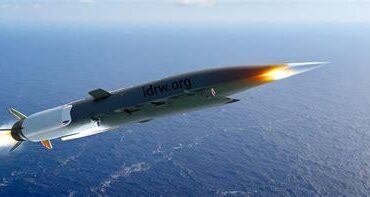
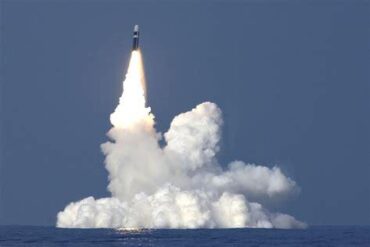
Developed by the Advanced Naval Systems Laboratory (ANSL) under the Defence Research and Development Organisation (DRDO), the K-6 missile represents a new era in Indian SLBM capabilities. Unlike its predecessors in the K-series, the K-6 is designed with an intercontinental strike range of up to 8,000 kilometers and features hypersonic terminal speeds exceeding Mach 7.5, making it a formidable challenge for any modern missile defense system. These specifications position India among a select group of nations capable of global strategic reach from beneath the ocean’s surface.
K-Series Evolution: From K-15 to K-6
India’s K-series SLBM family is the cornerstone of its naval nuclear deterrent. The journey began with the K-15 Sagarika, which remains in active service with a range of 750 to 1,500 kilometers. This was followed by the K-4 missile, already deployed aboard INS Arihant and INS Arighaat, with a range of 3,500 kilometers and a two-tonne payload capacity. The K-5, nearing deployment, is expected to provide up to 6,000 kilometers of range and includes Multiple Independently Targetable Reentry Vehicle (MIRV) capabilities.
The K-6 represents the apex of this evolution. Measuring over 12 meters in length and 2 meters in diameter, the K-6 is a three-stage, solid-fuel missile engineered for strategic depth, survivability, and stealth. Crucially, it is designed to carry up to 3 tonnes of payload, enabling it to launch between four to six MIRVs in a single mission. Its deployment will revolutionize India’s capacity to conduct wide-area, simultaneous strikes, thereby enhancing both first-strike survivability and second-strike credibility.
S5-Class SSBNs: A Platform Worthy of the K-6
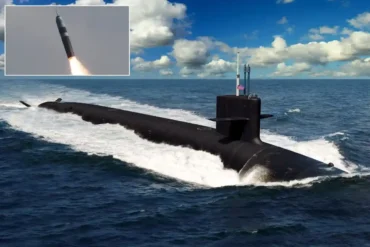
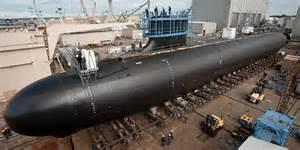
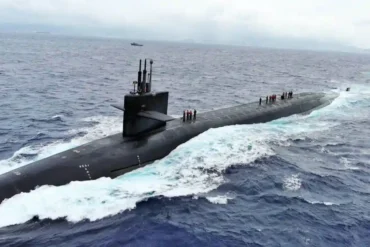
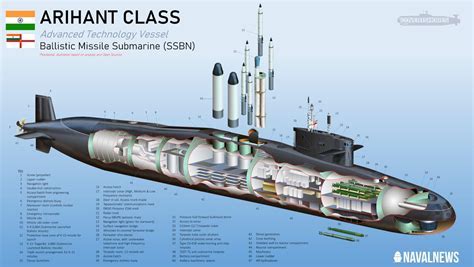
The K-6 missile will find its home aboard the upcoming S5-class nuclear-powered ballistic missile submarines (SSBNs), which mark a generational leap from the current Arihant-class. The S5 boats are projected to displace around 13,500 tonnes, dwarfing the 6,000-tonne Arihant-class. These vessels will be equipped with 12 to 16 vertical launch system (VLS) cells, making them capable of carrying either K-5 or K-6 missiles.
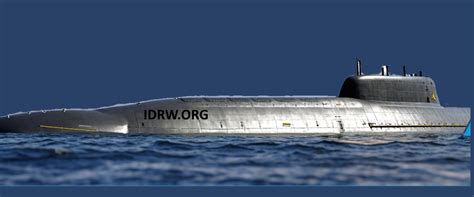
Powered by the CLWR-B2 compact light water reactor, generating 190 MW, and featuring pump-jet propulsion, the S5 submarines are designed for silent and extended patrols in strategic waters. Their advanced propulsion and reactor systems improve operational endurance and reduce acoustic signatures, enabling greater survivability in contested environments. The design phase neared completion by the end of 2024, with construction expected to begin by 2027. These submarines will allow for launches from secure Indian Ocean patrol zones, minimizing exposure to adversary detection and preemptive action.
Strategic Reach and Hypersonic Advantage
The K-6’s 8,000-kilometer range empowers India to cover virtually all of Asia, large portions of Africa, and critical zones in Europe from protected launch points. This range, combined with a terminal velocity of over 9,200 kilometers per hour, drastically reduces response windows for adversaries. At Mach 7.5, interception becomes significantly more complex, even for state-of-the-art anti-ballistic missile systems.
This capability comes at a time when other regional powers are upgrading their sea-based deterrents. Notably, China’s Type 096 submarines, armed with JL-3 SLBMs, pose a challenge that India must answer with equivalent or superior undersea assets. The K-6 and S5-class combination provides India a robust counterweight and aligns its strategic force structure with the capabilities of the established nuclear powers: the United States, Russia, China, the United Kingdom, and France.
Technological Edge and Indigenous Development
The K-series diverges from the land-based Agni missile family by emphasizing compactness, speed, and stealth—qualities essential for submarine deployment. All missiles in the K-series utilize solid-fuel propulsion and benefit from innovations by the High Energy Materials Research Laboratory (HEMRL), whose composite propellants reduce launch weight while increasing overall performance.
Additionally, all K-series SLBMs are guided by the Indian Regional Navigation Satellite System (IRNSS), offering GPS-independent precision targeting. Components such as launch control systems from Tata Power SED and indigenously developed pressure hulls and propulsion from Walchandnagar Industries further emphasize India’s focus on self-reliance in strategic systems. The secrecy surrounding K-6’s development, consistent with India’s deterrence posture, indicates the missile’s advancement is far along despite limited public disclosures.
Operationalizing the Nuclear Triad
India’s nuclear triad, comprising land-based Agni missiles, air-launched gravity bombs, and submarine-launched SLBMs, depends on the credibility and survivability of each leg. The sea-based leg is arguably the most resilient, given the difficulty of locating and targeting submarines in vast oceanic environments.
With the Arihant-class submarines currently forming the backbone of India’s underwater deterrent, the future S5-class, armed with the K-6, will serve as a potent, survivable force capable of withstanding first-strike scenarios. This is essential under India’s stated “No First Use” nuclear doctrine, which requires a guaranteed second-strike capability to deter any preemptive attack.
India’s move to develop such advanced undersea capabilities also has significant implications for maritime domain awareness (MDA) and blue-water operational readiness. With K-6-equipped SSBNs, India could maintain continuous at-sea deterrence, deploying SSBNs for prolonged periods and rotating assets without degrading readiness.
Global Context and Strategic Implications
As India steps deeper into great-power status, the K-6 program illustrates a clear intent to project power responsibly yet assertively, with strategic autonomy at the forefront. In a world witnessing rising geopolitical tensions, particularly in the Indo-Pacific, the deployment of an ICBM-range SLBM with MIRV capability marks India’s transition into a mature nuclear deterrent state.
The secrecy, complexity, and scale of the K-6 and S5-class submarine programs indicate more than defense posturing—they represent the crystallization of India’s long-term strategy to prevent nuclear coercion, maintain regional equilibrium, and fortify sovereign deterrent options beyond continental borders.
This strategic edge is crucial as regional peers expand their missile arsenals and forward-deploy SSBNs. India’s success in testing and deploying the K-6 will reaffirm its position as a capable and responsible nuclear power, upholding credible minimum deterrence while simultaneously advancing the technological sophistication of its defense ecosystem.
In the coming years, with the launch of the S5 submarines and full integration of the K-6 missile system, India will establish itself firmly within the exclusive league of nations that possess submarine-launched intercontinental hypersonic strike capability, reshaping the strategic calculus in the Indo-Pacific and beyond.