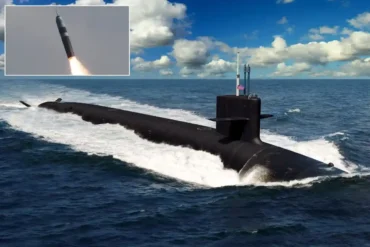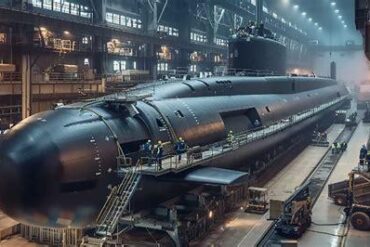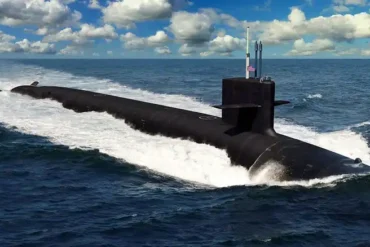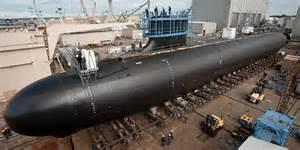
The United States has taken a decisive step to reinforce its strategic military posture with a $15.38 billion contract modification awarded to General Dynamics Electric Boat, anchoring the future of its sea-based nuclear deterrent. Extending through June 2035, this investment goes far beyond conventional shipbuilding—it represents a comprehensive effort to secure design authority, industrial resilience, and technological superiority for the Columbia-class ballistic missile submarine (SSBN) program.
At its core, the Columbia-class initiative is designed to replace the aging Ohio-class fleet, ensuring that the United States maintains a continuous, credible nuclear deterrent well into the second half of the 21st century. Unlike incremental upgrades, this program reflects a generational shift in submarine design, propulsion, and survivability—an evolution shaped by modern strategic threats and technological advancements.
Strategic Contract Scope Extends Beyond Shipbuilding
The scale and structure of the contract reveal a deliberate strategy: this is not simply about constructing submarines, but about sustaining an entire defense ecosystem. Managed under Naval Sea Systems Command, the agreement funds critical areas including submarine design refinement, missile-system integration, and long-term sustainment.
It also prioritizes supplier-base expansion and industrial capacity building, ensuring that the United States can maintain a steady production rhythm of both Columbia-class SSBNs and Virginia-class attack submarines. This dual-focus approach highlights how nuclear deterrence is increasingly intertwined with broader naval readiness and shipbuilding resilience.
Importantly, the funding is largely sourced from the National Sea-Based Deterrence Fund, supplemented by Navy research and development allocations. This layered financing underscores the program’s national priority, elevating it above standard procurement pipelines and insulating it from short-term budget volatility.
Engineering a Next-Generation Strategic Submarine
The Columbia-class submarine stands as one of the most advanced naval platforms ever conceived. Measuring approximately 560 feet in length with a 43-foot beam, and displacing around 20,800 tons submerged, it represents a significant leap in both size and capability over its predecessors.
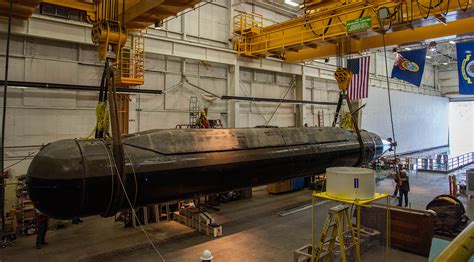
A defining feature is its electric-drive propulsion system, a departure from traditional mechanical drives. This innovation dramatically reduces acoustic signatures, making the submarine significantly harder to detect—an essential attribute for a platform whose survival depends on invisibility. Complementing this is a life-of-ship nuclear reactor core, designed to last the vessel’s entire 42-year service life without refueling, minimizing maintenance disruptions and maximizing operational availability.
The submarine’s stealth is further enhanced by a new-generation propulsor and refined hull design, ensuring that it remains one of the quietest vessels ever deployed beneath the ocean surface.
Trident II D5: The Backbone of Sea-Based Deterrence
At the heart of the Columbia-class lies its primary armament: the Trident II D5 submarine-launched ballistic missile (SLBM). Each submarine is equipped with 16 missile tubes, a reduction from the Ohio-class’s 24, but one that reflects a strategic recalibration rather than diminished capability.
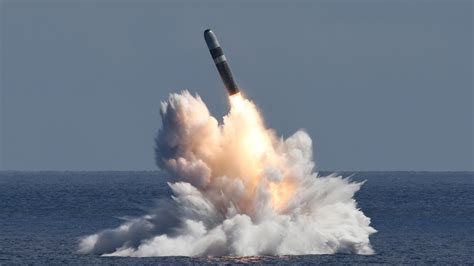
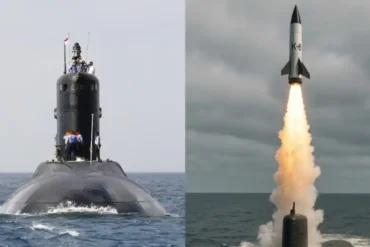
The Trident II D5 remains a formidable weapon, featuring a three-stage solid-propellant design, a length of 44 feet, and a range of approximately 4,000 nautical miles. Its advanced inertial guidance system ensures high accuracy, allowing submarines to operate from remote patrol areas while maintaining global strike capability.
Future upgrades are already planned. The D5 Life Extension (D5LE) will serve as the baseline missile for early Columbia-class boats, while the D5LE2 variant, scheduled for introduction in the late 2030s, will incorporate next-generation avionics and guidance systems. This forward-looking approach ensures that the platform remains technologically relevant throughout its decades-long service life.
Common Missile Compartment Strengthens Allied Integration
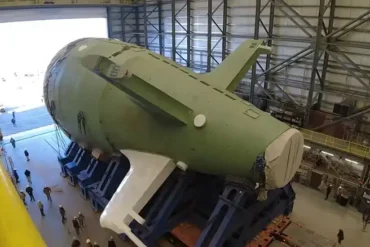
A standout feature of the Columbia-class program is its Common Missile Compartment (CMC), developed jointly with the United Kingdom. This shared architecture will also be used in the UK’s Dreadnought-class submarines, marking a significant step in transatlantic defense cooperation.
The CMC is more than a technical solution—it is a strategic framework that enhances interoperability between two nuclear allies. By standardizing missile-launch systems, both nations benefit from reduced development costs, streamlined logistics, and long-term compatibility in deterrence operations.
This collaboration underscores a broader reality: nuclear deterrence in the modern era is not solely national but increasingly allied and integrated, relying on shared technologies and coordinated capabilities.
Industrial Base Expansion: The Hidden Backbone of Deterrence
Behind every submarine lies a vast and complex industrial network. Recognizing this, the contract places significant emphasis on expanding and stabilizing the supplier base, which includes approximately 350 critical vendors.
These suppliers provide everything from specialized steel and propulsion components to advanced electronics and precision manufacturing. Any disruption in this chain could delay production or compromise quality, making supplier resilience a strategic priority.
The funding aims to increase manufacturing capacity, reduce single-source dependencies, and improve production quality across all tiers. In practical terms, this means investing in workforce training, modernizing facilities, and ensuring that even smaller subcontractors can meet the demanding standards of nuclear submarine construction.
This focus transforms the contract into more than a procurement action—it becomes an investment in national industrial strength, ensuring that the United States retains the capability to build and sustain its most critical military assets.
Addressing Schedule Pressures and Strategic Urgency
Despite its importance, the Columbia-class program has not been immune to challenges. Reports have indicated a 12- to 16-month delay for the lead submarine, raising concerns about maintaining uninterrupted deterrent coverage as Ohio-class boats retire.
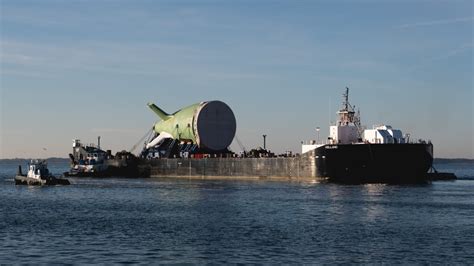
The latest contract directly addresses these concerns by consolidating funding for design updates, technical corrections, and production readiness into a single, comprehensive package. This approach allows for faster implementation of solutions and reduces the risk of cascading delays across subsequent vessels.
The urgency is clear: the Columbia-class must enter service on schedule to ensure that the sea-based leg of the U.S. nuclear triad remains intact, preserving a continuous at-sea deterrent presence.
Operational Philosophy: Survivability Above All
While the Columbia-class boasts impressive technical specifications, its true strength lies in its operational philosophy. Unlike surface combatants or attack submarines, SSBNs are not designed to engage in direct conflict. Their mission is to remain hidden, undetected, and ready.
This emphasis on survivable persistence defines every aspect of the platform’s design. From its ultra-quiet propulsion system to its reduced maintenance requirements, every feature serves a single purpose: ensuring that the submarine can withstand a first strike and deliver a guaranteed second response.
Even its defensive armament, including Mk48 heavyweight torpedoes, is secondary to this mission. The goal is not to fight, but to deter conflict altogether by eliminating any adversary’s confidence in a successful nuclear attack.
A Strategic Investment in Long-Term Deterrence
The $15.4 billion contract represents a holistic commitment to the future of U.S. nuclear deterrence. It secures not only the submarines themselves but also the technological, industrial, and strategic frameworks that make them viable.
By integrating design authority, missile systems, industrial capacity, and allied cooperation into a single program, the United States is ensuring that the Columbia-class will remain a cornerstone of global strategic stability for decades.
As geopolitical tensions evolve and technological competition intensifies, this investment sends a clear message: the United States is not merely maintaining its deterrent—it is redefining it for the next generation.