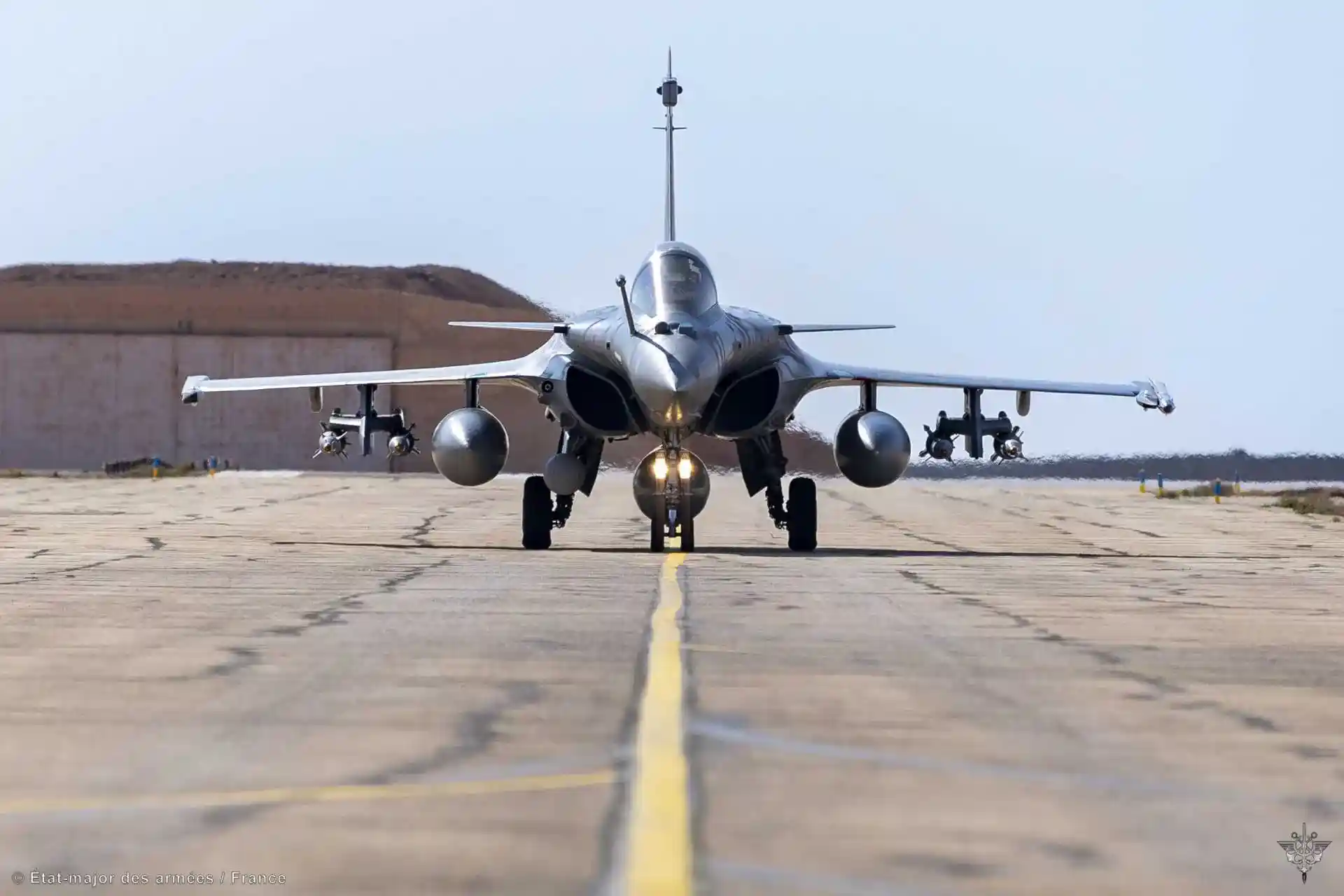
Modern European security policy is entering a period of profound recalibration. As geopolitical tensions reshape defense planning across the continent, France is exploring a new nuclear deterrence framework that could allow its nuclear-armed Rafale fighter jets to operate periodically from allied European air bases, including those in Belgium. The proposal signals a significant evolution in how Europe may organize its strategic defense posture in the coming decades.
The initiative reflects growing discussions about strengthening European strategic autonomy while reinforcing deterrence against potential adversaries. Although NATO remains the cornerstone of collective defense, several European governments are examining complementary arrangements that could enhance resilience in the event of strategic uncertainty.
Under the emerging concept, French Strategic Air Forces could temporarily deploy Rafale fighters equipped with ASMP-A nuclear cruise missiles to allied territories, conducting joint exercises, training operations, and visible deterrence demonstrations. Crucially, the nuclear weapons themselves would remain under exclusive French command, ensuring that France retains full control over its strategic arsenal.
France’s Expanding Vision for a European Nuclear Deterrent
French President Emmanuel Macron has increasingly emphasized the importance of strengthening Europe’s strategic defense architecture. France remains the only nuclear-armed member of the European Union, a status that has gained greater significance since the United Kingdom left the bloc in 2020.
Paris has proposed extending the strategic relevance of its nuclear deterrent beyond its own borders by integrating allied nations into cooperative deterrence frameworks. The concept does not involve transferring nuclear weapons to other countries or allowing shared control. Instead, it focuses on operational cooperation that could demonstrate France’s ability to disperse its nuclear forces across multiple locations in Europe.
From a strategic standpoint, dispersal creates a powerful complication for adversaries. A nuclear force concentrated in only a few bases becomes easier to target in a crisis. By contrast, forward-deploying aircraft across allied territories multiplies potential launch locations, forcing adversaries to account for a far broader set of strategic variables.
In practical terms, France could send Rafale squadrons to partner air bases for short-term deployments, exercises, or signaling missions designed to reinforce deterrence credibility. These operations would be temporary and rotational rather than permanent stationing.
Why Belgium Could Become a Key Partner
Among the potential host nations, Belgium has emerged as a particularly logical candidate. The country already plays an important role in NATO’s nuclear sharing system, which involves the storage of American B61 nuclear bombs in several European countries.
Belgium is widely believed to host U.S. B61 nuclear gravity bombs at Kleine-Brogel Air Base, where Belgian fighter aircraft maintain the capability to deliver them in the event of a NATO decision.
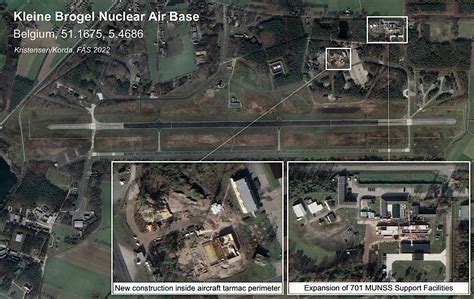
Because of this existing infrastructure and operational experience, Belgian air bases are already equipped with the security procedures, personnel training, and logistical arrangements necessary for nuclear-related operations. This makes Belgium a natural location for potential temporary deployments of French strategic aviation.
Belgian Foreign Affairs Minister Maxime Prévot has indicated that the idea of extending the French nuclear umbrella to European partners could represent a constructive initiative, though discussions remain at an exploratory stage. The Belgian government has emphasized that the purpose of such cooperation would be deterrence and strategic stability rather than preparation for conflict.
Prime Minister Bart De Wever has also signaled openness to deeper defense cooperation with France as part of broader European security initiatives.
The Rafale’s Role in France’s Airborne Nuclear Force
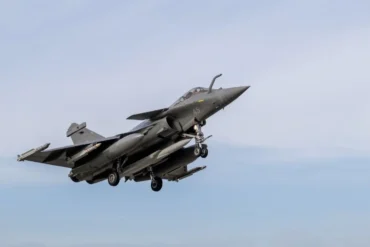
At the center of this proposal stands the Dassault Rafale, one of the most advanced multirole fighter aircraft in Europe. Within France’s strategic doctrine, the Rafale forms the airborne component of the country’s nuclear deterrent.
Three variants of the aircraft are technically capable of carrying nuclear weapons:
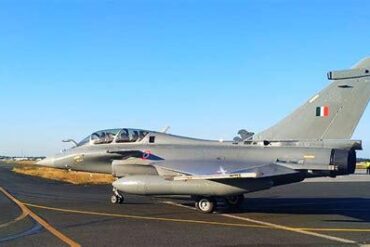
- Rafale B, the two-seat version used by the French Strategic Air Forces
- Rafale M, the carrier-based variant operated by French naval aviation
- Rafale C, the single-seat land-based fighter compatible with nuclear integration
Among these, the Rafale B plays the most prominent role in nuclear missions.
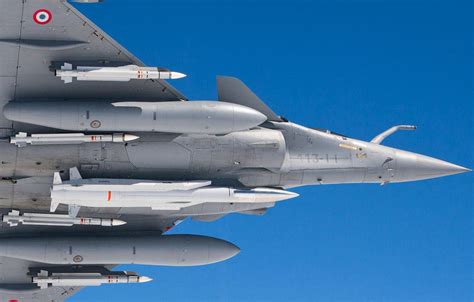
The aircraft carries the ASMP-A (Air-Sol Moyenne Portée-Amélioré) supersonic nuclear cruise missile. This weapon has a range exceeding 500 kilometers and is equipped with the TNA thermonuclear warhead, whose selectable yield is estimated to reach up to 300 kilotons.
Such a weapon dramatically expands the reach of the Rafale. Instead of flying directly over heavily defended targets, the fighter can launch the missile from stand-off distances, allowing the weapon to penetrate defenses at extremely high speeds.
The Rafale itself is powered by two Safran M88-2 turbofan engines, each producing around 50 kilonewtons of dry thrust and up to 75 kilonewtons with afterburner. This propulsion enables the aircraft to reach Mach 1.8 while maintaining the agility needed for both air-to-air combat and precision strike missions.
Advanced Systems Supporting Strategic Strike Missions
Beyond speed and payload, the Rafale’s sophisticated avionics and sensors allow it to operate in heavily contested environments. The fighter integrates the RBE2-AA active electronically scanned array (AESA) radar, a system capable of tracking multiple airborne and ground targets simultaneously while resisting electronic jamming.
Complementing the radar is the SPECTRA electronic warfare suite, a highly advanced defensive system designed to detect, analyze, and counter enemy radar threats. SPECTRA can identify hostile emitters, deploy countermeasures, and even assist in mission planning by mapping electronic threats in real time.
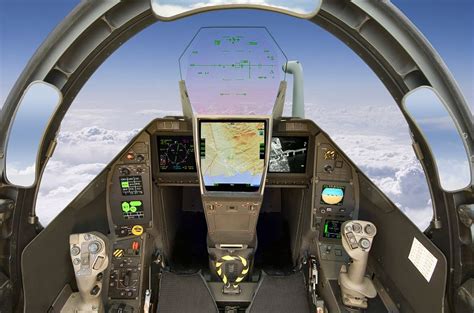
The aircraft also features the Front Sector Optronics (FSO) sensor, an infrared and visual detection system that allows the Rafale to identify targets without emitting radar signals. This passive capability becomes especially valuable during stealth-sensitive operations.
Fuel capacity is another critical element of the aircraft’s operational flexibility. The Rafale carries approximately 4.7 tonnes of internal fuel, which can be supplemented with external drop tanks attached to its 14 external hardpoints. Combined with aerial refueling from Airbus A330 MRTT tanker aircraft, this configuration enables long-range missions well beyond the aircraft’s basic combat radius of about 1,000 kilometers.
Such endurance allows the Rafale to conduct strategic patrols or deployments across large portions of Europe and beyond.
The Structure of France’s Nuclear Deterrent
France’s nuclear doctrine rests on a two-pillar structure designed to guarantee a credible retaliatory capability at all times.
The first pillar is the sea-based deterrent, composed of nuclear-powered ballistic missile submarines. France currently operates four Triomphant-class submarines, each equipped with M51.2 submarine-launched ballistic missiles capable of striking targets more than 8,000 kilometers away.
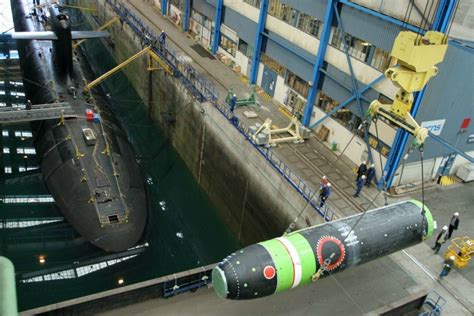
At least one of these submarines remains on continuous patrol in the Atlantic Ocean, ensuring that France always retains a survivable second-strike capability.
The second pillar is the airborne nuclear component, built around Rafale fighters capable of delivering the ASMP-A cruise missile. Unlike submarine forces, airborne nuclear units provide visible and flexible strategic signaling.
Aircraft deployments, exercises, or patrol flights can send clear political messages without crossing the threshold of actual nuclear escalation. This signaling function makes the airborne deterrent particularly suitable for temporary deployments to allied territories under the new European framework.
Strategic Logic Behind Dispersed Nuclear Aviation
From a strategic perspective, dispersing nuclear-capable aircraft across multiple air bases fundamentally alters the calculations of any adversary contemplating a pre-emptive strike.
If nuclear aircraft remain concentrated at a few known bases, those installations could theoretically become priority targets in a crisis. However, temporary deployments to allied bases create uncertainty about the exact location of strategic assets at any given moment.
In military planning, uncertainty is a powerful defensive tool. It forces adversaries to spread their resources across many possible targets, diluting the effectiveness of any attack plan.
Deployments of Rafale fighters to countries such as Belgium, Germany, the Netherlands, Poland, Denmark, Sweden, Greece, or the United Kingdom would therefore serve a clear strategic purpose: demonstrating that France’s nuclear force remains mobile, flexible, and resilient.
Differences From NATO Nuclear Sharing
Although the proposal might appear similar to NATO’s nuclear sharing arrangements, there are important differences.
Within NATO, certain allied countries host U.S. nuclear weapons and maintain aircraft capable of delivering them. In theory, those weapons could be employed following a joint political decision within the alliance.
France’s concept is structurally different. Under the proposed framework, all nuclear decision-making authority remains exclusively in French hands.
Partner countries would not control the weapons or participate in launch decisions. Their role would be limited to hosting aircraft, participating in exercises, and supporting operational coordination.
This arrangement preserves a core principle of French strategic doctrine: absolute national sovereignty over nuclear weapons.
Political and Strategic Implications for Europe
The broader significance of the proposal lies in its potential to reshape Europe’s strategic landscape. By extending elements of its nuclear deterrent to allied territories, France could effectively create a more Europeanized layer of nuclear protection alongside NATO structures.
For smaller European states, participating in such arrangements could strengthen their national security without requiring the costly and politically controversial step of developing independent nuclear arsenals.
The framework also requires no immediate investment in new nuclear infrastructure, relying instead on temporary deployments, exercises, and operational coordination.
In an era defined by renewed great-power competition, European governments are increasingly exploring ways to reinforce deterrence while maintaining alliance unity. France’s proposal reflects one of the most significant attempts yet to adapt nuclear strategy to this evolving environment.
Whether the plan ultimately becomes a permanent feature of European defense policy remains uncertain. Yet the discussions themselves illustrate a fundamental shift: European security is entering a phase where nuclear deterrence is no longer viewed solely through a transatlantic lens but increasingly as a shared European strategic responsibility.