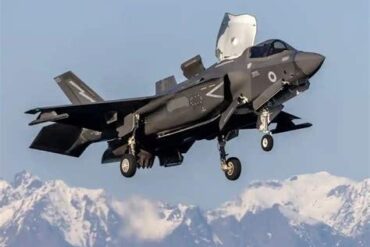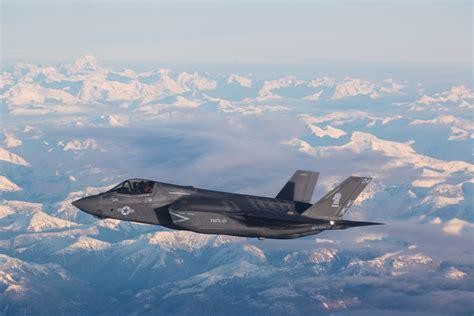
The United States Marine Corps is undergoing one of the most profound aviation transformations in its history, and at the center of this evolution is a bold, almost counterintuitive strategy: scattering its most advanced stealth fighters—the F-35B Lightning II—across tiny, austere islands throughout the Pacific. At first glance, dispersing high-value aircraft into remote, minimally equipped locations may seem risky. In reality, it is a calculated response to the shifting dynamics of modern warfare, where survivability, mobility, and information dominance outweigh sheer concentration of force.
This approach is not improvised. It is embedded within the Marine Corps’ 2026 Aviation Plan (AVPLAN), a long-term roadmap under Project Eagle that redefines how Marine aviation will fight, survive, and win through 2040. The plan is structured into three distinct phases—Fight Tonight, Bridge the Gap, and Future Fight—each progressively refining a doctrine centered on distributed operations, advanced networking, and expeditionary agility.
The implications are enormous. Instead of relying on large, fixed airbases that can be easily targeted by precision missiles, the Marine Corps is embracing a fluid, unpredictable operational model. Small teams, supported by cutting-edge aircraft and mobile infrastructure, will operate from “lily pads” scattered across island chains, turning geography into a strategic advantage rather than a limitation.
Distributed Aviation Operations: Reinventing Marine Airpower
At the heart of this transformation lies Distributed Aviation Operations (DAO), a concept that fundamentally reshapes how airpower is projected. Rather than concentrating aircraft at major bases, DAO disperses them across numerous temporary sites, forcing adversaries to contend with a constantly shifting and elusive target set.
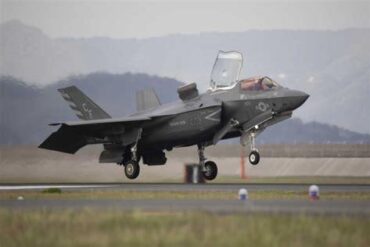
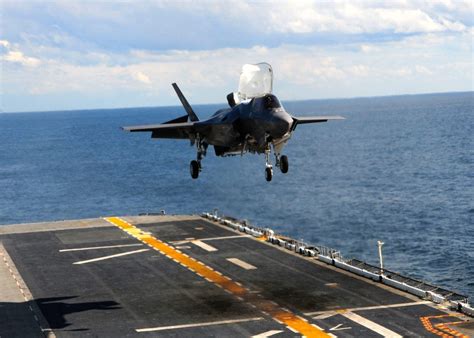
The F-35B is uniquely suited for this doctrine. Its Short Takeoff and Vertical Landing (STOVL) capability allows it to operate from improvised airstrips, damaged runways, and even small amphibious ships. This flexibility enables Marine units to deploy rapidly, establish forward positions, and relocate just as quickly—often before an enemy can respond.
This “shoot-and-scoot” approach is more than tactical mobility; it is strategic deception. By constantly moving aircraft between dispersed locations, the Marines complicate enemy targeting cycles, dilute the effectiveness of long-range missile systems, and preserve combat power in highly contested environments. In a region like the Indo-Pacific, where vast distances and dense island chains dominate the geography, this model offers a decisive edge.
The F-35B: More Than a Fighter, a Flying Sensor Network
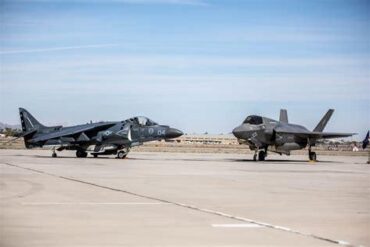
The F-35B is not simply a replacement for legacy aircraft like the AV-8B Harrier—it represents a generational leap in capability. Its stealth design allows it to penetrate advanced air defenses, but its true power lies in its role as a data fusion and command node.
Every F-35B in the air acts as a high-altitude sensor platform, collecting vast amounts of information from radar, infrared systems, and electronic warfare suites. This data is processed onboard and shared instantly across a network that connects air, sea, and ground forces. The result is a unified, real-time picture of the battlespace.
This capability transforms the aircraft into a force multiplier. A single F-35B can detect threats far beyond the range of ground-based systems and relay precise targeting data to missile batteries, naval vessels, or allied aircraft. It effectively becomes the eyes and ears of the joint force, enabling coordinated strikes across multiple domains.
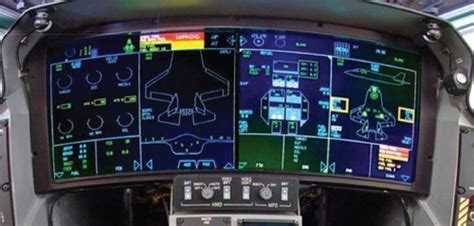
The concept of Joint All-Domain Command and Control (JADC2) hinges on this connectivity. In this framework, the F-35B is not just a participant—it is a central node. It links disparate systems into a cohesive “kill web,” where sensors and shooters operate seamlessly regardless of service branch or nationality.
From Supercarriers to Lightning Carriers
One of the most striking shifts in Marine aviation is the growing emphasis on “Lightning Carriers.” These are amphibious assault ships configured to carry up to 20 F-35Bs, effectively transforming them into compact aircraft carriers.
Unlike traditional supercarriers, which are large and highly visible, Lightning Carriers are smaller, more agile, and capable of operating in shallower waters. This makes them ideal for navigating the complex maritime terrain of the Pacific, where narrow straits and island clusters create both opportunities and challenges.
The combination of sea-based and land-based dispersed operations creates a layered, resilient force posture. Aircraft can operate from ships, forward island bases, or rapidly established refueling points, ensuring that no single strike can cripple the Marine Corps’ aviation capability.
MADIS: Shielding the Distributed Force
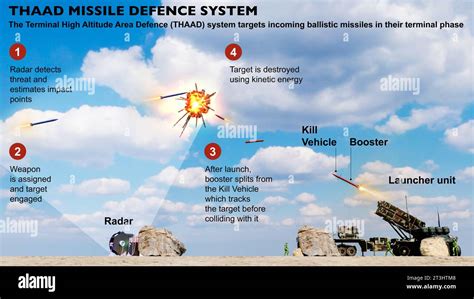
Dispersing aircraft across remote locations introduces new vulnerabilities, particularly from drones and low-flying threats. To counter this, the Marine Corps is deploying the Marine Air Defense Integrated System (MADIS), a mobile, short-range air defense solution designed to protect expeditionary sites.
MADIS operates as a paired system mounted on Joint Light Tactical Vehicles. One vehicle provides kinetic firepower through cannons and missiles, while the other delivers advanced radar and electronic warfare capabilities. Together, they create a protective bubble around forward operating sites.
The integration between MADIS and the F-35B is where the system truly excels. Data collected by the aircraft can be fed directly into ground-based defense networks, providing early warning of incoming threats. This layered defense ensures that even the most remote outposts remain protected against modern aerial threats.
Forward Arming and Refueling Points: The Backbone of Mobility
The success of distributed operations depends on the ability to sustain aircraft in austere environments. This is where Forward Arming and Refueling Points (FARPs) come into play. Established by Marine Wing Support Squadrons, these temporary sites provide the fuel, ammunition, and maintenance needed to keep F-35Bs in the fight.
FARPs are designed for speed and flexibility. They can be set up in remote locations with minimal infrastructure, allowing aircraft to land, refuel, rearm, and take off within a short window. This drastically reduces turnaround time and extends operational reach.
Aviation Ground Support (AGS) has been elevated to a core function within the Marine Corps to support this model. AGS units are responsible for everything from runway repair to deploying specialized landing surfaces for vertical operations. They also leverage predictive maintenance systems, using data analytics to anticipate logistical needs before they become critical.
Scaling Stealth: Bigger Squadrons, Greater Impact
While the Marine Corps is dispersing its aircraft geographically, it is simultaneously increasing the size and capability of its F-35 squadrons. Larger, 12-aircraft units provide greater flexibility, improved maintenance efficiency, and enhanced operational endurance.
This dual approach—larger squadrons combined with distributed deployment—creates a powerful synergy. Units can deploy in smaller detachments while still maintaining the depth and resilience of a larger formation. It also supports the growing demands of data-centric warfare, where each aircraft contributes to a shared information network.
The Corps is also adjusting its procurement strategy, increasing its reliance on the carrier-based F-35C for long-range missions while maintaining the F-35B as the cornerstone of expeditionary operations. Together, these variants provide a balanced mix of endurance, payload, and flexibility.
Allied Interoperability: A Networked Coalition
The Pacific is not a solo theater. It is a coalition environment where interoperability is essential. The F-35 program was designed with this in mind, enabling seamless integration between allied forces.
Countries such as Japan, Australia, the United Kingdom, and Italy operate the same platform, sharing common data links and operational procedures. This allows aircraft from different nations to operate interchangeably, whether from land bases or ships.
One of the most significant developments is the integration of F-35Bs with Japan’s Izumo-class destroyers, which are being modified to support fixed-wing operations. Joint training ensures that pilots and crews from both nations can operate together seamlessly, effectively expanding the number of available launch platforms across the region.
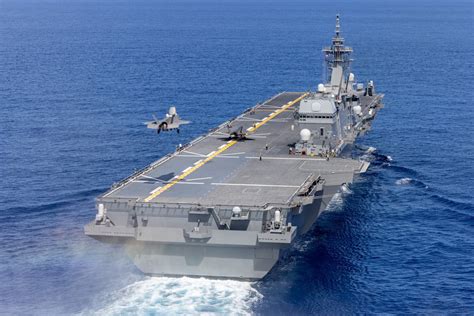
This level of interoperability transforms the strategic landscape. Instead of isolated national forces, the coalition becomes a distributed, interconnected network capable of responding rapidly to emerging threats.
Turning Geography Into an Advantage
The Indo-Pacific is often described as a theater defined by the “tyranny of distance.” Vast oceans, scattered islands, and limited infrastructure pose significant challenges for traditional military operations. The Marine Corps’ new strategy flips this narrative.
By leveraging the F-35B’s unique capabilities and embracing distributed operations, the Marines turn these geographic constraints into strengths. Islands become launch points, refueling hubs, and sensor nodes. Distance becomes a buffer that complicates enemy logistics and targeting.
This approach also aligns with the broader shift toward multi-domain operations, where success depends on the integration of air, land, sea, cyber, and space capabilities. The F-35B, with its advanced sensors and connectivity, serves as a bridge across these domains.
The Future Fight: Toward 2040 and Beyond
The 2026 AVPLAN is not an endpoint—it is a foundation for continuous evolution. As the Marine Corps moves into the later phases of Project Eagle, the focus will shift toward even greater integration with unmanned systems, artificial intelligence, and autonomous logistics.
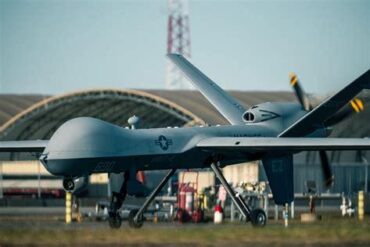
Manned-unmanned teaming will allow F-35Bs to control swarms of drones, extending their reach and reducing risk to pilots. Advanced data analytics will further enhance predictive maintenance and operational planning. New technologies will continue to refine the balance between mobility, survivability, and lethality.
What remains constant is the underlying philosophy: adaptability is the key to dominance. By embracing dispersion, connectivity, and innovation, the Marine Corps is positioning itself to operate effectively in the most challenging environments on Earth.
Conclusion: A Strategy Built for Survival and Supremacy
Scattering F-35Bs across tiny Pacific islands is not a sign of vulnerability—it is a demonstration of strategic foresight. In an era where precision weapons can neutralize fixed targets in minutes, survival depends on mobility and unpredictability.
The Marine Corps’ approach combines cutting-edge technology with a return to its expeditionary roots. Small, agile units operating from austere locations, supported by a networked ecosystem of sensors and defenses, create a force that is both resilient and lethal.
This is not just a tactical adjustment; it is a redefinition of airpower. By turning the vastness of the Pacific into a dynamic battlefield and leveraging the full potential of the F-35B, the Marine Corps is building a force designed not only to fight—but to endure, adapt, and dominate in the conflicts of tomorrow.