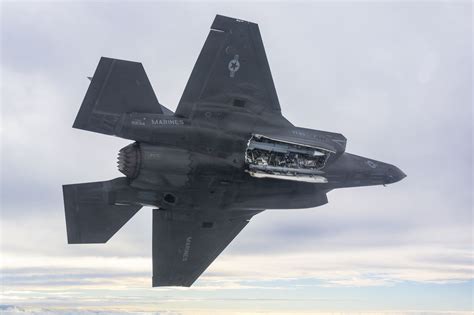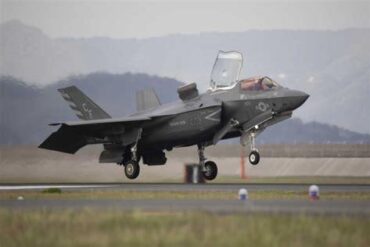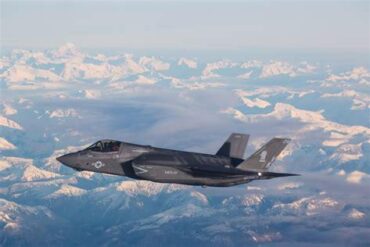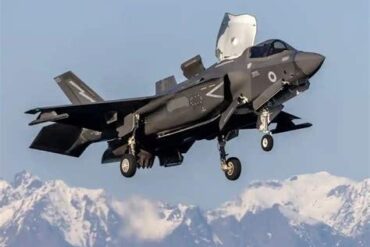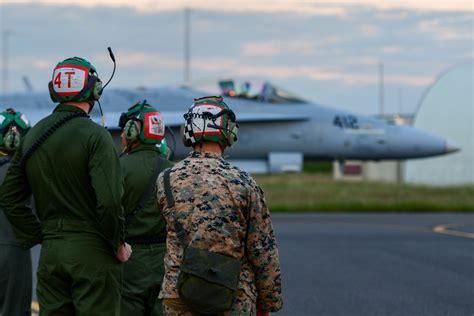
Marine Corps aviation has reached a pivotal milestone with the retirement of its long-serving F/A-18 Hornet jets, signaling a generational shift in aerial warfare capabilities. In a formal ceremony held on June 26, 2025, at Marine Corps Air Station Beaufort, South Carolina, Marine All-Weather Fighter Attack Squadron 224 (VMFA(AW)-224), known as the “Fightin’ Bengals,” was redesignated Marine Fighter Attack Squadron 224 (VMFA-224). This change marks the squadron’s official transition to operating the F-35B Lightning II, a fifth-generation stealth fighter tailored for short takeoff and vertical landing (STOVL) operations.
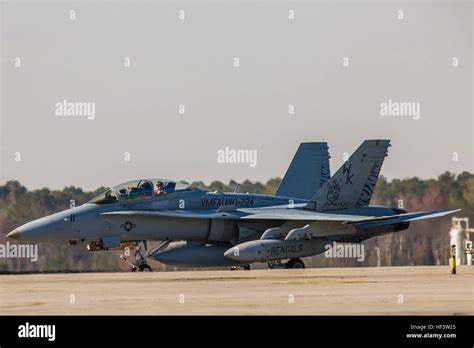
A Historic Lineage Ends With Hornet Retirement
The F/A-18 Hornet, a combat-proven platform, has served the United States Marine Corps (USMC) for over three decades. VMFA(AW)-224’s final flight of the Hornet took place on April 28, 2025, concluding a rich operational history that included combat deployments from Operation Desert Storm in 1991 to close air support missions during the Global War on Terror, including Operation Iraqi Freedom. The move follows a broader phase-out, with VMFA(AW)-553 retiring its Hornets in June 2023 and the US Navy ending operational flights from NAS Oceana in October 2019.
The Hornet’s versatility and reliability defined Marine air superiority for a generation, enabling multi-role missions in both contested and permissive environments. Yet, technological evolution demands capabilities beyond the Hornet’s design, prompting the Corps to fully embrace stealth, sensor fusion, and digital integration through the F-35B.
Fightin’ Bengals: A Legacy Reforged
VMFA-224’s heritage is deeply entrenched in Marine Corps aviation history. First activated as VMF-224 on May 1, 1942, the squadron earned its nickname “Fightin’ Bengals” flying the Grumman F4F Wildcat in World War II, later transitioning to the Vought F4U Corsair and earning distinction in the Pacific Theater. Throughout the Cold War and Vietnam era, the squadron evolved through platforms like the Douglas A-4D Skyhawk and Grumman A-6 Intruder, before eventually adopting the McDonnell-Douglas F/A-18D Hornet.
For decades, the Bengals embodied the USMC’s all-weather, all-condition strike capability, operating across climates, time zones, and mission types. Their redesignation marks a continuation of that ethos but under the mantle of 21st-century warfare.
A New Era Under New Command
The transition to the F-35B was ceremoniously accompanied by a change in leadership. Lt. Col. Jarrod Allen, outgoing commanding officer of VMFA(AW)-224, handed over responsibilities to Lt. Col. John Stuart, who now oversees VMFA-224 as it begins its F-35 era.
“As the Bengals redesignate, it ends an era of the All-Weather designation that began with the Night Fighter designation in 1943,” said Allen. “I could not be prouder of the Marines and Sailors who upheld the high standards of excellence during the final days of this chapter.”
Stuart, embracing the challenges of transitioning to a stealth aircraft, emphasized the importance of continuity and innovation: “The next thing for the Fightin’ Bengals is to build upon the rock-solid foundation we’ve inherited and produce a stealth fighter squadron unmatched in tactical excellence, maintenance efficiency, quality, and Marine Corps ethos.”
Enter the F-35B Lightning II: Fifth-Gen Dominance
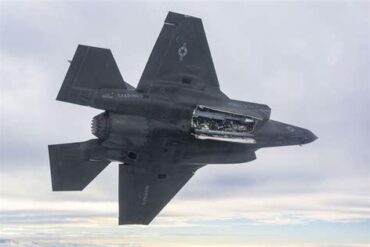
The F-35B Lightning II, developed by Lockheed Martin, is the world’s first supersonic stealth fighter with short takeoff and vertical landing capabilities. Unlike the F-35C variant, which is designed for traditional carrier operations, the F-35B allows the Marine Corps to operate from expeditionary bases, austere airfields, and amphibious assault ships like the USS America (LHA-6) and USS Wasp (LHD-1).
This aircraft is the cornerstone of the USMC’s Lightning Carrier concept, a vision that redefines how Marines project air power in both high-end conflict and distributed operations. Features of the F-35B include:
- Stealth airframe with radar-absorbing materials
- Advanced sensors and fusion capabilities for real-time situational awareness
- Network-centric architecture for seamless joint-force integration
- Vertical landing and short takeoff using a swiveling jet nozzle and lift fan
Its combination of lethality, survivability, and deployability make it a game-changer for future USMC missions, from air superiority and interdiction to intelligence, surveillance, and reconnaissance (ISR) in contested environments.
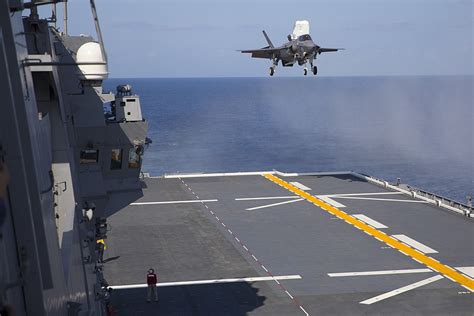
Safe for Flight: Certification and Training Underway
VMFA-224 is now in the midst of receiving its first batch of F-35Bs, with deliveries expected before the end of 2025. The squadron is currently conducting comprehensive transition training, a rigorous multi-phase process aimed at earning the “Safe for Flight” certification. This standard confirms that the unit can independently operate and maintain the F-35B, with mission-ready pilots, technicians, and logistics support systems in place.
Achieving Safe for Flight requires:
- Full operational readiness of maintenance crews trained on F-35-specific systems
- Completion of flight simulations and airframe-specific pilot instruction
- Adherence to the F-35 Joint Program Office’s safety protocols and checklists
This period is critical not just for operational safety, but also to ensure seamless integration with other Marine Air Ground Task Force (MAGTF) elements.
Tactical and Strategic Implications for Marine Aviation
The switch to the F-35B comes at a time when the Marine Corps is adapting to distributed maritime operations and the Force Design 2030 vision. As geopolitical tensions rise in the Indo-Pacific and other global hotspots, the need for aircraft capable of first-day-of-war survivability and forward-operating flexibility has never been greater.
F/A-18 Hornets, while reliable, lack stealth and are increasingly challenged in environments dominated by integrated air defense systems (IADS) and fifth-generation adversaries. The F-35B addresses these limitations with electronic warfare suites, reduced radar cross-section, and network-enabled operations that allow it to function as a sensor node in a broader combat web.
With platforms like the F-35B, the USMC is not just upgrading its hardware—it’s fundamentally transforming how it fights, supports, and sustains airpower.
A Phased Transition, Not a Total Replacement
While some headlines suggest a blanket replacement of all legacy fighters, the reality is more nuanced. The Marine Corps has scaled back its F-35B procurement slightly, in favor of acquiring more F-35Cs, the carrier-based variant shared with the Navy. However, VMFA-224’s shift to the F-35B is part of a long-standing plan and will proceed as scheduled.
The transition is occurring in phases, with squadrons like VMFA-121 and VMFA-211 already combat-certified with the F-35B. VMFA-224 will join this elite cadre in shaping future joint operations, especially as USMC amphibious doctrine continues to evolve.
Looking Ahead: Preparing for Future Conflicts
The United States Marine Corps has always been a forward-thinking force, prepared to adapt to new domains and technologies. The decommissioning of the Hornet from VMFA-224 closes a historic chapter, but opens a bold new one. As the Fightin’ Bengals embrace stealth, advanced sensors, and STOVL power, they are being forged into a tool ready for the conflict landscapes of the next 50 years.
With adversaries like China and Russia investing heavily in anti-access/area denial (A2/AD) strategies, the F-35B provides the penetration capability and operational adaptability needed to meet those threats head-on. And with a new commander steering VMFA-224 into the future, the Marines are clearly betting on superior technology, training, and tradition to win the wars of tomorrow.