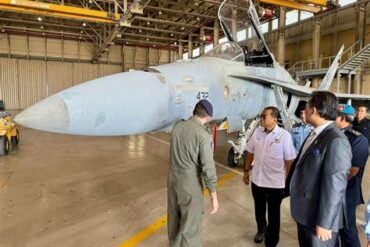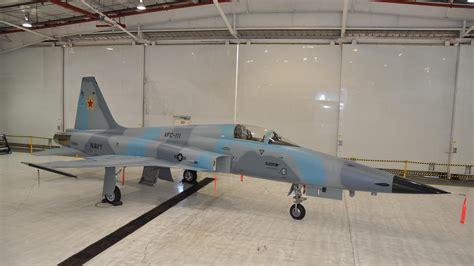
The Northrop F-5 Tiger II has spent decades serving as one of the most recognizable aggressor aircraft in American military aviation. Generations of Navy and Marine Corps pilots sharpened their skills by flying against these lightweight fighters, and the aircraft even became a Hollywood icon after appearing in Top Gun. Yet as the strategic environment changes and China fields increasingly capable fourth- and fifth-generation fighters, the U.S. Navy is preparing for a major shift. Instead of relying on aging F-5s, reserve aggressor squadrons are beginning to receive F/A-18E/F Super Hornets.
This transition represents much more than replacing an old aircraft with a newer one. It reflects the Navy’s effort to ensure pilots train against threats that closely resemble the sophisticated aircraft they could face in future conflicts. While the F-5 remains a legendary design, the requirements of modern air combat have evolved beyond what the small fighter can realistically replicate.
For decades, the philosophy behind aggressor training has remained simple. American pilots become better by fighting opponents that challenge them. The aircraft playing the enemy must possess the speed, sensors, tactics, and capabilities necessary to force realistic decision-making. As adversaries become more advanced, so too must the aircraft assigned to imitate them.
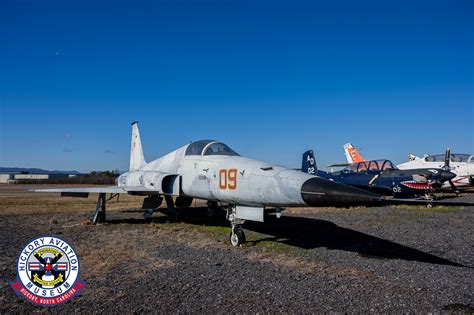
The Northrop F-5 Tiger II Became an Unexpected Training Legend
The F-5 was originally designed by Northrop as a simple, affordable fighter intended for allied air forces. During the Cold War, many nations required an effective supersonic aircraft without the expense and complexity associated with larger fighters. The result was one of the most successful light combat aircraft ever produced.
Although the United States never adopted the F-5 as a frontline fighter, the aircraft found another purpose. Its size, agility, and performance characteristics made it ideal for simulating Soviet fighters. By the late 1970s and 1980s, Navy aggressor squadrons and the famed TOPGUN school routinely employed F-5E Tiger IIs to train aviators.
The aircraft’s appearance in the 1986 film Top Gun accurately reflected reality. Black-painted F-5s portrayed enemy fighters, forcing F-14 Tomcat crews to engage in realistic dogfights. Those scenes cemented the aircraft’s place in aviation history.
Northrop’s attempt to evolve the fighter into the F-20 Tigershark ultimately failed. Ironically, the basic F-5 itself proved far more successful than its advanced successor. The aircraft continued flying in numerous countries while the T-38 Talon trainer, a close relative, became the backbone of U.S. Air Force advanced pilot training.
Even today, decades after its first flight, the F-5 remains operational around the world.
Why Modern Threats Are Making The F-5 Increasingly Obsolete
The strategic environment confronting the United States is dramatically different from the Cold War era. Potential adversaries now field sophisticated aircraft equipped with advanced radars, long-range missiles, electronic warfare systems, and networked sensors.
China’s rapid modernization has especially transformed the challenge facing American pilots. Aircraft such as the J-10C, J-16, and stealthy J-20 possess capabilities that older aggressor aircraft simply cannot mimic.
The F-5’s small size and maneuverability remain valuable, but its limitations are increasingly apparent. The aircraft lacks the sensor suite, radar sophistication, speed, and overall systems architecture necessary to reproduce modern threats.
As a result, pilots training exclusively against F-5s may not receive exposure to the kinds of adversaries they would encounter in a conflict against a technologically advanced opponent.
The Navy has therefore concluded that higher-end adversary platforms are necessary.
Lessons Learned From Decades Of Realistic Combat Training
American emphasis on realistic air combat training dates back to painful lessons learned during the Vietnam War. U.S. pilots often entered combat with insufficient experience against enemy aircraft and tactics.
Following the conflict, the military developed programs intended to recreate authentic combat conditions. One of the most fascinating examples was Operation Constant Peg, a secret effort that used captured Soviet MiG-17s, MiG-21s, and MiG-23s flown by American pilots.
The purpose was simple. Pilots needed to experience enemy tactics before facing them in combat.
This philosophy eventually gave rise to dedicated aggressor units and institutions such as TOPGUN and the Air Force Weapons School. Their mission has always been to challenge aviators with realistic opponents rather than easy victories.
Today, the challenge has changed. Instead of preparing for Soviet MiGs, the military must simulate advanced Chinese and Russian aircraft.
That requirement demands more capable aggressor platforms.
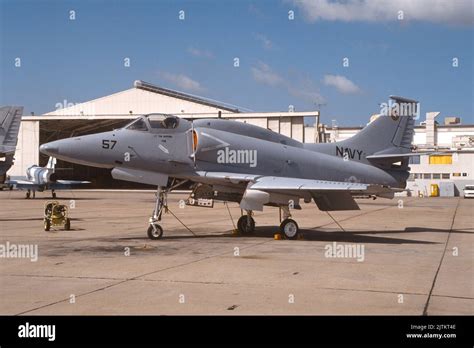
Congressional Plans Confirm The Transition Toward Super Hornets
Recent legislative language included in the House Armed Services Committee’s Fiscal Year 2027 National Defense Authorization Act provided one of the clearest indications that the Navy intends to transition reserve F-5 units toward the F/A-18E/F Super Hornet.
The proposal calls for annual reports detailing plans and progress involving the replacement of Navy Reserve F-5 tactical fighter aircraft with Super Hornets.
Such language effectively confirms what observers have suspected for some time.
The Navy already possesses surplus Super Hornets becoming available as fleet modernization progresses. Rather than retiring these aircraft outright, they can serve a valuable second career as adversary fighters.
This approach offers several advantages. It provides significantly improved training capabilities while maximizing the usefulness of existing aircraft that still possess years of service life.
The Navy’s Remaining F-5 Aggressor Fleet Is Aging
Despite numerous upgrades, the F-5 fleet is becoming increasingly difficult to sustain.
The Navy currently operates F-5N and two-seat F-5F aggressors, many upgraded to the ARTEMIS standard. Additional aircraft acquired from Switzerland supplement these numbers. The former Swiss Air Force fighters represented a unique reverse foreign military sale in which the United States purchased aircraft it had originally exported decades earlier.
The acquisition proved economical. Forty-four aircraft cost roughly $50 million over several years.
Yet even upgraded versions remain products of an earlier era.
Modern sensors, radar systems, electronic warfare environments, and beyond-visual-range combat concepts demand capabilities the F-5 was never designed to possess. While the aircraft still contributes quantity, quality increasingly matters more.
Maintaining aging airframes also becomes more expensive over time. Spare parts, structural fatigue, and technological limitations all create challenges.
Eventually, replacement becomes the logical option.
Why The F/A-18E/F Super Hornet Makes An Ideal Aggressor
The Super Hornet offers capabilities that dramatically exceed those of the F-5.
Unlike the lightweight Tiger II, the F/A-18E/F is a mature combat aircraft proven through decades of operational service. It has accumulated enormous combat experience in Iraq, Afghanistan, Syria, and maritime operations across the globe.
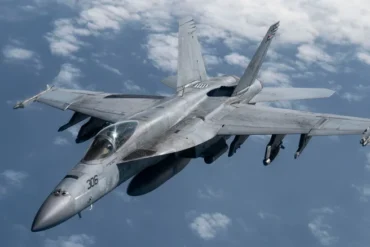
The aircraft’s AN/APG-79 AESA radar provides sensor capabilities unavailable to older aggressor jets. Advanced targeting systems, radar warning receivers, electronic warfare equipment, and infrared search-and-track technology enable the aircraft to replicate modern threats far more realistically.
Perhaps equally important, the Super Hornet possesses performance characteristics closer to those of Chinese fighters.
Aircraft such as the J-16 derive from the Flanker family and represent highly capable fourth-generation-plus platforms. Super Hornets can better simulate these threats because they possess comparable sensor sophistication and operational flexibility.
Even older blocks of Super Hornets remain formidable opponents.
Pilots training against them gain experience relevant to contemporary combat environments.
Reserve Aggressor Squadrons Are Already Changing
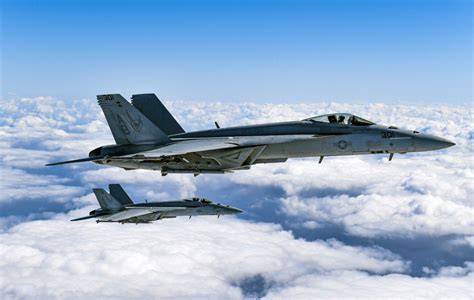
The Navy operates four Fighter Squadron Composite units responsible for adversary missions.
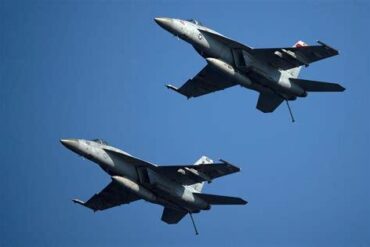
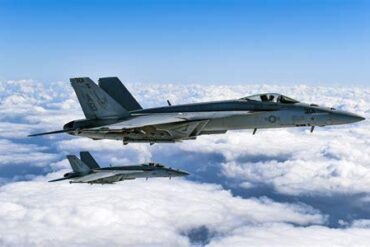
VFC-12 “Fighting Omars” has already transitioned to Super Hornets, becoming the first reserve aggressor unit to employ the aircraft. VFC-13 “Fighting Saints” replaced its F-5s with upgraded F-16C/D fighters.
Two squadrons still operate the Tiger II.
VFC-111 “Sundowners” continues flying F-5s, while VFC-204 “River Rattlers” also relies on the aging fighter after previously operating legacy Hornets.
TOPGUN itself employs a combination of F-16s and Super Hornets to create increasingly complex scenarios.
These changes demonstrate the Navy’s broader movement away from older platforms toward more capable aggressor aircraft.
The Marine Corps Faces Similar Decisions
Marine Corps aggressor units also rely heavily on F-5 aircraft.
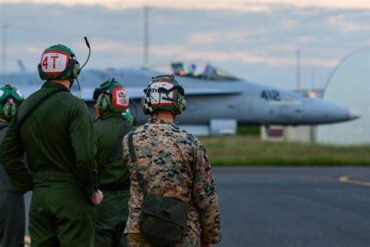
VMFT-401 “Snipers” and VMFT-402 “Grim Reapers” continue operating upgraded Tiger IIs equipped with Red Net situational awareness systems. Although these enhancements improve capability, they cannot fully overcome the aircraft’s inherent limitations.
Marine aviation planners are studying replacement options as part of broader modernization efforts.
Exactly what platform eventually succeeds the F-5 remains unclear, but retirement appears inevitable.
The Marines face many of the same challenges confronting the Navy. Advanced adversaries require advanced training.
F-35s And Future Autonomous Aircraft Will Shape Aggressor Missions
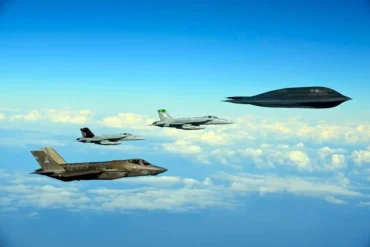
The Air Force has already embraced fifth-generation aggressors by assigning F-35As to dedicated red air roles.
The Navy’s long-term plans may eventually involve similar approaches.
Meanwhile, collaborative combat aircraft programs promise another revolution. Autonomous or semi-autonomous systems could perform aggressor missions at lower cost while offering remarkable flexibility.
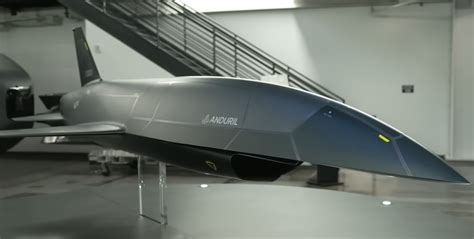
One particularly interesting development involves Anduril’s Fury aircraft. Originally conceived partly as an aggressor platform, the design evolved into a candidate for the Air Force’s Collaborative Combat Aircraft initiative and received the designation YFQ-44.
These systems could eventually transform training.
Artificial intelligence, advanced networking, and autonomous capabilities may enable aircraft to emulate enemy tactics with unprecedented realism.
The future aggressor force could look very different from today’s manned squadrons.
Private Contractors Will Ensure The F-5 Lives On
Retirement from Navy service does not necessarily mean the end of the F-5.
Private companies play an increasingly important role in supplying adversary training. Contractors such as ATAC, Draken International, Top Aces, Tactical Air Support, and Ravn Aerospace collectively operate more than 400 tactical aircraft.
These fleets include former military fighters from numerous countries.
Among them, Tactical Air Support remains a major operator of F-5 aircraft. The company possesses around two dozen F-5E/F and F-5AT variants sourced from Jordan and Canada, with plans to expand further.
As long as contractor demand exists, the Tiger II will continue flying.
Its simplicity, affordability, and proven reliability ensure it remains useful for many missions, even if frontline aggressor roles increasingly require more sophisticated aircraft.
The End Of An Era And The Beginning Of A New One
The Northrop F-5 Tiger II has enjoyed one of the most remarkable careers in aviation history. Designed as an inexpensive Cold War fighter, it evolved into one of America’s most important training tools and helped shape generations of naval aviators.
Yet air combat has entered a new age.
China’s increasingly capable fighter fleet, evolving electronic warfare environments, and the demands of high-end warfare require adversary aircraft possessing far greater sophistication.
The F/A-18E/F Super Hornet provides that capability. By transitioning reserve aggressor squadrons to Super Hornets, the Navy is ensuring that future aviators face more realistic opponents before entering combat.
The move does not diminish the legacy of the F-5. Instead, it highlights the timeless principle that training must evolve alongside threats.
Just as the Tiger II once replaced earlier aggressor aircraft, the Super Hornet now assumes that responsibility. And someday, autonomous systems and sixth-generation platforms will likely replace it as well.
For now, however, one legendary fighter is passing the torch to another.