The Boeing E-3 Sentry has long stood as one of the most recognizable symbols of airborne command and control—a flying nerve center crowned by its iconic rotating radar dome. For decades, this aircraft defined how modern air forces achieved battlefield awareness. Yet beneath that distinctive silhouette lies a growing problem: the very feature that made the E-3 revolutionary is now its greatest liability. The rotodome, once a marvel of engineering, has become nearly impossible to replace, sustain, or modernize in a rapidly evolving era of digital warfare.
The challenge is not merely about aging metal or outdated electronics. It is about an entire ecosystem of lost manufacturing capability, obsolete design philosophy, and a support infrastructure that no longer exists. As the United States Air Force gradually retires the E-3 fleet, the question is no longer whether the rotodome can be upgraded—but whether it can realistically be replaced at all.
The Rotodome: Engineering Marvel Turned Maintenance Nightmare
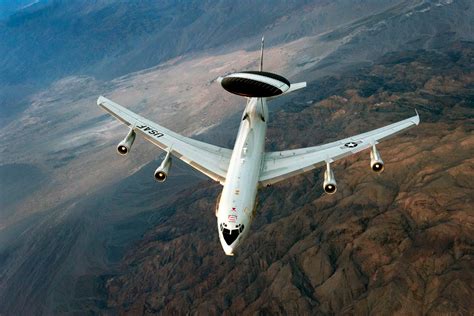
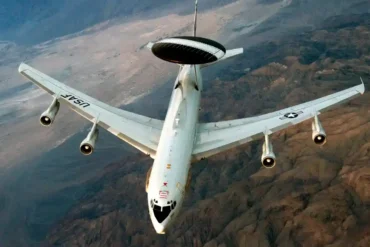
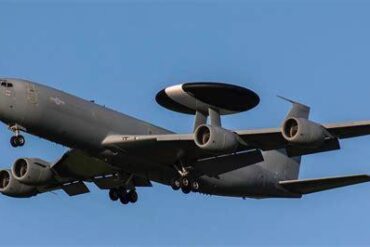
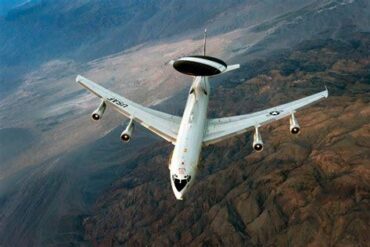
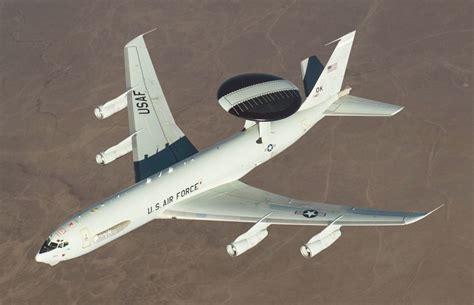
At first glance, the E-3’s radar dome appears deceptively simple—a large disc rotating steadily above the fuselage. In reality, it is a 30-foot-wide, 6-ton mechanical system that must spin flawlessly at approximately six revolutions per minute. Inside this structure resides the AN/APY-1/2 radar, a system that once represented the cutting edge of airborne surveillance.
This rotation is not cosmetic; it is fundamental to how the radar scans the sky. Unlike modern systems that steer beams electronically, the E-3 physically turns its radar to achieve 360-degree coverage. That mechanical dependence introduces a critical vulnerability: if any component within the rotation assembly fails—be it a motor, bearing, or hydraulic line—the entire aircraft effectively loses its primary mission capability.
The consequences are stark. A multi-billion-dollar airborne command platform can be reduced to a transport aircraft by the failure of a single mechanical component. In modern military aviation, where redundancy and resilience are paramount, such fragility is increasingly unacceptable.
A Supply Chain That No Longer Exists
One of the most significant barriers to replacing the rotodome is not technical—it is industrial. The radar system itself was developed by Northrop Grumman, while the airframe originated from the Boeing 707, an aircraft that has long since disappeared from commercial production. Over time, the specialized tooling, manufacturing processes, and skilled workforce required to build and maintain the rotodome have all been phased out.
Today, if a critical component fails, there is no warehouse stocked with replacements. Instead, the Air Force must commission contractors to reverse engineer individual parts, often from decades-old blueprints or physical remnants. What should be a routine repair becomes a bespoke manufacturing project, with costs that can escalate into hundreds of thousands of dollars for a single component.
Even more troubling is the reality that some parts are not just expensive—they are effectively irreplaceable. The original production lines have been dismantled, and many subcontractors that supplied specialized components have ceased to exist. Recreating this industrial base from scratch would require enormous investment with little long-term return, given the shrinking size of the E-3 fleet.
The Mechanical Burden of a Spinning Giant
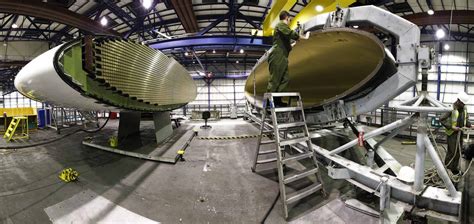
The rotodome does not merely sit atop the aircraft—it fundamentally alters how the aircraft behaves in flight. Positioned roughly 20 feet above the fuselage, the dome creates a top-heavy structural dynamic that places constant stress on the airframe.
During turbulence or hard landings, the dome acts like a lever, amplifying forces on the mounting struts. Over time, this leads to microscopic cracks and structural fatigue in the fuselage. To ensure safety, crews must conduct frequent non-destructive inspections using advanced imaging techniques. If damage is detected, the aircraft can be grounded for weeks while custom repairs are fabricated.
This structural complexity extends to maintenance procedures. Removing the dome requires a specialized heavy-lift gantry system, designed specifically for this aircraft. These systems are rare, expensive, and increasingly difficult to maintain themselves. The risk associated with removing and reinstalling the dome—both in terms of physical damage and liability—has driven maintenance costs to extraordinary levels.
Reverse Engineering: A Costly Step Backward
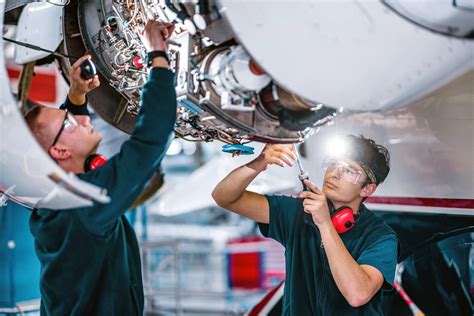
Modern aviation thrives on modularity and scalability. The E-3, by contrast, is trapped in a cycle of reverse engineering that feels more like archaeology than engineering. Each failed component becomes a unique challenge, requiring engineers to analyze, redesign, and manufacture parts that were originally produced decades ago.
This process is not only expensive but also time-consuming. Aircraft can remain grounded while waiting for a single custom-built component. The cumulative effect is a dramatic reduction in fleet readiness, with fewer aircraft available for operational missions at any given time.
The irony is striking: a system designed to provide real-time battlefield awareness is itself hindered by delays measured in months. In a strategic environment where speed and adaptability are critical, this mismatch is increasingly untenable.
Why Modern Radar Makes the Rotodome Obsolete
The fundamental limitation of the E-3 lies in its reliance on mechanical scanning. The radar requires approximately ten seconds to complete a full 360-degree sweep, a delay that may seem negligible but is significant in modern combat scenarios.
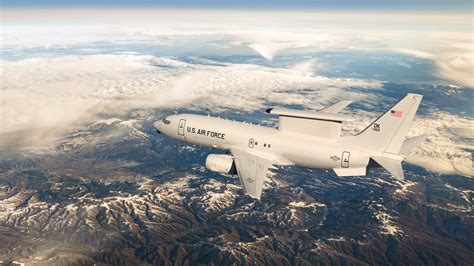
In contrast, aircraft like the Boeing E-7 Wedgetail employ Active Electronically Scanned Array (AESA) technology. These systems can steer radar beams electronically at near-instantaneous speeds, allowing for simultaneous tracking, targeting, and surveillance. They can dedicate portions of their energy to specific threats while maintaining full situational awareness—a capability known as dwell.
The difference is analogous to comparing a film camera to a high-speed digital sensor. While the E-3 captures snapshots of the battlefield, modern systems provide a continuous, dynamic picture. This technological gap cannot be bridged by simply replacing or upgrading the rotodome; it requires a fundamentally different approach to radar design.
The Financial Reality: A Flying Money Pit
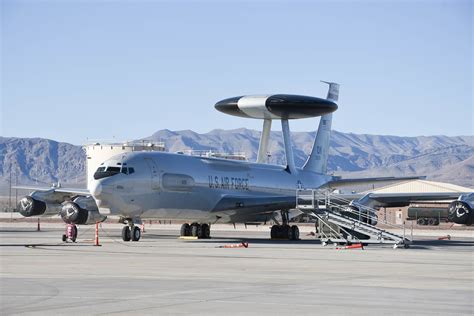
Operating the E-3 is an expensive endeavor, with costs estimated at $60,000 per flight hour. A significant portion of this expense is tied directly to maintaining the rotodome and its associated systems. From specialized technicians to custom-fabricated parts, every aspect of the system demands resources that far exceed those of modern alternatives.
Efforts to modernize the fleet have already consumed billions of dollars, resulting in a hybrid system that combines analog and digital technologies. Rather than simplifying maintenance, these upgrades have often increased complexity, creating new challenges without fully addressing underlying limitations.
When compared to newer platforms, the financial argument becomes clear. Investing in aircraft like the E-7 or even the Northrop Grumman E-2D Hawkeye offers better long-term value, despite their high upfront costs. The E-3, by contrast, continues to consume resources without delivering proportional capability.
The Human Factor: Vanishing Expertise
Beyond hardware and cost, there is a human dimension to the rotodome’s decline. The skills required to maintain and repair this system are highly specialized—and increasingly rare. As the E-3 fleet shrinks, fewer technicians are willing to invest time in mastering what is effectively a dead-end skill set.
Training new personnel becomes difficult to justify when the platform itself is nearing retirement. Experienced technicians retire or transition to other programs, taking their knowledge with them. This creates a feedback loop in which declining expertise further complicates maintenance, driving costs even higher.
In modern defense planning, sustainability is as much about people as it is about machines. The rotodome fails on both fronts.
The Shift Toward Next-Generation AWACS Platforms
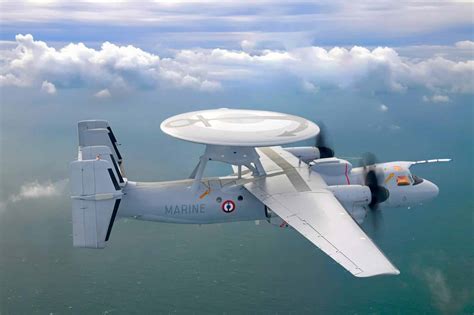
The transition away from the E-3 reflects a broader shift in how air forces approach airborne early warning and control. Platforms like the E-7 and E-2D represent a new generation of systems that prioritize flexibility, reliability, and digital integration.
While the E-2D retains a rotating dome, it incorporates advanced radar technology that allows for electronic scanning within the beam. This hybrid approach offers many of the benefits of AESA systems while maintaining compatibility with existing designs. The E-7 goes even further, eliminating mechanical rotation entirely in favor of a fixed radar array.
These innovations highlight the fundamental issue with the E-3: its design is rooted in a different era. Attempting to retrofit modern capabilities into the existing rotodome is not just difficult—it is strategically misguided.
Why Replacement Is Practically Impossible
Replacing the E-3’s rotodome is not simply a matter of building a new one. It would require:
- Recreating decades-old manufacturing processes
- Reestablishing a defunct supply chain
- Training a new generation of specialized technicians
- Designing components that integrate with an aging airframe
- Accepting significant financial and operational risk
Each of these challenges is formidable on its own. Together, they form a barrier that is effectively insurmountable. Even if unlimited funding were available, the time required to rebuild this capability would render the effort obsolete before completion.
The reality is that the rotodome is not just a component—it is a relic of a bygone technological paradigm. Its replacement is constrained not by imagination but by practicality.
A Legacy That Cannot Be Rebuilt
The Boeing E-3 Sentry remains an icon of military aviation, a testament to the ingenuity of its designers and the strategic vision of its era. For decades, it provided unmatched situational awareness, shaping the outcome of conflicts and redefining how wars were fought.
Yet its defining feature—the rotating radar dome—has become a symbol of its limitations. What was once a breakthrough is now a bottleneck, a system that resists modernization and defies replacement.
As air forces look to the future, the lesson is clear: innovation must be sustainable. The technologies that define today’s cutting edge must also be adaptable, maintainable, and scalable. The E-3’s rotodome, for all its historical significance, fails that test.
In the end, the impossibility of replacing the rotodome is not a failure of engineering—it is a reflection of progress.