The United States Air Force’s struggle to replace its aging fleet of E-3 Sentry AWACS aircraft has revealed deep challenges in modernizing one of the most critical components of America’s airborne command infrastructure. While the solution seemed straightforward — swap out an aging airframe with a modern, proven platform — the reality has been far more complex, political, and uncertain.
The Backbone of Airborne Battle Management
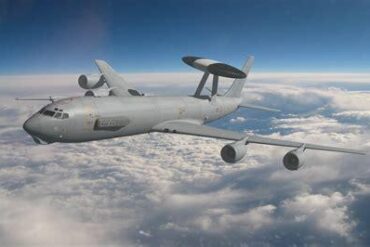
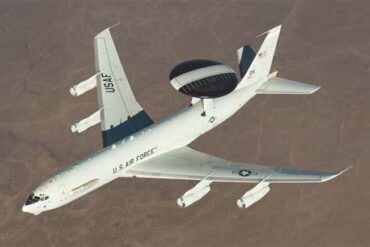
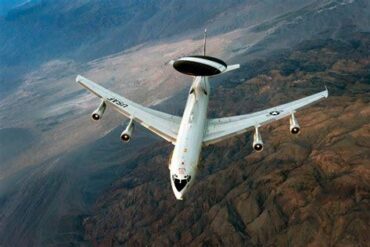
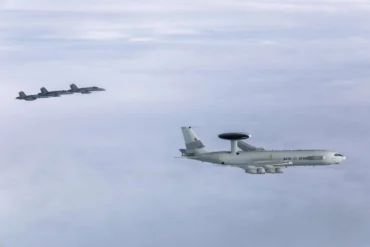
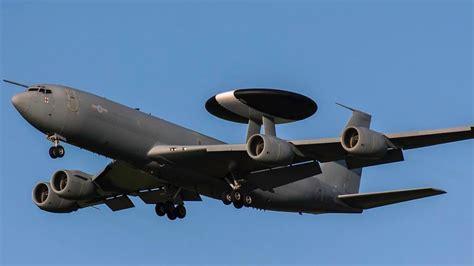
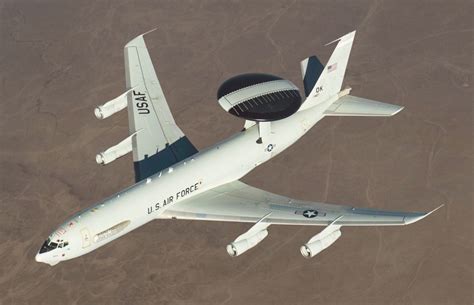
Since the Cold War, the E-3 Sentry has played a pivotal role in U.S. air operations. Built on the venerable Boeing 707 airframe, the E-3 is distinguished by its iconic rotating radar dome, which provides 360-degree surveillance capability across immense areas. More than just a sensor platform, the E-3 functions as an airborne command center, allowing mission crews to coordinate fleets of aircraft, track enemy threats, and provide real-time battle management.
But the E-3’s days are numbered. Many of these aircraft are over four decades old, and maintenance has become a burden both in terms of cost and operational readiness. With plans for a full retirement by 2035, a replacement is not just desirable — it is essential.
The E-7 Wedgetail: A Ready-Made Successor
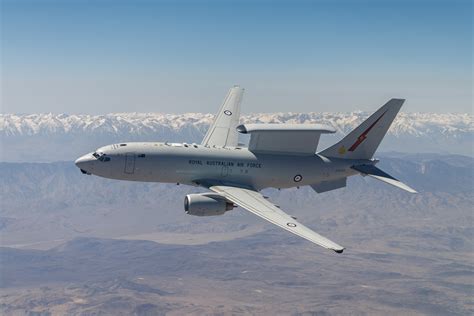
Enter the Boeing E-7 Wedgetail, a heavily modified 737-based platform already fielded by Australia, the United Kingdom, and other U.S. allies. Unlike its predecessor, the E-7 uses the Northrop Grumman Multi-role Electronically Scanned Array (MESA) radar — a fixed, slab-like system that eliminates the need for a rotating dome while still offering comprehensive 360-degree coverage.
The Wedgetail brings substantial improvements:
- A newer and more reliable airframe.
- Lower maintenance demands.
- Faster deployment and integration.
- Enhanced onboard systems tailored to modern warfare.
In short, the E-7 provides a leaner, smarter, and technologically superior alternative to the E-3. However, its path to adoption within the U.S. military has been anything but smooth.
A Turbulent Procurement Process
The U.S. Department of Defense initially embraced the E-7, selecting it as the successor to the Sentry. But in June 2025, the effort was nearly derailed when the Pentagon proposed canceling all orders. Officially, this decision was driven by cost overruns and long-term plans to pivot toward space-based capabilities for battle management.
The Department argued that systems like the E-2D Advanced Hawkeye, a smaller, carrier-compatible radar plane used by the Navy, could fill the gap temporarily. However, this move sparked alarm across the defense establishment.
Generals Step In: The Letter That Changed Everything
In response to the cancellation, a bipartisan chorus of voices emerged in opposition — including a letter signed by 16 retired four-star generals and multiple other military leaders. The letter emphasized the following concerns:
- The space-based command infrastructure cited by the DoD is nowhere near operational readiness.
- The E-2D lacks the range, capacity, and endurance of the E-3 or E-7.
- Abandoning the E-7 would create a dangerous gap in U.S. airborne battle management capability.
Congress took the warning seriously. In the 2026 National Defense Authorization Act, lawmakers blocked the proposed cancellation and authorized funding to keep the E-7A prototyping contract alive. Despite this legislative lifeline, the episode revealed just how fragile and politicized the future of U.S. airborne command systems has become.
Why Replacing AWACS Is Incredibly Difficult
Airborne radar planes are not simple surveillance tools. The AWACS mission is one of the most complex and multifaceted in military aviation. These aircraft must:
- Detect and track hundreds of targets over vast distances.
- Coordinate missions between fighters, bombers, drones, and naval assets.
- Manage aerial refueling schedules and tanker taskings.
- Act as a real-time communication and decision-making hub in dynamic battlespaces.
No current technology can replicate these capabilities in a single, integrated solution. Ground-based radar is limited by horizon constraints and terrain, while satellite systems — though promising — lack the responsiveness and resolution needed for tactical command.
Even the E-2D, as capable as it is, was built for shorter-range, carrier-based missions, sacrificing endurance and onboard mission crew size. In contrast, the E-3 and E-7 can remain aloft for 12 hours or more, hosting large teams of mission specialists who can interpret sensor data, issue directives, and react in real time.
The Illusion of a Tech-Only Future
Proponents of canceling manned radar planes argue that artificial intelligence, distributed networks, and space assets will soon render AWACS aircraft obsolete. But this optimism obscures a key fact: modern wars still require human decision-making in real time. The battlefield is chaotic, and sensor data alone cannot dictate strategy. The need for trusted, adaptive airborne command is as great now as ever.
Moreover, the AI-enabled systems envisioned by the Pentagon are years — if not decades — away from replacing experienced mission crews. As of 2026, no existing autonomous or satellite-driven system can coordinate the nuanced, cross-domain operations required in a modern peer conflict.
A Delay with Consequences
With the Air Force now moving forward — reluctantly and reactively — on the E-7, every delay in the transition increases the risk of capability gaps. The Air Force plans to retire the last E-3 by 2035, but integration of the E-7 into U.S. operations is expected to take at least another five to eight years.
In the meantime, aging E-3s will continue to require expensive maintenance, and their mission readiness will degrade. With conflicts brewing across Eastern Europe, the South China Sea, and the Middle East, the need for dependable airborne command platforms has never been more urgent.
The Clock Is Ticking
The effort to replace America’s radar planes is not just about new aircraft. It reflects broader tensions between technological ambition and operational necessity. The Pentagon dreams of a future filled with satellites, autonomous drones, and digital command centers. But until that future is fully realized, the skies will still need sentinels — flown by humans, supported by crews, and backed by proven systems.
The E-7 Wedgetail, despite bureaucratic turbulence, may be the last great manned AWACS. But for now, it’s the only viable bridge between a creaking past and an uncertain future. If the U.S. wants to maintain global air superiority, the road ahead must be paved with investment, urgency, and clarity — not indecision.