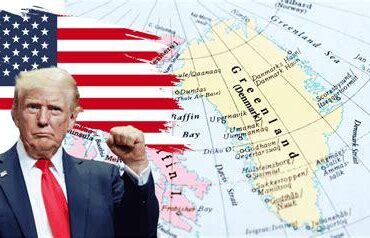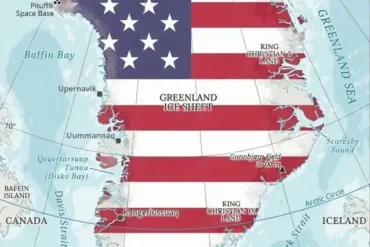
Greenland has re-emerged as one of the most geopolitically charged territories on Earth, not because of a sudden surge of Russian submarines or Chinese warships, but because it sits at the intersection of missile defense, space dominance, resource security, and eroding transatlantic trust. What appears on the surface as Donald Trump’s fixation on countering Moscow and Beijing in the Arctic conceals a deeper strategic logic—one rooted in America’s desire to control the skies, space, and the High North without relying on European intermediaries.
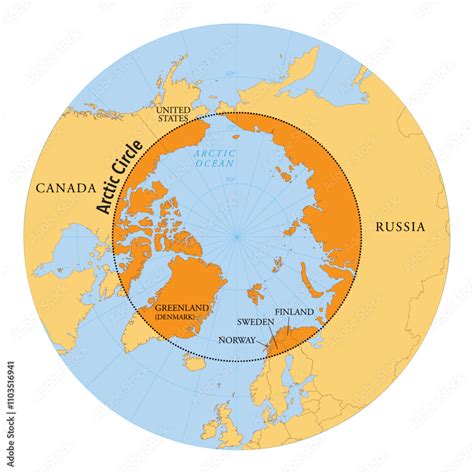
The Arctic is no longer a frozen periphery. It is a strategic accelerator, where climate change, military technology, and great-power rivalry converge. Greenland, an autonomous territory of Denmark, occupies a pivotal position in this transformation. It is geographically closer to North America than to continental Europe, sits directly beneath polar missile trajectories, and hosts some of the most critical U.S. military and space infrastructure outside American soil.
Trump’s renewed rhetoric about Greenland, framed publicly as a response to Russian and Chinese encroachment, collides with intelligence assessments from Nordic allies that tell a different story. According to NATO-linked diplomatic sources, the waters around Greenland are not “crawling” with adversarial vessels. Yet Washington’s urgency persists. The reason lies not in exaggerated naval threats, but in missile interception geometry, space-based warfare, and a profound skepticism about Europe’s reliability in a future high-intensity conflict.
Greenland’s Strategic Gravity in the Arctic Security Architecture
Greenland’s importance to the United States predates the Cold War and extends far beyond contemporary headlines. During World War II, when Nazi Germany occupied Denmark, Washington moved swiftly to secure Greenland as a protectorate, recognizing that control of the island was essential to defending the North American continent. That decision laid the groundwork for a permanent U.S. military footprint that has endured for more than eight decades.
Geographically, Greenland functions as a forward shield. Any intercontinental ballistic missile launched from Russia toward the continental United States would almost certainly traverse Arctic airspace, passing over or near Greenland. This makes the island an irreplaceable node for early warning systems, radar installations, and—crucially—future missile interception platforms.
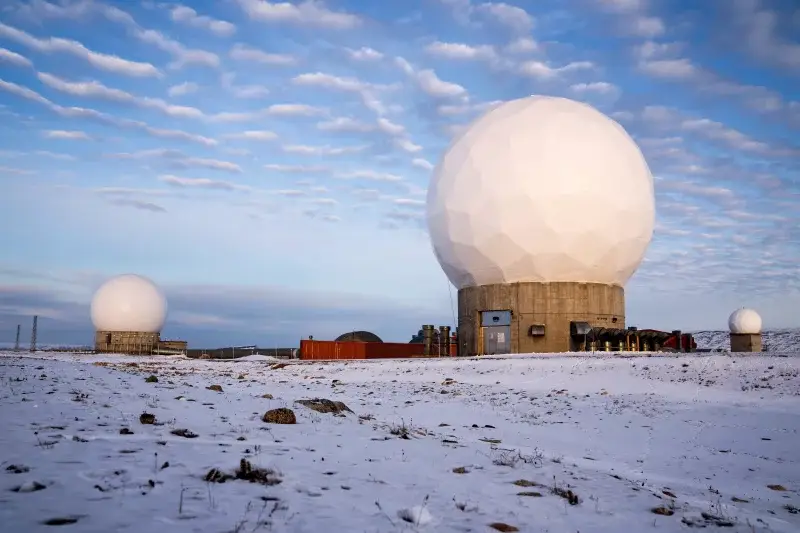
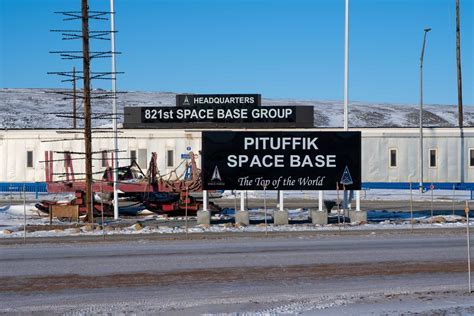
The Thule Air Base, now renamed Pituffik Space Base, embodies this strategic role. Integrated into the U.S. Space Force, Pituffik is not merely a relic of Cold War planning but a living, evolving asset designed to track objects in space, detect missile launches, and support satellite operations. Its location on Greenland’s northwest coast allows unparalleled coverage of polar orbits, something no base in continental Europe can replicate.
Greenland also anchors America’s Arctic defense of Alaska. As tensions with Russia intensify across the Bering Strait, the ability to monitor and respond to Russian aerospace activity becomes indispensable. From Washington’s perspective, Greenland is not an overseas outpost—it is an extension of the North American security perimeter.
The Myth of Crowded Arctic Waters and the Reality Beneath
Trump’s claim that Russian and Chinese ships dominate Greenland’s surrounding waters has been flatly contradicted by senior Nordic diplomats and Norway’s foreign minister. Intelligence briefings suggest that while Russia maintains significant Arctic capabilities, its naval and submarine activities are concentrated primarily along its own coastline, not around Greenland.
This discrepancy between rhetoric and reality raises a critical question: why is Greenland still at the center of Washington’s strategic anxiety? The answer lies in domains that are less visible than warships—space trajectories, under-ice infrastructure, and future missile defense architectures.
Modern warfare is increasingly defined by what happens above the atmosphere. Satellites provide the backbone for communication, navigation, targeting, and intelligence. Control over space translates directly into control over terrestrial battlefields. In this context, Greenland’s value lies not in nearby naval traffic, but in its role as a space and missile defense hub at the top of the world.
From Iceworm to Space Force: America’s Hidden Arctic Legacy
Greenland’s ice conceals a long history of American strategic experimentation. During the Cold War, the U.S. constructed Camp Century, a secret base buried beneath the ice, officially described as a scientific research facility. In reality, it was part of Project Iceworm, a plan to deploy nuclear missiles hidden within Greenland’s ice sheet, capable of striking the Soviet Union with little warning.
Although the project was abandoned due to the instability of shifting ice, it underscored a persistent truth: Washington has long viewed Greenland as a launchpad for strategic dominance, even if that dominance remained unseen.
Today, the tools have changed, but the logic remains. Missiles no longer need to be hidden under ice; they can be intercepted in midcourse. Satellites no longer merely observe; they enable precision warfare. Greenland’s value has evolved from concealment to interception and control.
Rare Earths, Energy, and the Resource Dimension of Power
Beyond military considerations, Greenland represents one of the world’s most promising frontiers for untapped natural resources. Beneath its ice and rugged terrain lie substantial reserves of rare-earth elements, uranium, lithium, cobalt, oil, and gas—materials that underpin the global energy transition and advanced manufacturing.
Rare earths, essential for smartphones, electric vehicles, wind turbines, and military hardware, are currently dominated by China’s supply chains. For the United States, reducing this dependency is not just an economic objective but a national security imperative. Greenland offers a potential alternative—one that could reshape global resource geopolitics if developed at scale.
China understands this calculus. Over the past decade, Chinese firms have pursued investments in Greenlandic infrastructure and mining projects, seeking a foothold in the Arctic. These moves triggered alarm in Copenhagen and Washington alike, prompting Denmark to intervene directly to block Chinese acquisitions and accelerate Western-backed investments.
China’s Arctic Ambitions and the Gateway Question
China’s self-designation as a “near-Arctic state” in 2018 marked a turning point in polar geopolitics. Though geographically distant, Beijing views the Arctic as a future economic corridor and strategic theater. Central to this vision is the Northern Sea Route, which promises to cut shipping times between Asia and Europe by up to 40 percent.
Greenland occupies a unique position in this strategy. As the island moves gradually toward greater autonomy—and potentially independence—China sees an opportunity to establish influence through investment, technology, and infrastructure. For Washington, this prospect is unacceptable. Allowing a strategic rival to gain leverage over a territory so vital to North American defense would represent a systemic failure of deterrence.
Trump’s earlier proposal to buy Greenland in 2019 was widely mocked, but it reflected a blunt articulation of a deeper concern: sovereignty equals control, and control equals security. This time, the stakes are even higher.
The Golden Dome and the Geometry of Missile Defense
At the heart of the renewed Greenland push lies the Golden Dome, a $175 billion, multi-layered missile defense initiative envisioned as a comprehensive shield against ballistic, hypersonic, and cruise missile threats. Often compared to Israel’s Iron Dome, Golden Dome is far more ambitious, spanning land, sea, air, and space.
Missile defense is not only about technology; it is about geometry. Interceptors must be positioned where they can detect, track, and neutralize threats at optimal points in their trajectory. For missiles launched from Russia, Greenland sits directly under the most likely flight paths. This makes it an ideal location for advanced radar systems and potentially for interceptor deployments.
Experts argue that without Greenland, Golden Dome would be strategically incomplete. With it, the United States gains a decisive advantage in early detection and midcourse interception, fundamentally altering the balance of deterrence.
Space, the High North, and the End of European Reliance
Space has become the ultimate high ground. Satellites in polar orbits pass over the Arctic far more frequently than over equatorial regions, making the High North indispensable for maintaining constant contact with space-based assets. Ground stations in places like Svalbard have traditionally served this purpose for NATO countries.
However, these installations rely on vulnerable subsea cables and infrastructure increasingly targeted by adversaries. From Washington’s perspective, dependence on European-controlled facilities introduces unacceptable risk. Trust, once assumed, is now questioned.
This erosion of confidence explains why sovereignty matters. While Denmark currently allows U.S. bases on Greenland, American strategists worry about future political shifts in Europe that could constrain U.S. operations. Sovereign control eliminates ambiguity. It ensures that in a crisis, access will not be negotiated—it will be guaranteed.
Distrust of Europe and the Logic of Unilateral Security
The most uncomfortable truth underpinning Trump’s Arctic vision is not about Russia or China, but about Europe. The White House’s strategic calculus increasingly assumes that Europe may not always act in lockstep with American security priorities, especially in high-risk scenarios involving space or nuclear escalation.
Greenland, therefore, becomes a symbol of strategic self-reliance. By strengthening its foothold there, the United States signals that it intends to secure its future defense architecture independently if necessary. This logic resonates across party lines in Washington, explaining why Arctic expansion enjoys rare bipartisan support.
Greenland as the Keystone of America’s Arctic Future
Far from being a whimsical obsession or a relic of imperial thinking, Trump’s focus on Greenland reflects a hard-edged assessment of emerging warfare domains. The island sits at the nexus of missile defense, space control, resource security, and geopolitical trust. In an era defined by hypersonic weapons and orbital competition, geography has returned as destiny.
Greenland’s ice may be melting, but its strategic value is solidifying. As the Arctic transforms into a theater of power projection, the United States is moving to ensure that it does not fight tomorrow’s wars from yesterday’s assumptions. The push northward is not about ships on the horizon—it is about who controls the future from above.