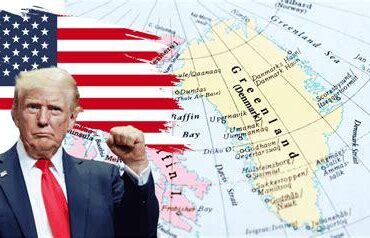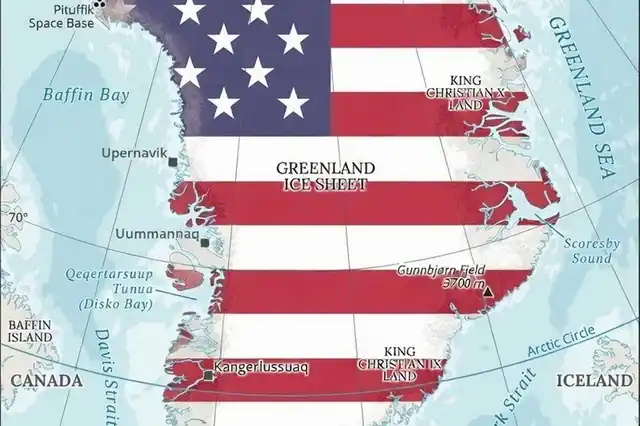
The accelerating push by President Donald Trump to assert control over Greenland has shifted from rhetorical provocation to strategic urgency. We are now witnessing a recalibration of American Arctic policy driven by hard security mathematics rather than symbolic geopolitics. At the center of this shift stands Vice President JD Vance, whose recent remarks reframed Greenland not as a peripheral outpost, but as an indispensable node in the architecture of global missile defense. When Vance declared that the entire missile defense infrastructure is partially dependent on Greenland, he articulated what defense planners have quietly acknowledged for decades: geography still rules strategy.
The Arctic island’s importance does not arise from population or economic weight. It arises from physics. Missiles travel along predictable trajectories, and Greenland sits astride the shortest ballistic routes between Eurasia and North America. This cold, ice-covered landmass functions as an early-warning gatekeeper, enabling detection, tracking, and interception before threats can mature into catastrophe. From Washington’s perspective, control over that gatekeeper has become inseparable from national survival.
Trump’s renewed insistence that Greenland is vital to U.S. security is therefore less about territorial ambition and more about strategic redundancy. In an era defined by hypersonic weapons, shrinking reaction times, and multipolar competition, redundancy is not luxury; it is doctrine. The argument advanced by the White House is that reliance on agreements alone is no longer sufficient when adversaries are testing the seams of international order.
Greenland’s Strategic Gravity in Missile Defense Calculus
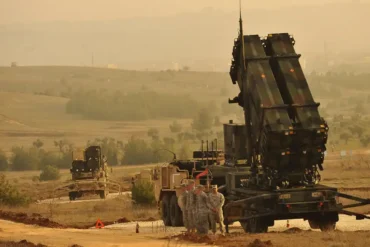
The logic behind Greenland’s importance is stark and unforgiving. Ballistic missile defense depends on early detection, persistent tracking, and layered interception. Greenland’s location allows radar systems to see what continental systems cannot see early enough. Without that northern vantage point, warning windows narrow, decision-making compresses, and deterrence weakens.
US Vice President JD Vance’s statement that global security itself is tied to Greenland was not hyperbole. It was a reminder that missile defense is inherently collective. A failure to detect a launch over the Arctic affects not only American cities, but allied capitals across the Atlantic. Greenland is therefore not a regional concern; it is a planetary chokepoint.
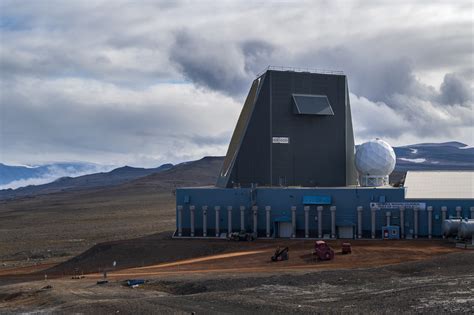
The Long Shadow of America’s Military Footprint
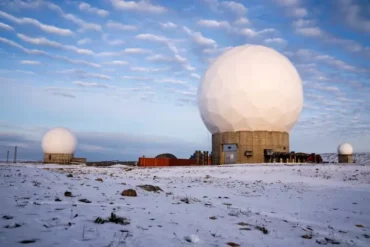
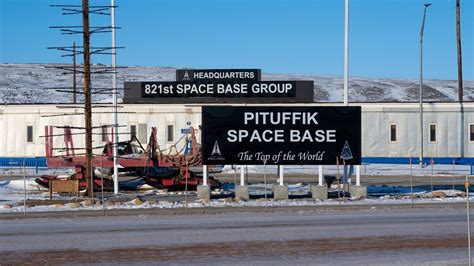
The United States has not suddenly discovered Greenland. Its military presence dates back to 1941, when occupied Denmark authorized American forces to establish bases to protect the Western Hemisphere. By the end of World War II, fifteen U.S. bases dotted the island. Today, only one remains: Pituffik Space Base on the northwestern coast, a facility that quietly anchors America’s Arctic surveillance network.
This enduring presence underscores an inconvenient truth for critics of Trump’s posture. The United States already enjoys extraordinary freedom of action on Greenlandic soil. The 1951 defense agreement, revised in 2004, grants Washington broad latitude to operate, expand, and modernize its facilities, provided Copenhagen and Nuuk are informed in advance. In legal terms, the U.S. already holds the keys. In strategic terms, Trump appears determined to own the door.
Denmark’s Security Investments and Washington’s Skepticism
Denmark has pushed back against accusations of neglect by pointing to a significant surge in Arctic defense spending. In 2025 alone, Copenhagen allocated 1.2 billion euros to Greenlandic security, a figure intended to silence claims of complacency. These investments extend far beyond symbolic patrols. They include new Arctic-capable vessels, advanced radar systems, drones, and maritime surveillance aircraft designed to cover a territory where ice blankets more than four-fifths of the land.
The Sirius Patrol, often caricatured for its dogsleds, represents only one layer of a broader security mosaic. Denmark has also committed to strengthening digital resilience by constructing a subsea telecommunications cable linking Greenland directly to Europe, reducing isolation and enhancing command reliability. Yet from Washington’s vantage point, these measures, while welcome, do not equate to strategic control.

Russia, China, and the Arctic Chessboard
The urgency of Trump’s Greenland push is inseparable from the intensifying competition in the Arctic. Denmark’s own intelligence assessments acknowledge that Russia, China, and the United States are all maneuvering for greater influence as melting ice unlocks new sea routes and resource access. Greenland’s rare-earth potential adds another layer of long-term strategic value, even if current projects remain stalled.
Chinese activity has been limited but closely watched. Research vessels operating far north of Greenland in 2025 triggered scrutiny, not panic. China’s economic footprint on the island remains marginal, constrained by political resistance and prior interventions by Denmark and the United States to block strategic infrastructure investments. Russia, by contrast, possesses the Arctic military mass that animates U.S. planners’ worst-case scenarios.
Sovereignty, Identity, and the Independence Question
For Greenland itself, the geopolitical storm raises existential questions. The government in Nuuk has been unequivocal: the island is not for sale. While independence remains a long-term aspiration for some political factions, the prevailing consensus rejects immediate separation from Denmark, let alone incorporation into the United States. Polling consistently shows overwhelming opposition among Greenlanders to becoming American.
The Naleraq party’s call for faster independence reflects frustration rather than alignment with Washington. Its leaders insist that rejecting Danish rule does not imply embracing American sovereignty. This nuance is often lost in external narratives that treat Greenland as a passive prize rather than a society with its own political agency.
A Security Doctrine Written in Ice
What emerges from Trump’s accelerated Greenland push is a doctrine shaped by inevitability rather than impulse. Missile trajectories, radar horizons, and response times do not negotiate. They obey natural law. By foregrounding Greenland as the linchpin of missile defense, the administration is signaling that future security policy will privilege geography over diplomacy when the two collide.
We are entering a phase where Arctic silence is no longer empty. It hums with sensors, data streams, and strategic anxiety. Greenland, long perceived as remote, has become central. Whether through agreements, influence, or more assertive measures, Washington’s message is clear: the defense of the American continent now runs through the ice.