The Airbus A350 has become one of the most technologically advanced airliners ever built, celebrated for its exceptional fuel efficiency, lightweight composite structure, and ultra-long-haul capabilities. Yet behind its sleek exterior lay one of the aviation industry’s most contentious engineering disputes. What initially appeared to be cosmetic paint deterioration evolved into a legal battle worth nearly $2 billion, strained one of Airbus’ most valuable customer relationships, triggered regulatory scrutiny, and ultimately accelerated an important redesign that quietly reshaped the aircraft’s construction.
While the lawsuit between Airbus and Qatar Airways officially ended in early 2023 through a confidential settlement, the engineering story did not end there. In fact, Airbus had already been working on an improved lightning protection solution before the legal conflict concluded. The introduction of Perforated Copper Foil (PCF) marked one of the most understated yet significant refinements ever made to the A350 program—a modification designed not because the aircraft was unsafe, but because even minor durability issues can become major commercial problems when they affect fleets worth billions of dollars.
Rather than publicly celebrating the redesign, Airbus quietly integrated the new material into production aircraft, allowing the change to solve a problem that had become one of the company’s most visible reputational challenges.
Why The Airbus A350 Paint Problem Became A Multi-Billion-Dollar Dispute
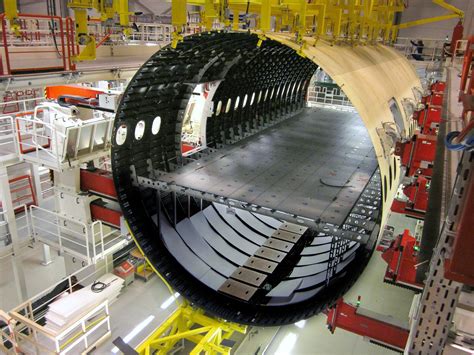
Unlike conventional aluminum aircraft, the Airbus A350 relies extensively on carbon-fiber reinforced polymer composites. More than half of its structure is built from advanced composite materials that dramatically reduce weight while improving fuel efficiency and corrosion resistance. These materials represent one of aviation’s greatest technological leaps, but they also introduce engineering challenges that traditional metal aircraft never encountered.
One of those challenges involves lightning protection. Aluminum naturally conducts electricity, allowing lightning strikes to dissipate harmlessly across the airframe. Composite materials, however, are poor electrical conductors. Engineers therefore needed an additional conductive layer capable of safely distributing electrical energy whenever lightning strikes the aircraft.
For the original A350 design, Airbus selected Expanded Copper Foil (ECF). Positioned directly beneath the aircraft’s paint and above the composite fuselage, the copper mesh acts as an invisible shield, carrying electrical energy away from sensitive aircraft systems during lightning events. Functionally, the system performed exactly as intended.
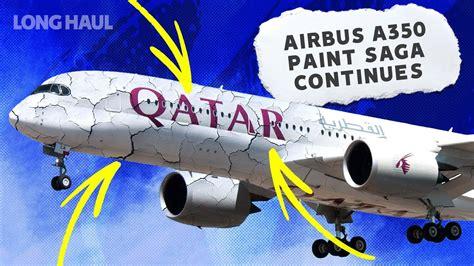
The controversy emerged because the copper foil, composite structure, primers, and paint all reacted differently to repeated cycles of heating and cooling. As aircraft routinely experience temperatures ranging from scorching desert ramps to sub-zero cruise altitudes above 35,000 feet, each material expands and contracts at slightly different rates. Over hundreds of flight cycles, these microscopic movements began producing paint cracking, peeling, blistering, and localized erosion.
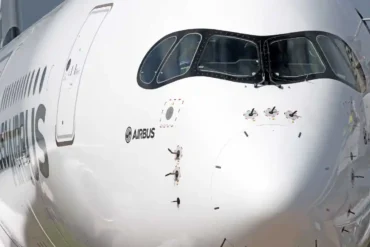
Eventually, portions of the protective paint exposed the underlying copper mesh, creating dramatic visual damage that became impossible to ignore.
Qatar Airways Saw More Than A Cosmetic Issue
No airline pushed back harder than Qatar Airways. Operating one of the world’s largest Airbus A350 fleets, the carrier argued that exposed copper foil represented evidence of a deeper design deficiency. Concerned about long-term structural integrity and lightning protection, Qatar grounded approximately two dozen A350 aircraft as a precaution.
Airbus maintained a fundamentally different position throughout the dispute. According to the manufacturer, the exposed copper foil did not reduce the aircraft’s ability to withstand lightning strikes and therefore presented no safety risk. The company consistently characterized the damage as a durability and cosmetic issue rather than an airworthiness concern.
This disagreement quickly escalated beyond engineering. Qatar filed proceedings in London’s High Court during late 2021 seeking approximately $618 million in damages while also requesting roughly $4 million per day for every aircraft that remained grounded. One particularly high-profile claim involved an A350 intended for a FIFA World Cup promotional livery, with Qatar arguing that nearly one thousand repair patches would be required before repainting could proceed.
The cumulative financial exposure eventually approached $2 billion, making it one of the largest commercial aviation legal disputes in recent memory.
Airbus And Qatar Airways Both Had Too Much At Stake
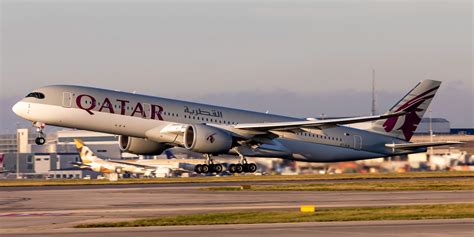
Commercial aircraft programs are built on relationships lasting decades rather than individual transactions. Qatar Airways had invested heavily in the Airbus A350 family, operating dozens of A350-900 and A350-1000 aircraft while planning additional deliveries. Airbus likewise depended on Qatar as one of the aircraft’s flagship customers.
As legal filings intensified, Airbus took the extraordinary step of cancelling Qatar’s remaining A350 orders in 2022. The move demonstrated just how severely the relationship had deteriorated. Industry observers suddenly faced the possibility that one of Airbus’ premier customers might permanently shift future fleet growth toward Boeing.
Yet neither side truly benefited from a prolonged divorce. Replacing an established widebody fleet involves pilot retraining, maintenance restructuring, spare parts inventories, and network planning extending years into the future. Likewise, losing a globally recognized premium airline would have damaged Airbus both commercially and symbolically.
When both parties finally reached an amicable settlement in February 2023, the confidential agreement restored aircraft deliveries, resumed cooperation, and launched repair programs that returned grounded aircraft to commercial service. Although neither company admitted liability, the settlement effectively reset one of aviation’s most fractured partnerships.
Airbus Had Already Been Working On A Better Solution
Perhaps the most fascinating aspect of the entire controversy is that Airbus had already begun developing an alternative before the courtroom battle reached its conclusion.
Years earlier, Airbus engineers had filed European patents covering Perforated Copper Foil (PCF) technology. Unlike expanded copper foil, which resembles a woven metallic mesh, perforated copper foil consists of precisely engineered openings that improve how the conductive layer behaves under thermal stress.
Airbus repeatedly emphasized that this development formed part of its normal continuous aircraft improvement process rather than a direct response to Qatar’s legal action. That explanation aligns with how modern aircraft programs evolve. Manufacturers routinely introduce hundreds of incremental improvements throughout production runs, often without significant public attention.
Nevertheless, the timing naturally attracted scrutiny because PCF also happened to address the exact characteristic that had contributed to visible paint deterioration.
Why Perforated Copper Foil Performs Better
The advantages of perforated copper foil extend beyond aesthetics. The redesigned material offers both structural and operational improvements that benefit airlines throughout an aircraft’s decades-long service life.
Most importantly, PCF better accommodates thermal expansion differences between composite materials and the conductive copper layer. By reducing internal stresses beneath the paint system, the new design minimizes micro-cracking that can eventually propagate into visible surface damage.
The refined material also delivers modest weight savings. While the reduction on any individual aircraft is relatively small, commercial aviation measures efficiency in kilograms rather than tons. Every kilogram removed from an airframe contributes to lower fuel burn over tens of thousands of flight hours, making even seemingly minor improvements financially meaningful.
Reduced maintenance requirements represent another important advantage. Paint repairs on modern composite aircraft are significantly more complex than simple cosmetic touch-ups. Extensive surface preparation, inspections, and specialized repair procedures increase maintenance costs while keeping aircraft out of revenue service. Improving paint durability therefore benefits operators directly through lower lifecycle expenses.
Other Airlines Experienced Similar Paint Deterioration
Although Qatar Airways became the public face of the controversy, it was far from the only airline to observe paint deterioration.
Airlines including Finnair, Cathay Pacific, Etihad Airways, Lufthansa, Delta Air Lines, and Air France all reportedly contacted Airbus regarding similar surface conditions. Their experiences demonstrated that the phenomenon was not isolated to a single operator or climate.
The critical distinction lay in interpretation rather than occurrence. Most operators accepted Airbus’ assessment that the issue remained cosmetic and continued flying their aircraft without widespread groundings. Qatar Airways adopted a far more conservative position, ultimately creating the legal confrontation that brought unprecedented attention to the engineering challenge.
This broader industry experience reinforced Airbus’ decision to continue refining the A350 design. Even when a condition does not compromise safety, reducing maintenance burdens and improving long-term durability remains a worthwhile objective for any aircraft manufacturer.
The Composite Revolution Changed Aircraft Engineering
The Airbus A350 and Boeing 787 fundamentally transformed commercial aviation by embracing composite construction on an unprecedented scale. These materials enabled dramatic reductions in fuel consumption while improving resistance to fatigue and corrosion.
However, every technological leap introduces new engineering puzzles. Traditional aluminum aircraft had accumulated decades of operational experience that guided design decisions. Composite airframes required engineers to rethink everything from electrical bonding and lightning protection to thermal expansion, structural repairs, and paint systems.
Lightning protection became especially important because composite materials cannot naturally disperse electrical energy the way aluminum can. Conductive copper layers therefore became essential components rather than optional enhancements.
Ironically, the very technology that protected the aircraft from lightning also became the source of one of the program’s highest-profile commercial disputes—not because the protection failed, but because the interaction between multiple advanced materials gradually affected the aircraft’s external finish.
Airbus Quietly Introduced The New Design Into Production
Rather than implementing an abrupt redesign across the entire aircraft, Airbus adopted a measured engineering approach. Beginning in late 2022, new A350 production gradually incorporated perforated copper foil into rear fuselage sections before extending the updated material progressively throughout additional aircraft sections.
This phased introduction minimized manufacturing disruption while allowing Airbus to integrate the refined design into ongoing production. Such incremental evolution is common throughout commercial aircraft programs, where improvements are continuously incorporated without requiring entirely new aircraft variants.
From an engineering perspective, the transition demonstrated a practical philosophy. Instead of treating the controversy as merely a public relations challenge, Airbus refined the underlying material technology to improve durability while maintaining the aircraft’s proven lightning protection performance.
A Quiet Redesign With Lasting Industry Impact
The confidential settlement between Airbus and Qatar Airways ensured that many details surrounding the dispute remain private. Nevertheless, the engineering outcome is visible in every newer A350 leaving the production line.
Perforated copper foil may never receive the publicity associated with new engines or redesigned cabins, yet its significance extends far beyond a single material substitution. It reflects how modern aircraft continuously evolve through thousands of incremental refinements driven by operational experience, customer feedback, and engineering analysis.
The episode also illustrates that commercial disagreements often accelerate innovation. Whether Airbus would have adopted PCF eventually regardless of Qatar’s lawsuit is impossible to determine definitively, but the legal battle undoubtedly focused extraordinary attention on paint durability, thermal stresses, and long-term maintenance performance.
Today, the Airbus A350 remains one of the world’s premier long-haul aircraft, serving airlines across every continent while continuing to expand its global fleet. The quiet redesign of its lightning protection layer will likely never attract the same headlines as the lawsuit that preceded it, yet it stands as a reminder that aviation’s most important advances are often the ones passengers never notice. Beneath the aircraft’s flawless exterior, subtle engineering improvements continue making every new generation stronger, lighter, more durable, and better prepared for decades of global service.