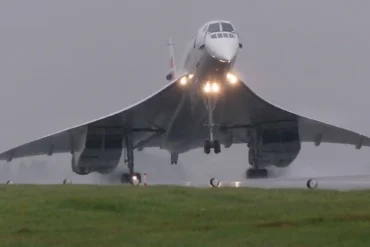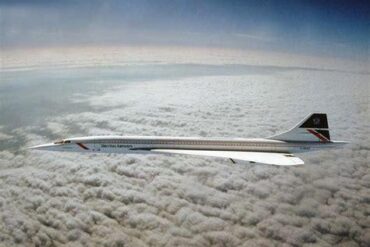
Concorde was never an ordinary airliner. Every part of the aircraft existed on the edge of what commercial aviation could safely achieve during the 1970s and 1980s. It cruised faster than a rifle bullet, climbed higher than most military aircraft, and crossed the Atlantic in less than half the time of conventional jets. Yet one of the most surprising technical problems in Concorde’s history came not from its engines, wings, or fuel system, but from something that appeared completely harmless: blue paint.
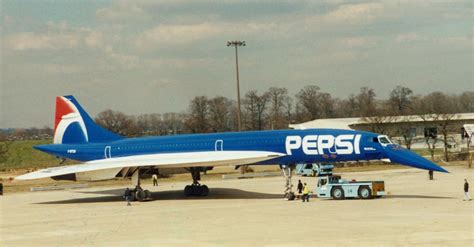
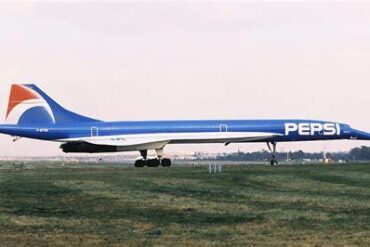
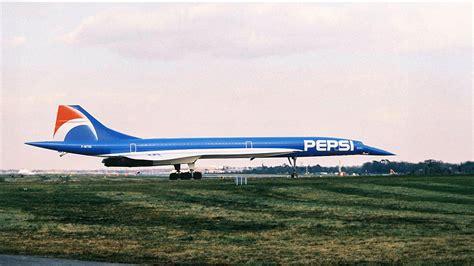
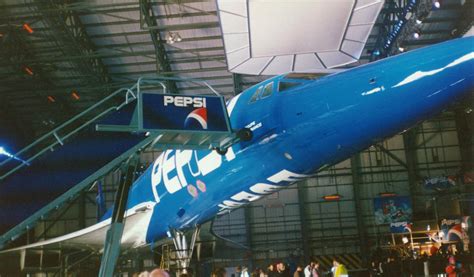
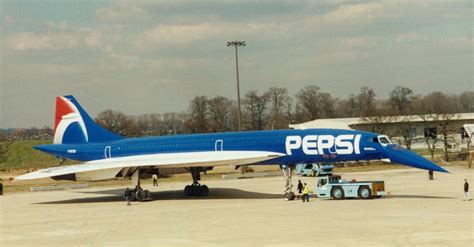
In 1996, PepsiCo partnered with Air France for a spectacular marketing campaign that temporarily transformed one Concorde into a flying Pepsi advertisement. The aircraft wore a deep blue livery that instantly became one of the most recognizable special paint schemes ever applied to an airliner.
The problem was that Concorde was not designed to wear dark colors.
As stunning as the aircraft looked on the tarmac, engineers quickly discovered that the blue paint absorbed significantly more heat during supersonic flight. That additional heat pushed the aircraft dangerously close to its thermal operating limits, forcing strict speed restrictions and operational compromises that revealed just how delicate Concorde’s engineering balance truly was.
For aviation enthusiasts, the Pepsi Concorde became more than a marketing stunt. It became a rare public demonstration of the invisible thermal challenges that defined supersonic transport.
After all, on most airplanes, paint is cosmetic. On Concorde, paint was part of the engineering.
Concorde Operated In A Thermal Environment Unlike Any Other Airliner
To understand why the blue paint created such serious concerns, it is necessary to understand the environment in which Concorde operated. Unlike conventional passenger aircraft cruising at around 35,000 feet and subsonic speeds, Concorde routinely flew above 50,000 feet while maintaining speeds beyond Mach 2.
At those altitudes and velocities, aerodynamic heating became one of the aircraft’s defining engineering challenges.
Whenever an aircraft travels through the atmosphere at extreme speed, air molecules compress violently against the fuselage, wings, and nose. That compression generates enormous amounts of heat. On Concorde, the heating effect was continuous because the aircraft maintained Mach 2 cruise for hours rather than minutes.
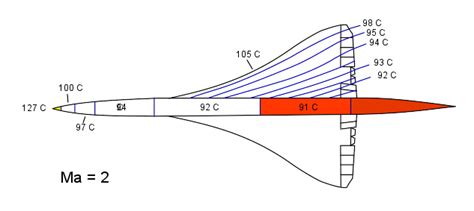
During normal operations, portions of Concorde’s skin regularly exceeded 260°F (127°C). Some areas became even hotter depending on atmospheric conditions and sunlight exposure. The nose and wing leading edges experienced particularly intense temperatures because they were the first surfaces encountering compressed airflow.
Unlike modern military aircraft built from titanium or advanced composites, Concorde relied heavily on aluminum alloys. Aluminum was lightweight and practical for commercial production, but it came with a major limitation: heat tolerance.
As temperatures increased, aluminum expanded noticeably and gradually lost structural strength. Concorde’s designers therefore had to establish strict thermal limits that the aircraft could never exceed for prolonged periods.
This was not theoretical engineering caution. Concorde physically changed shape during flight.
At Mach 2 cruise, the aircraft’s fuselage expanded by nearly ten inches due to thermal growth. Cabin floors became warm to the touch. Tiny gaps appeared inside the cabin structure as the airframe stretched under heat stress. Engineers anticipated all of this and designed the aircraft around it, but the margins remained carefully controlled.
That meant even seemingly minor variables mattered.
Including paint color.
Why White Paint Was Essential For Concorde’s Design
Most commercial airliners are painted white for practical reasons. White paint reflects sunlight, reduces cabin heat, lowers cooling requirements, and minimizes long-term ultraviolet damage. Airlines also benefit from easier inspection visibility and lower thermal stress on the fuselage.
For Concorde, however, white paint was not simply practical.
It was critical.
The aircraft’s white exterior acted as a passive thermal management system. By reflecting a substantial portion of solar radiation, the paint reduced the amount of external heat absorbed while the aircraft already battled aerodynamic heating at Mach 2.
At 50,000 feet, solar intensity becomes far more severe because the atmosphere filters less incoming radiation. A dark-colored aircraft exposed to direct sunlight at those altitudes can absorb dramatically more thermal energy than it would closer to sea level.
Concorde’s engineers understood this perfectly. The aircraft’s thermal envelope had been calculated with its reflective white paint scheme in mind.
Changing the color altered the equation.
The Pepsi livery introduced a dark blue finish across large portions of the fuselage, particularly around the rear sections where temperatures were somewhat lower. Even with careful placement, the darker coating absorbed significantly more solar energy than the standard paint.
The effect was immediate and measurable.
Testing revealed that some blue-painted sections approached temperatures near 350°F (177°C), uncomfortably close to the aircraft’s allowable thermal limits.
That additional heat reduced the safety margin engineers depended on during prolonged supersonic cruise.
The Physics Behind The Blue Paint Problem
The Pepsi Concorde controversy is often misunderstood because people assume the paint somehow changed the aircraft’s aerodynamics.
It did not.
The aircraft’s shape remained identical. The drag increase from the paint itself was negligible. The real issue was purely thermal.
Dark colors absorb more electromagnetic radiation than lighter colors. This principle affects everything from clothing to automobiles to buildings. A black vehicle parked under the sun becomes substantially hotter than a white one because darker surfaces convert more solar radiation into heat energy.
Concorde amplified this phenomenon dramatically.
The aircraft already generated tremendous aerodynamic heat from sustained supersonic flight. Adding extra solar absorption created a cumulative effect that pushed the aluminum structure closer to its certified limits.
Engineers therefore had to reduce the aircraft’s operational stress.
Under standard conditions, Concorde cruised comfortably between Mach 2.02 and Mach 2.04 for transatlantic crossings lasting roughly three hours. With the Pepsi livery installed, however, the aircraft faced strict restrictions.
The aircraft was generally limited to Mach 1.7 during routine operation while wearing the blue paint. Time spent near Mach 2 was capped at roughly twenty minutes.
These limitations prevented the airframe and fuel systems from overheating during extended high-speed cruise.
Fuel temperature represented another serious concern.
Concorde used fuel not only for propulsion but also as part of its thermal management strategy. The fuel circulating through the wings and systems absorbed heat generated during flight. If external temperatures rose too high, fuel temperatures could also climb beyond acceptable operating margins.
The darker paint therefore affected more than just the fuselage skin. It influenced the aircraft’s entire thermal ecosystem.
Why Engineers Allowed Only Partial Blue Coverage
One fascinating detail about the Pepsi Concorde is that the entire aircraft was not painted blue.
The wings and forward fuselage remained predominantly white.
This decision was not aesthetic. It was entirely engineering-driven.
The nose section and wing leading edges experienced the most severe aerodynamic heating during Mach 2 flight. Applying dark paint to those surfaces would have created unacceptable temperature increases almost immediately.
Instead, engineers concentrated the blue finish on areas with lower thermal exposure, particularly toward the rear fuselage and tail.
Even then, the thermal margins became uncomfortably narrow.
The compromise illustrated how carefully Concorde’s engineers managed temperature distribution across the airframe. Unlike conventional jets, where liveries are largely unrestricted, Concorde required engineers to treat paint as a performance-critical component.
This was one of the clearest demonstrations that Concorde behaved less like a traditional airliner and more like a high-performance aerospace vehicle.
Every detail mattered.
The Pepsi Promotion Became An Engineering Balancing Act
Despite the restrictions, the Pepsi campaign proceeded because both PepsiCo and Air France recognized the enormous publicity value of a blue Concorde.
The aircraft, registered F-BTSD and nicknamed “Sierra Delta,” embarked on a promotional tour across Europe and the Middle East. Celebrity appearances involving figures like Andre Agassi, Cindy Crawford, and Claudia Schiffer amplified media attention surrounding the campaign.
The aircraft visited major destinations including Paris, London, Dubai, Cairo, and Madrid.
Importantly, the promotional flights avoided the kind of long-duration Mach 2 operations typical of transatlantic services.
That limitation protected the aircraft from prolonged thermal exposure while still allowing the campaign to proceed successfully.
After roughly two weeks, the special livery was removed and the aircraft returned to its traditional Air France paint scheme.
No permanent structural damage was reported because the aircraft never exceeded the carefully imposed operational restrictions.
Still, the episode demonstrated how even a temporary cosmetic modification required deep engineering analysis when applied to Concorde.
Why Military Jets Could Use Dark Paint Without Similar Problems
One question inevitably follows the Pepsi Concorde story: if dark paint caused such serious thermal issues, why do military supersonic aircraft frequently wear dark gray, black, or camouflage paint schemes?
The answer lies in operational duration and construction materials.
Most fighter aircraft capable of Mach 2 speeds rarely remain supersonic for extended periods. Aircraft such as the McDonnell Douglas F-15 Eagle or General Dynamics F-16 Fighting Falcon typically spend only brief intervals above Mach 1.5 before slowing down again.
The thermal spikes are intense but temporary.
Concorde was fundamentally different because it sustained Mach 2 cruise continuously for hours. The aircraft absorbed heat for vastly longer periods, allowing temperatures to build progressively throughout the flight.
Military aircraft also prioritize different mission requirements. Camouflage, radar signature reduction, and tactical visibility matter far more than solar reflectivity during prolonged cruise.
Then there is the famous exception: the Lockheed SR-71 Blackbird.
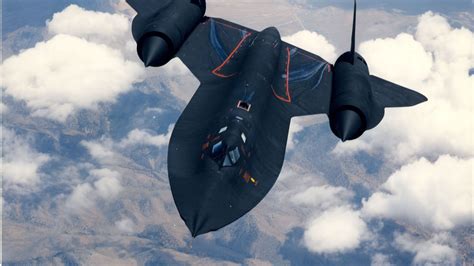
The SR-71 was painted black despite flying even faster than Concorde. Yet this was not contradictory at all.
The Blackbird’s titanium structure was specifically engineered to survive temperatures exceeding 900°F (482°C). At Mach 3, aerodynamic heating completely overwhelmed any solar heating effects. The black coating actually improved thermal radiation efficiency, helping dissipate heat more effectively.
Concorde’s aluminum structure simply could not tolerate those extremes.
The aircraft existed in an unusual middle ground where solar heating still mattered enormously because aerodynamic heating already pushed the airframe near its material limits.
Concorde’s Thermal Limits Revealed The Fragility Of Supersonic Transport
The Pepsi livery incident highlighted an uncomfortable reality about supersonic passenger travel.
Concorde operated with astonishingly tight engineering tolerances.
The aircraft achieved its legendary performance not because technology made supersonic travel easy, but because engineers carefully balanced countless variables at the edge of feasibility. Heat management, fuel transfer, structural expansion, engine efficiency, and aerodynamic stability all existed in delicate equilibrium.
Even a darker shade of paint could disrupt that balance.
This sensitivity helps explain why supersonic passenger aviation never became widespread despite Concorde’s iconic status. Operating such aircraft demanded extraordinary maintenance, precision engineering, and operational discipline.
Concorde was magnificent precisely because it was difficult.
Its designers squeezed unprecedented performance from available materials and technology, but doing so left little room for deviation. Modern aerospace engineers often view Concorde as both a triumph and a warning: a masterpiece of engineering achieved through relentless compromise.
The Pepsi paint scheme unintentionally exposed those compromises to the public in a uniquely visual way.
People suddenly realized that Concorde was not merely fast.
It was thermally alive.
The Blue Concorde Became One Of Aviation’s Most Fascinating Experiments
Today, the Pepsi Concorde remains one of the most memorable special liveries ever applied to an airliner because it represented far more than branding.
It exposed the hidden physics behind supersonic flight.
The aircraft demonstrated that at Mach 2, even color becomes an engineering decision. Paint transformed from decoration into thermal control equipment. A cosmetic change forced speed restrictions, altered route planning, and reduced operational flexibility on one of the most advanced passenger aircraft ever built.
That reality continues to fascinate aviation historians because it illustrates how extraordinary Concorde truly was.
Modern airliners can adopt virtually any color scheme without significant performance consequences. Concorde could not. Its design margins were so refined that sunlight absorption alone became operationally significant.
In many ways, the Pepsi Concorde symbolized the entire supersonic era: beautiful, ambitious, technologically brilliant, and permanently constrained by physics.
The blue livery lasted only briefly, but it left behind one of the greatest engineering stories in aviation history — proof that when an aircraft flies faster than the Earth rotates beneath it, even paint can become a serious aerodynamic and thermal concern.