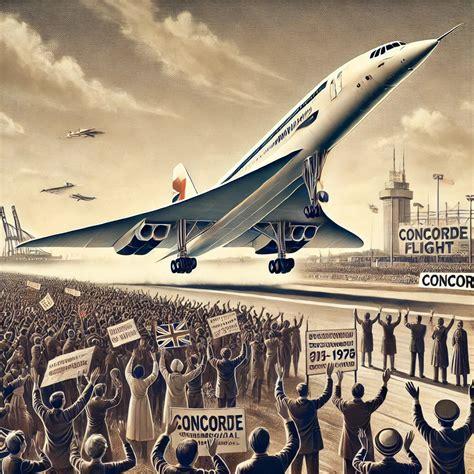
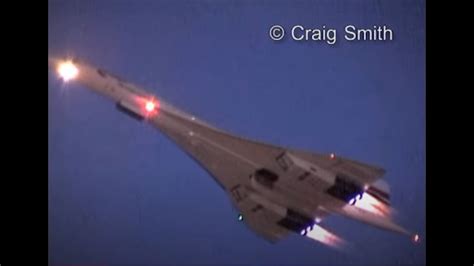
The morning of January 21, 1976, arrived with a peculiar electricity humming through European aviation. Airports had always been places of motion and promise, but that day carried a sharper edge. Something unprecedented was about to happen, something that had been theorized, argued over, protested against, and mythologized for nearly two decades. Concorde, the needle-nosed Anglo-French supersonic airliner, was finally entering commercial service, not as a prototype or political demonstration, but as a paying passenger aircraft that would redefine what “long-haul” meant.
Fifty years later, the significance of that moment still reverberates. Concorde’s first commercial flight was not merely the start of an airline route; it was the public unveiling of a future imagined during the Space Age, shaped by Cold War geopolitics, and delivered through audacious engineering. Its debut symbolized confidence, rivalry, compromise, and spectacle, all compressed into a white delta-winged aircraft accelerating past Mach 2 at the edge of the stratosphere.
The irony, now almost poetic, is that Concorde’s first commercial day did not involve the route it would later dominate. There was no New York skyline waiting on the horizon. Instead, two simultaneous departures—one British, one French—lifted off toward destinations chosen as much by diplomacy and regulatory constraint as by geography. The story of Concorde’s first commercial flight is therefore not a single narrative, but a mirrored one, reflecting how technology, politics, and prestige collided at supersonic speed.
A Supersonic Dream Forged by Two Nations
Concorde was never just an airplane. From its inception in the late 1950s, it was a statement of intent. Britain and France, facing a rapidly consolidating American aerospace industry, chose cooperation over competition, binding themselves through a treaty that made withdrawal financially impossible. The result was one of the most ambitious civil aviation projects ever attempted, designed to cruise at twice the speed of sound while carrying passengers in scheduled airline service.
Economics, however, were never Concorde’s strength. Development costs ballooned, production numbers shrank, and by the time the aircraft was ready, it was clear that no airline could justify purchasing it outright. The solution was quietly elegant: the governments absorbed the cost, and British Airways and Air France were essentially gifted seven aircraft each. Profitability would come later, if at all. Prestige, on the other hand, was immediate.
That context matters deeply when examining Concorde’s first commercial flight. This was not a routine airline launch. It was a choreographed geopolitical event, watched closely by governments, regulators, environmental activists, and an aviation public split between awe and apprehension. Noise concerns, sonic booms, and fuel consumption had already sparked fierce opposition, particularly in the United States. Concorde was entering service under a cloud of controversy, even as it promised to rewrite the rules of time and distance.
January 21, 1976: Two Departures, One Message
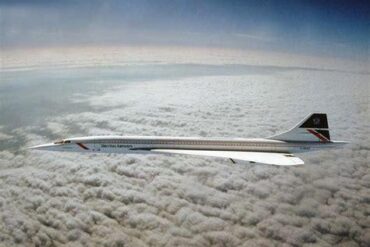
The question of which country would fly Concorde first was resolved with diplomatic symmetry. Both would. On the same day, at nearly the same hour, two Concordes departed on their inaugural commercial journeys. One lifted off from London Heathrow, bound for Bahrain. The other departed Paris Charles de Gaulle, heading toward Rio de Janeiro via Dakar.
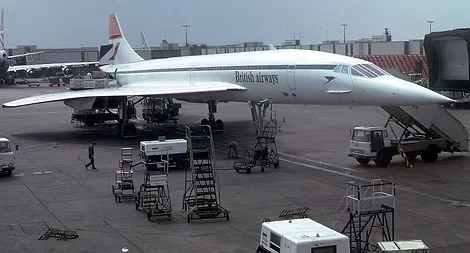
These routes puzzled casual observers, but they made perfect sense within the constraints of the era. Supersonic flight over land was effectively banned across much of Europe and North America, limiting Concorde’s ability to exploit its defining advantage. Overwater routes offered freedom to accelerate to Mach 2 without provoking political backlash or legal injunctions.
The British route to Bahrain was carefully chosen. It allowed extended supersonic segments over the Bay of Biscay, the Mediterranean, and the Arabian Sea, with only brief subsonic passages over land. Bahrain itself carried symbolic weight, having been a British protectorate until 1971 and remaining diplomatically receptive to the aircraft despite its noise profile. The French route, meanwhile, showcased France’s global reach, linking Europe, Africa, and South America in a single, supersonic-enabled journey.
Inside the First Commercial Cabin
Those fortunate enough to be onboard the inaugural flights described an atmosphere closer to a gala than a routine airline service. Francine Carville, a cabin crew member on the British Airways flight, later recalled crowds lining the roads near Heathrow, waiting simply to watch Concorde take off. Inside the cabin, anticipation built steadily as the aircraft climbed and accelerated.
When Concorde passed Mach 2, the cabin reportedly fell silent for a brief moment, as if passengers instinctively understood they were crossing an invisible threshold. Champagne was served. Applause followed. In a detail that feels almost alien today, passengers were later invited to visit the flight deck mid-flight, cigars and brandy in hand. This was aviation in a different era, unburdened by modern security protocols and intoxicated with optimism.
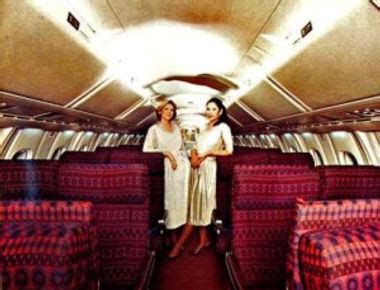
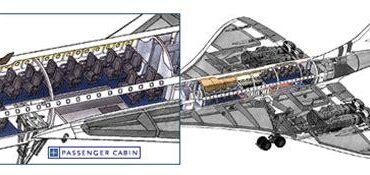
Despite its luxury branding, Concorde’s cabin was compact. The fuselage’s slender profile limited seat width, window size, and aisle space. Seats were arranged in a 2–2 configuration, all designated as first class, though legroom was modest compared with contemporary widebody aircraft like the Boeing 747. What passengers sacrificed in space, they gained in experience. Time itself seemed to compress, with meals served quickly and journeys ending before the body could fully register departure.
The Politics of Speed and Silence
Concorde’s inaugural routes underscored a deeper reality: the aircraft had entered service without guaranteed access to its most lucrative market. The United States, particularly New York, represented the natural destination for supersonic travel. Yet American resistance to Concorde was fierce. Environmental concerns, airport noise protests, and protectionist anxieties converged into a formidable barrier.
In 1973, the Federal Aviation Administration had imposed a blanket ban on civil supersonic flight over U.S. land. Even subsonic Concorde operations faced scrutiny. It was not until May 1976—months after Concorde entered service—that limited permission was granted for trial flights to Washington Dulles. New York followed later, and only after prolonged legal battles culminating in a Supreme Court decision in October 1977.
This fraught introduction reveals one of Concorde’s central paradoxes. It was a technological marvel designed to shrink the Atlantic, yet it debuted by deliberately avoiding the very routes that would define its legacy. The first commercial flights were therefore less about commercial optimization and more about asserting the aircraft’s legitimacy in the face of opposition.
Fare, Prestige, and the Meaning of “Commercial”
Although the inaugural flights were technically revenue services, their commercial nature was nuanced. On the British Airways flight, only around 27 passengers paid for their seats; the rest were invited guests. Air France carried more paying passengers, but both aircraft operated well below capacity. Each carried roughly 100 people, reinforcing the ceremonial character of the occasion.
The fares themselves were striking but not outrageous by today’s standards. A ticket on the London–Bahrain flight cost £676.20, approximately $1,366 at the time. Adjusted for inflation, this aligns closely with modern long-haul first-class pricing. Concorde fares were typically set at first-class plus a premium, reflecting both speed and exclusivity.
What passengers were buying was not comfort in the conventional sense, but access to a rarefied experience. Concorde transformed time into a luxury commodity, allowing executives, celebrities, and heads of state to cross oceans faster than the Earth could rotate beneath them. That value proposition would eventually sustain the aircraft on transatlantic routes, even as operating costs remained punishingly high.
Aircraft That Made History
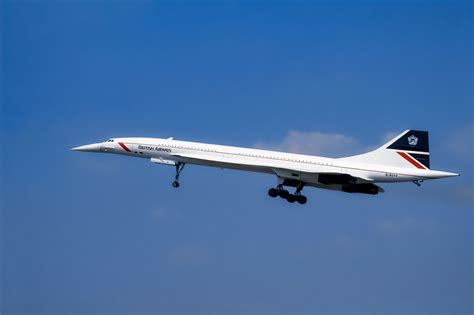
The individual airframes that flew on January 21, 1976, have since become museum pieces, frozen in aluminum and memory. The British aircraft, registered G-BOAA, had first been registered in 1974 and went on to enjoy a long and eventful career. It became the first Concorde to complete the demanding 12,000-hour maintenance check and later received significant upgrades, including a redesigned rudder. Its final commercial flight occurred in 2000, and today it is displayed at the National Museum of Flight in Scotland.
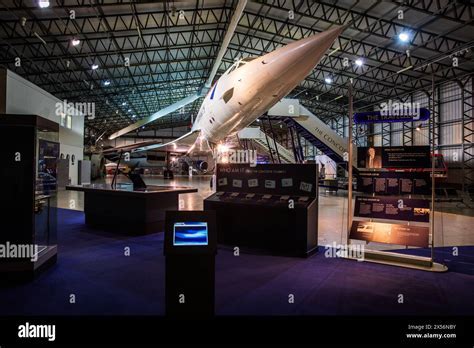
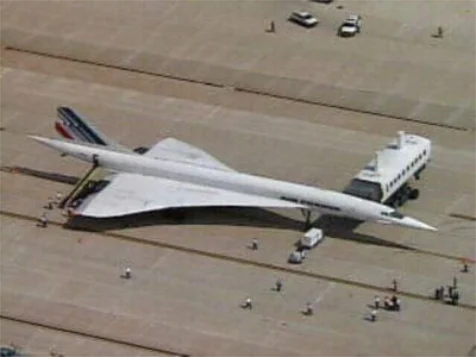
The French aircraft, F-BVFA, first flew in 1975 and entered service just weeks before the inaugural commercial flight. It accumulated over 17,800 flight hours and completed more than 5,500 supersonic crossings before its final passenger flight from New York to Paris in May 2003. It now resides at the Smithsonian National Air and Space Museum’s Steven F. Udvar-Hazy Center, an artifact of a future that arrived early and departed too soon.
From Cautious Beginnings to Transatlantic Icon
As restrictions eased and opposition softened, Concorde gradually found its stride. The London–New York and Paris–New York routes became its backbone, transforming the aircraft from a diplomatic experiment into a profitable, if limited, operation. British Airways, in particular, refined the Concorde product into a high-margin service catering to business travelers who valued speed above all else.
Yet the shadow of its origins never fully lifted. Concorde remained vulnerable to external shocks, from fuel price spikes to political shifts. Its sonic boom restrictions were never fully relaxed, and its environmental footprint increasingly clashed with emerging sustainability concerns. The tragic accident in 2000 and the downturn in aviation following 2001 accelerated a retirement that had long seemed inevitable.
Fifty Years On: Why the First Flight Still Matters
Looking back half a century later, Concorde’s first commercial flight stands as a defining moment not just in aviation history, but in cultural memory. It marked the last time commercial air travel leapt forward in speed rather than efficiency. Since Concorde’s retirement in 2003, aircraft have become quieter, cleaner, and more economical, but not faster.
That stagnation in speed is precisely why Concorde continues to fascinate. Its inaugural flight represents a crossroads, a moment when ambition briefly outweighed caution. The aircraft proved that sustained supersonic passenger travel was possible, safe, and desirable, even if it was not broadly scalable within the constraints of its era.
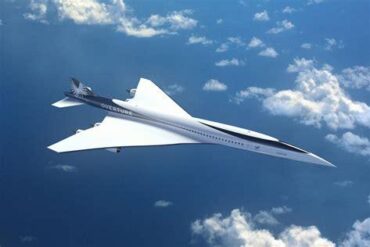
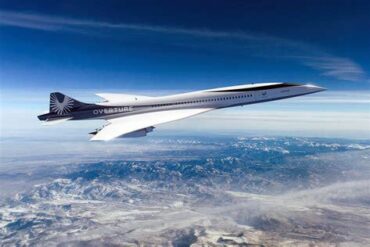
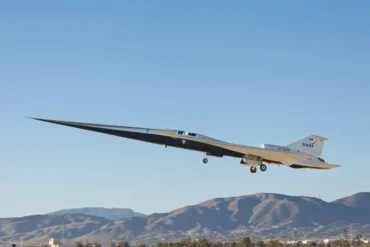
As new ventures once again promise a return to supersonic travel, Concorde’s first commercial flight offers both inspiration and warning. It reminds us that technology does not exist in a vacuum. It must negotiate politics, economics, public perception, and environmental responsibility. Concorde succeeded brilliantly in the air, and imperfectly on the ground.
Fifty years on, the image of two white delta wings lifting simultaneously from London and Paris still resonates. It was a declaration that the future could be faster, bolder, and unapologetically ambitious. For one extraordinary day in January 1976, the world moved at Mach 2, and time itself seemed willing to keep up.