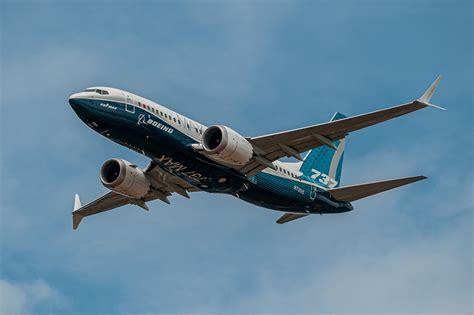
Boeing entered the year with renewed delivery momentum, fueled largely by the steady recovery of its narrow-body workhorse, the Boeing 737 MAX. Airlines across the world continue to rely on the aircraft family for short- and medium-haul routes, and Boeing has been under pressure to increase production while clearing one of the industry’s largest commercial aircraft backlogs. Yet even in a year that began with encouraging signs, the manufacturer has encountered a familiar obstacle: an unexpected manufacturing quality issue that has forced a pause in some aircraft deliveries.
The setback emerged in early March after Boeing engineers identified minor damage to wiring insulation during routine internal inspections on several undelivered aircraft. Although the defect is considered limited in scope, the discovery has required technicians to inspect and repair affected jets before they can be handed over to airline customers. As a result, some deliveries originally scheduled for the first quarter of the year may slip while the necessary corrective work is completed.
From a distance, the problem may sound trivial—scratches on insulation around electrical wiring bundles. Inside a modern airliner, however, such details matter enormously. Aircraft electrical systems carry signals controlling avionics, flight systems, sensors, and cabin equipment. Any compromise to insulation raises regulatory and safety concerns, even if the physical damage appears small. Aviation manufacturing operates under an uncompromising rule: if something looks questionable, it gets inspected and fixed before passengers ever step aboard.
Wiring Inspections Prompt Temporary Delivery Pause
The issue was uncovered during routine production inspections, a step designed specifically to catch anomalies before aircraft leave the factory. Boeing technicians noticed small abrasions on wiring bundles installed in multiple undelivered 737 MAX jets. Investigators traced the marks back to a machining process during assembly, suggesting that tools or nearby components had made contact with the wiring during installation.
While the scratches themselves are not catastrophic, insulation damage creates the possibility—however remote—of electrical interference or degradation over time. Aviation regulators require that wiring remain fully protected to prevent potential failures later in an aircraft’s operational life. That requirement means every affected aircraft must undergo careful inspection and targeted repairs before delivery approval.
Boeing has therefore paused certain handovers while engineers review additional aircraft and perform the required rework. Technicians are inspecting wiring bundles, replacing sections where insulation has been compromised, and verifying that each system meets strict airworthiness standards before the aircraft moves forward in the delivery pipeline.
The company emphasized that aircraft already in airline service are not affected, since the defect was discovered on jets still within the manufacturing process. That distinction is critical for airline operators, who rely on predictable fleet availability and cannot afford unexpected technical directives after aircraft enter service.
Strong Early-Year Deliveries Face a Short-Term Setback
The timing of the discovery is notable because Boeing had recently shown signs of improving delivery performance. In February alone, the manufacturer delivered 51 aircraft, including 43 Boeing 737 MAX jets. That figure represented one of Boeing’s strongest February totals in several years and briefly placed the company ahead of Airbus in monthly deliveries.
For a company rebuilding credibility after multiple production disruptions in recent years, such milestones matter. Deliveries translate directly into revenue recognition, cash flow, and airline confidence. Every completed aircraft represents a major financial transaction that can reach tens of millions of dollars depending on configuration and contractual pricing.

Even a relatively small manufacturing hiccup can therefore ripple across quarterly results. Delayed deliveries shift revenue into later months, complicate airline fleet planning, and invite scrutiny from analysts tracking the health of Boeing’s production system. The wiring issue, though manageable, illustrates how precision manufacturing at aerospace scale leaves little margin for error.
Boeing has nevertheless maintained that the situation should not significantly alter its broader targets for the year. The company expects some deliveries to move slightly later in the schedule but believes the repairs are straightforward and relatively quick to complete.
737 MAX Production Remains the Centerpiece of Boeing’s Recovery
Despite the temporary disruption, Boeing has not adjusted its 737 MAX production rate. Assembly continues at approximately 42 aircraft per month, a level that reflects both regulatory oversight and the company’s ongoing effort to stabilize its manufacturing processes.
Longer term, Boeing intends to gradually expand output. Internal planning aims to raise production to about 47 aircraft per month, with an ambitious goal of eventually reaching 63 monthly jets by 2028. Achieving those targets would allow Boeing to reduce its massive order backlog and compete more aggressively with Airbus’ highly successful A320neo family.
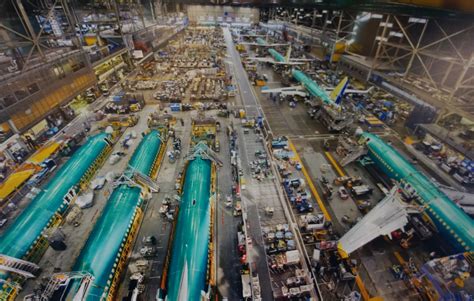
The stakes are enormous. The 737 MAX program represents the largest share of Boeing’s commercial aircraft orders and serves as a primary engine of the company’s financial recovery. Airlines worldwide continue to expand narrow-body fleets as global travel demand rebounds and low-cost carriers scale their networks. In that environment, production stability becomes as valuable as the aircraft itself.
Boeing is targeting roughly 500 deliveries of 737-family aircraft in 2026, a milestone that would demonstrate sustained progress after years of production volatility. Achieving that goal depends on keeping assembly lines moving smoothly while avoiding the kinds of disruptions that have plagued the company in the past.
Quality Control Challenges Remain Under Regulatory Watch
The wiring discovery also arrives in the context of heightened regulatory scrutiny. In recent years, Boeing’s manufacturing practices have faced close examination from the Federal Aviation Administration (FAA) following a series of quality-control incidents across multiple aircraft programs.
Regulators now maintain tight oversight of Boeing’s production systems, requiring rigorous inspections, detailed reporting procedures, and corrective actions whenever anomalies appear. From a scientific perspective, this is the aerospace equivalent of the engineering feedback loop: detect the anomaly, analyze its cause, fix the process, and strengthen the safeguards so it does not happen again.
In this case, Boeing believes the wiring defect represents a limited manufacturing issue rather than a systemic failure. Engineers have already begun implementing repairs on affected aircraft while reviewing assembly procedures to prevent similar abrasions during installation.
That response reflects a broader truth about aircraft manufacturing. A commercial jet contains millions of individual parts, thousands of electrical connections, and systems that must operate flawlessly at 35,000 feet. In such an intricate machine, progress rarely moves in a perfectly straight line. It advances through inspection, correction, and refinement.
For Boeing, maintaining stable output of the 737 MAX while resolving small but consequential production issues remains essential. Airlines continue to wait for hundreds of aircraft already on order, and the company’s financial recovery depends on turning those orders into delivered aircraft rolling down runways around the world.