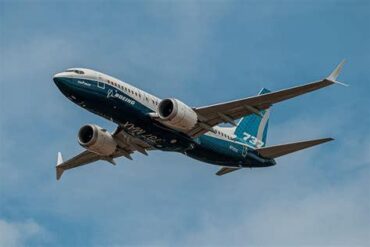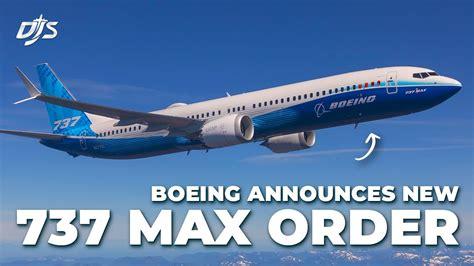
The mystery surrounding Boeing’s latest “unidentified” narrowbody order has now been cleared. Boeing has formally confirmed that Air India is the customer behind the previously undisclosed purchase of 30 Boeing 737 MAX aircraft, a deal that quietly entered the manufacturer’s backlog before being publicly attributed. The disclosure, made in Boeing’s January 29, 2026, order update, provides fresh insight into both Air India’s aggressive fleet strategy and Boeing’s strengthening position in the Indian aviation market.
Aircraft orders are frequently logged under anonymous designations when contracts are finalized in stages or when airlines prefer discretion during sensitive commercial negotiations. In this case, the order appeared on Boeing’s books without a customer name, prompting speculation across the aviation industry. The confirmation brings clarity while underscoring Air India’s accelerating transformation under Tata Group ownership, a transition that has reshaped the carrier’s fleet philosophy, network ambition, and global positioning.
Since returning to Tata control, Air India has pursued a decisive break from its legacy image. Fleet modernization has become central to that strategy, with the airline committing to large-scale aircraft acquisitions across both narrowbody and widebody segments. The newly identified 737 MAX order fits squarely into that narrative, reinforcing a long-term partnership with Boeing that now spans nearly every major aircraft category.
A Strategic 30-Aircraft Boost for Short and Medium-Haul Growth
The confirmed deal consists of 20 Boeing 737 MAX 8 aircraft and 10 Boeing 737 MAX 10 jets, providing Air India with a balanced mix of flexibility and high-capacity performance. Boeing acknowledged that a portion of the order had already been recorded in its backlog before the airline’s identity was officially disclosed, a common practice in large fleet programs.
These aircraft are primarily earmarked for domestic services and short-haul international routes, where demand has been rising sharply. India’s aviation sector is experiencing sustained passenger growth driven by economic expansion, urbanization, and an increasingly mobile middle class. For Air India, additional narrowbody capacity allows higher frequencies on dense trunk routes while opening new regional markets without compromising unit costs.
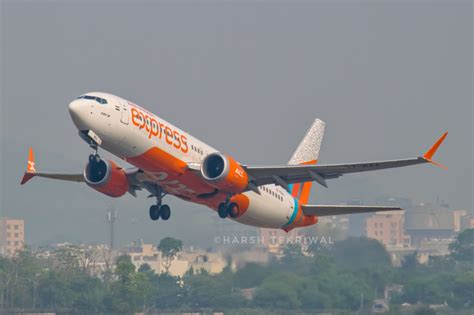
Fuel efficiency and operational reliability sit at the core of the decision. The 737 MAX family delivers lower fuel burn and reduced emissions compared to older-generation narrowbodies, an important consideration in a market where aircraft utilization is intense and margins remain competitive. By expanding its MAX fleet, Air India gains both cost advantages and operational consistency across its short-haul network.
Deepening Boeing–Air India Ties Across Fleet Segments
This newly revealed order further cements Air India as one of Boeing’s most significant airline customers globally. In recent years, the carrier has placed substantial widebody orders for Boeing 787 Dreamliners and the next-generation 777X, aimed at rebuilding its long-haul presence and improving international connectivity. With the addition of these 737 MAX aircraft, Air India’s total Boeing order book now approaches 200 airplanes, spanning single-aisle and twin-aisle categories.
Such scale reflects more than simple fleet replacement. It signals a deliberate alignment with Boeing’s product ecosystem, emphasizing commonality in training, maintenance, and operational planning. For an airline managing rapid expansion, these efficiencies translate directly into smoother growth and better cost control.
India represents a critical battleground for global aircraft manufacturers. Boeing projects that roughly 90% of new aircraft deliveries to India and South Asia over the next two decades will be single-aisle jets, out of an estimated requirement for around 3,300 new airplanes. Air India’s latest order mirrors these forecasts and positions the airline to capitalize on long-term structural growth rather than short-term demand spikes.
Why the 737 MAX 8 and MAX 10 Matter for India
The combination of the 737 MAX 8 and the larger 737 MAX 10 gives Air India flexibility across a wide range of missions. The MAX 8 offers strong range and adaptability for thinner routes and regional international sectors, while the MAX 10 provides increased seating density for high-demand domestic markets where slot constraints make larger aircraft economically attractive.
The MAX 10, however, remains the final variant of the MAX family awaiting certification. Boeing continues to work closely with regulators to address outstanding technical requirements, and while timelines have shifted, customer interest has not faded. Air India’s inclusion of the MAX 10 in its fleet plan reflects confidence in the aircraft’s long-term value rather than short-term delivery timing.
For Boeing, the order adds momentum to its narrowbody backlog at a time when production stability and program credibility remain under close scrutiny. Each new commitment from a major airline strengthens the narrative of recovery and sustained demand for the MAX platform.
More Than a Backlog Update
The revelation of Air India as the buyer behind Boeing’s previously unidentified 737 order does more than resolve a bookkeeping question. It highlights a carrier in the midst of one of the most ambitious transformations in global aviation and confirms Boeing’s central role in that journey. As Air India rebuilds its domestic dominance and international relevance, fleet choices like this one signal intent, confidence, and long-term vision—qualities that resonate far beyond a single order announcement.