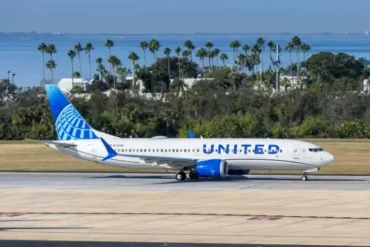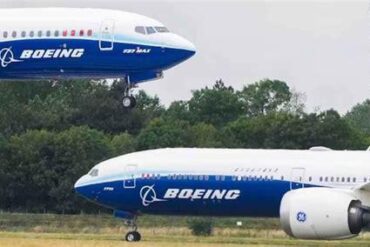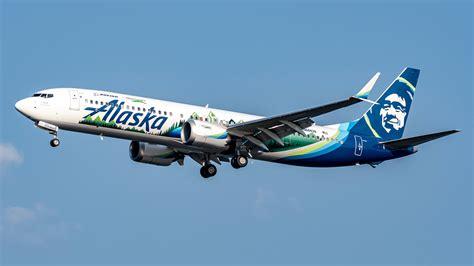
Alaska Airlines has taken another measured but meaningful step forward in its long-term fleet modernization strategy with the delivery of its 12th Boeing 737 MAX 8. The aircraft traveled from Boeing Field (BFI) to Los Angeles International Airport (LAX), marking the fulfillment of Alaska’s initial firm order for the MAX 8 variant. This milestone reflects the carrier’s continued commitment to expanding a leaner, more fuel-efficient, and future-ready mainline fleet.
The airline, already one of the most Boeing-reliant carriers in the United States, views the MAX family as a backbone of its next decade of growth. Even amid turbulence—most notably the 2024 door plug incident that prompted a temporary grounding and a wave of regulatory scrutiny—the company has doubled down on its investment in the MAX line. Operational results, efficiency gains, and passenger satisfaction metrics have consistently reinforced the decision.
A Strategic Bet On Efficiency And Growth
Alaska Airlines has repeatedly emphasized the importance of the Boeing 737 MAX 8 within its growth strategy. The aircraft’s balance of range, fuel economy, and passenger capacity gives Alaska the flexibility to strengthen high-demand West Coast routes while opening new long-thin opportunities across North America. The efficiency edge is especially valuable in a post-pandemic environment where fuel prices and operating costs remain unpredictable.
The carrier now operates a growing lineup of MAX aircraft, and order data confirms that more are on the way. With firm orders and options combined, at least eight additional MAX 8 jets are still expected to join the fleet. These sit alongside a far larger pipeline of MAX 9 and MAX 10 commitments—collectively forming one of the most ambitious fleet refresh initiatives in the U.S. airline industry.
Inside Alaska Airlines’ MAX Portfolio
The airline’s fleet strategy leans heavily on the MAX family as a successor to its aging NG (Next-Generation) models. Alaska’s commitment is substantial: at least 80 firm MAX orders divided among the MAX 10, MAX 9, and MAX 8 variants, plus options for up to 105 more.
The 737 MAX 9 already constitutes nearly one-third of Alaska’s active fleet, showing how quickly the airline has embraced the type. Its positive operational performance and strong customer feedback make the ongoing rollout of MAX 8 and, eventually, MAX 10 aircraft a natural progression.
Nat Pieper, then-SVP of Fleet, Finance & Alliances, made Alaska’s confidence unmistakable in 2024 when he stated that the MAX 9 delivered “terrific results” across guest satisfaction, economics, and fuel efficiency—metrics that paved the way for continued investment.
A Partnership Built Over Decades
Alaska Airlines’ long relationship with Boeing is a story woven into the fabric of Pacific Northwest aviation. The airline has been almost exclusively Boeing-equipped since the 1960s, beginning with the 727 in 1966 and the versatile 737-200 ‘Combi’ in 1981.
That deep history has shaped a fleet culture centered around a single aircraft family, with Alaska even serving as the launch customer for the 737-900. Today, its fleet ranges from the aging 737-700s to the newest MAX models, offering a vivid snapshot of Boeing’s evolution across generations.
Current Alaska Airlines 737 Fleet Overview
According to Planespotters.net, the fleet shows a clear shift toward younger, more efficient MAX types:
- Boeing 737-700 — 14 aircraft, 25.5 years average age
- Boeing 737-800 — 61 aircraft, 17.7 years average age
- Boeing 737-900ER — 79 aircraft, 9.8 years average age
- Boeing 737 MAX 8 — 12 aircraft, 0.9 years average age
- Boeing 737 MAX 9 — 80 aircraft, 3.2 years average age
A major turning point came in October 2022, when Alaska executed the largest aircraft commitment in its history by securing an additional 52 MAX aircraft for delivery through 2027. That single expansion pushed the airline’s potential MAX fleet beyond 250 aircraft—a transformational investment spanning through 2030.
Recovering From The Boeing Turbulence
The 2024 door plug failure on Alaska Airlines Flight AS1282 became one of the most widely scrutinized moments in the airline’s modern history. The missing-bolt manufacturing lapse triggered FAA investigations, temporary grounding of MAX 9 aircraft, and a sharp reevaluation of Boeing’s quality oversight processes.
For Alaska, the incident carried heavy financial and operational consequences, prompting Boeing to issue $100 million in initial compensation and triggering rigorous inspections across the MAX production ecosystem.
Yet despite the setback, Alaska Airlines maintained its strategic alignment with Boeing. Both companies share a Pacific Northwest legacy and remain intertwined in the region’s aerospace economy. Boeing’s subsequent move to reintegrate Spirit AeroSystems—responsible for 70% of MAX structures—has been seen as a critical step toward restoring confidence and tightening quality control.
A Long-Term Vision Anchored In The MAX
Even with the MAX 7 and MAX 10 still awaiting final certification—expected in 2026—Alaska continues leaning forward. The airline has publicly backed Boeing through its production challenges and sees the MAX family as essential to its path through the next decade.
The arrival of the 12th MAX 8 is modest in isolation but meaningful in trajectory. It reinforces a steady fleet modernization plan, fortifies Alaska’s position within the competitive West Coast aviation market, and underscores a partnership that has weathered both triumph and turbulence.
The next wave of deliveries, especially the larger MAX 10, will shape Alaska’s ability to scale long-haul domestic routes and optimize high-density markets. As production normalizes and certification milestones inch closer, the airline appears poised to unlock the full potential of its next-generation Boeing fleet over the years ahead.