Flight Safety International’s Dallas Learning Center has long been recognized as a benchmark in professional pilot training, and its PC-12NG Initial Course stands out as one of the most rigorous, detailed, and career-enhancing simulator programs available in the industry. For pilots entering the Part 135 world or transitioning into more complex turboprop operations, this course not only delivers technical excellence but also instills deep systems knowledge and operational confidence.
Understanding the PC-12NG and FlightSafety’s Curriculum
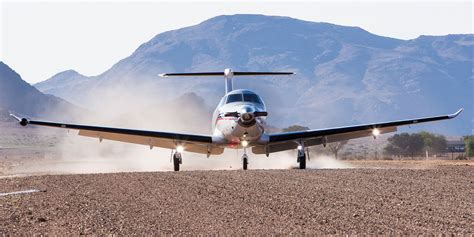
The Pilatus PC-12NG is a highly capable single-engine turboprop aircraft equipped with the Honeywell Apex avionics suite. It combines long-range efficiency with STOL (short takeoff and landing) capabilities, making it a top choice for Medevac, corporate, and charter operations. At FlightSafety Dallas, the initial course for the PC-12NG has been designed to reflect both the aircraft’s complexity and its versatile operational roles.
From the moment trainees walk into the center, the expectation is clarity, precision, and mastery. The first few days are dedicated to systems theory, where students are immersed in the aircraft’s subsystems including:
-
Electrical architecture and single-bus redundancy
-
Fuel system configuration and transfer logic
-
Landing gear hydraulics and emergency extension systems
-
Pressurization and environmental control systems (ECS)
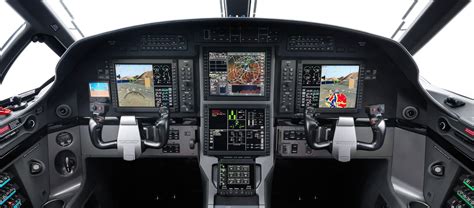
During this phase, trainees also begin integrating FMS operations using the Apex simulator software, accessible through the FlightSafety iPad app. The course material is presented in modular eLearning segments and interactive lessons—designed for clarity, but uncompromising in depth.
Simulation and Classroom Dynamics: Immersion in Practice
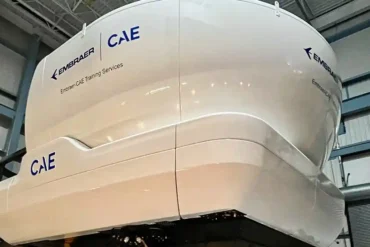
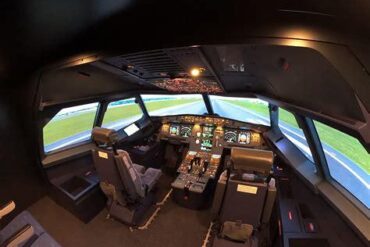
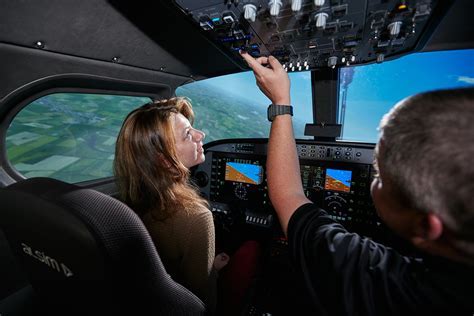
Once foundational systems knowledge is established, the course pivots to full-motion simulator sessions and flight scenario rehearsals. Each day is typically split between classroom learning and 2–4 hour sim blocks. Trainees rotate between Pilot Flying (PF) and Pilot Monitoring (PM) roles, ensuring complete exposure to:
-
ILS and RNAV approaches (coupled and uncoupled)
-
Engine failure on takeoff and single-engine operations
-
Circling approaches with terrain awareness techniques
-
Fire emergencies and smoke/fume removal procedures
-
High-altitude emergency descent protocols
These sessions are facilitated by highly experienced instructors, many of whom are prior military or Part 135 captains. Their emphasis is on real-world application. For instance, engine failures below 1,000 feet are drilled repeatedly, reflecting the importance of mental rehearsal and muscle memory in high-stress situations.
Trainees are strongly advised to memorize critical flows and emergency items—particularly those involving:
-
Takeoff engine failure
-
Engine fire procedures
-
Emergency descent profiles
While Pilatus does not officially label specific “memory items,” the training culture emphasizes pilot judgment and scenario-driven responses, especially during low-altitude threats.
Mastering the Apex FMS: A Known Challenge
The Honeywell Apex system remains one of the most advanced yet demanding avionics packages in its class. It offers deep FMS functionality, including:
-
Vertical navigation (VNAV) planning
-
Lateral navigation with crossfill
-
Complex hold entries and missed approach setups
Many trainees struggle here initially, particularly with hold entries, waypoint sequencing, and understanding the coupling logic of the flight director/autopilot. As such, FlightSafety instructors recommend:
-
Intensive self-study using the JCD Apex Task Trainer
-
Practicing on the Honeywell APM web simulator
-
Watching curated YouTube walkthroughs focused on real-world scenarios
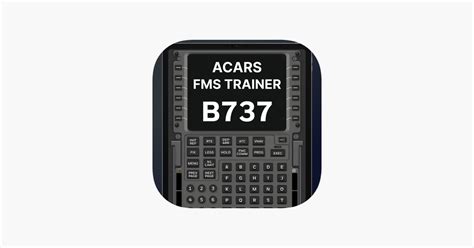
These supplemental tools are essential for preparing for the oral and sim checkrides, where knowledge of FMS programming under pressure can be the difference between a marginal pass and a flawless performance.
Oral Evaluation and Checkride Expectations
By the time trainees reach the checkride phase, most have already logged extensive simulator hours and engaged in daily system reviews. The final evaluation is conducted in two parts:
-
Oral Check: This involves scenario-based questioning covering:
-
Limitations and performance
-
Emergency recognition and systems behavior
-
Walk-around visual inspections (using photo references)
-
Simulated Flight Test: This includes:
-
Four separate approaches (typically including a circling approach)
-
A turnback maneuver
-
Short field takeoff and landing
Many pilots report that examiner Arron, a well-respected figure at the Dallas center, creates a calm environment conducive to performance. The key to success lies in preparation—those who show up having memorized flows and deeply understood systems usually fare best.
Key Advice for Success: What Experienced Pilots Recommend
Alumni of the course consistently emphasize several core recommendations:
-
Start studying early. Focus on the systems, limitations, and emergency flows.
-
Use your iPad. Leverage the FSI app to engage with training modules on-the-go.
-
Memorize “below 1000-feet” scenarios cold. Engine failures, fire, and forced landings must be second nature.
-
Be FMS fluent. Don’t just learn where to click—understand why it works.
-
Stay rested. The sim days are mentally demanding. Proper rest improves retention and reaction time.

A Launchpad for Operational Excellence
The Flight Safety Dallas PC-12NG Initial Course does more than prepare pilots for a checkride—it provides a complete operational mindset for single-engine turbine flight. With an increasing number of operators utilizing the PC-12NG for air ambulance, VIP charter, and utility transport, graduates of this course are stepping into roles that demand not just proficiency, but judgment.
The blend of modern simulator technology, scenario-based instruction, and unmatched aircraft-specific detail gives pilots an edge that is hard to find elsewhere. For those entering this course, the message is clear: show up sharp, stay focused, and absorb everything. What you gain here will follow you into every cockpit thereafter.
FAQs
What materials should I study before attending the FlightSafety PC-12NG Initial Course?
We recommend studying the PC-12NG limitations, engine failure protocols below 1,000 feet, and emergency descent procedures. Familiarity with the Honeywell Apex FMS through online trainers or YouTube tutorials will also significantly ease the learning curve.
How long is the PC-12NG Initial Course at FlightSafety Dallas?
The initial course typically spans 10 to 14 days, depending on prior experience and scheduling. It includes ground school, daily simulator sessions, and oral and flight evaluations. Some operators may extend this based on operational requirements.
Is the course suitable for pilots with no turbine experience?
Yes. The FlightSafety curriculum is designed to accommodate pilots transitioning from piston aircraft or Part 135 induction. Instructors are supportive and will tailor the pace to ensure understanding, especially for first-time sim students.