The Federal Aviation Administration (FAA) is preparing to enforce mandatory inspections on certain Boeing 787 Dreamliner aircraft after investigators identified manufacturing discrepancies linked to structural shim gaps. The proposed airworthiness directive (AD) follows a detailed engineering assessment that concluded some aircraft were produced with shim gaps exceeding acceptable tolerances—an issue capable of introducing abnormal stress loads into the aircraft’s wing structure.
Although the Boeing 787 is widely regarded as one of the most technologically advanced commercial aircraft ever built, modern composite airframes rely on extremely precise manufacturing standards. Even minor variations in assembly geometry can generate long-term fatigue stress. In this case, the FAA determined that shim gap irregularities may have produced excessive preload forces on critical structural elements within the wing assembly, raising concerns about crack formation over time.
The proposed directive specifically targets 17 US-registered Dreamliners, affecting a limited subset of aircraft based on their manufacturing timeframe. According to the regulatory filing identified as AD-2025-01361-T, the issue is not systemic across the entire fleet but tied to aircraft produced during a specific production window where shim installation tolerances may have deviated from engineering allowances.
FAA Investigation Reveals Structural Stress Concentrations
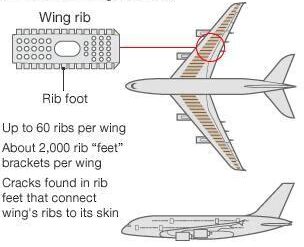
The FAA’s investigation began after receiving reports of potential structural irregularities in the lower side-of-body (SOB) splice plates, components that connect sections of the aircraft’s wing structure to the fuselage. Engineers discovered that excessive shim gaps between structural mating surfaces could create abnormal compression forces once fasteners are installed.
These forces translate into localized stress concentrations, particularly around fastener holes in the lower outboard wing skins. Over thousands of flight cycles, repeated aerodynamic loads—especially those generated during high-load maneuvers such as pull-ups and turbulence encounters—can initiate fatigue cracks in these areas.
The FAA’s structural analysis concluded that the existing inspection program was insufficient to reliably detect these early fatigue cracks. Without enhanced inspection procedures, cracks could propagate undetected, eventually reducing the aircraft’s limit load capacity, a fundamental measure of how much structural force an aircraft can safely withstand during operation.
Such degradation, if left unaddressed, could compromise the primary wing structure, which is one of the most critical load-bearing elements of the aircraft.
Mandatory Ultrasonic Inspections Across Critical Wing Components
To mitigate the risk, the proposed FAA directive introduces a comprehensive repetitive inspection program using advanced ultrasonic testing methods capable of detecting microscopic cracks hidden within structural layers.
The inspections will focus on several critical components in the Dreamliner’s wing-to-fuselage interface:
- Splice plates
- Front and rear spar terminal fittings
- Lower wing cords
- Jack pad structural areas
Ultrasonic inspection techniques allow maintenance crews to detect subsurface structural cracks that cannot be identified through visual examination alone. The method sends high-frequency sound waves through metal structures and measures reflections caused by material discontinuities.
If cracking is discovered during inspections, operators must perform detailed follow-up structural evaluations and necessary repairs before returning the aircraft to service.
Operational Safety Implications for the Boeing 787 Fleet
The FAA’s directive emphasizes that failing to detect fatigue cracking could weaken the aircraft’s primary structural system, potentially affecting the Dreamliner’s ability to safely withstand aerodynamic loads during flight.
Modern commercial aircraft are designed with substantial safety margins, but fatigue cracks in load-bearing structures can grow gradually under repeated stress cycles. If such cracks extend beyond certain thresholds, they may lead to progressive structural weakening.
In extreme cases, the FAA notes that unchecked cracking could reduce the aircraft’s ability to operate or land safely, prompting the agency to classify the condition as an unsafe structural scenario requiring regulatory intervention.
Importantly, regulators stress that the directive is preventive, meaning no catastrophic structural failures have been reported. Instead, the inspections are designed to ensure that early-stage fatigue damage is detected long before reaching critical limits.
Financial Impact on US Operators Remains Limited
The FAA estimates that compliance with the inspection program will cost approximately $24,310 per aircraft per inspection cycle. For the 17 Dreamliners registered in the United States, the total projected cost amounts to roughly $413,270.
Most of this cost is associated with labor rather than replacement parts. The directive estimates 286 work hours per inspection cycle, with technicians performing specialized non-destructive testing (NDT) procedures.
Key cost estimates include:
- Labor requirement: 286 hours per aircraft
- Hourly labor rate: $85
- Parts cost: $0 (inspection only)
- Total estimated cost per aircraft: $24,310
- Total estimated cost for US operators: $413,270
Because the issue stems from manufacturing tolerances, some or all repair expenses may be covered under aircraft warranty agreements, potentially reducing the financial burden on airlines.

Understanding Shim Gaps in Aircraft Manufacturing
In aircraft engineering, a shim gap refers to a small unintentional space between structural components during assembly. Since modern aircraft structures require extremely tight tolerances, manufacturers use shims—thin metal or composite fillers—to eliminate these gaps and ensure proper load distribution.
Shims play a crucial role in maintaining structural alignment and vibration control. Without them, the mechanical loads transferred between components may become uneven, creating stress points that accelerate fatigue damage.
Aircraft like the Boeing 787, which uses extensive carbon-fiber composite structures, require thousands of precisely fitted shims across the airframe. These gaps are typically measured using specialized instruments such as Gapman devices, which ensure assembly tolerances remain within engineering specifications.
Improper shim installation or gaps exceeding allowable limits can compromise joint stiffness and load transfer efficiency, increasing the likelihood of crack initiation under cyclic stress.
Regulatory Review and Public Comment Period
The FAA has opened a public comment period for the proposed directive, inviting feedback from airlines, manufacturers, and maintenance organizations until April 27, 2026. After reviewing industry responses, the agency may finalize the rule, making the inspections legally mandatory for affected aircraft.
The directive applies to Boeing 787-8, 787-9, and 787-10 variants produced during the specified timeframe. Regulators believe the limited number of aircraft involved means the measure will not have a significant economic impact on the broader aviation industry.
For the aviation sector, the proposed inspections highlight an enduring reality of aircraft manufacturing: even in an era of digital design and advanced composites, microscopic assembly tolerances can still shape the long-term structural health of an aircraft flying tens of thousands of feet above Earth.