Airbus entered the middle of the decade with the momentum of an industry leader. The European manufacturer consistently outperformed Boeing in orders between 2019 and 2024, benefiting from strong demand for the A320neo family and the continued fallout from Boeing’s 737 MAX crisis and production challenges. Yet the competitive landscape in 2026 became far more nuanced than simple order totals suggested. While Airbus continued to attract customers and expand its backlog, Boeing quietly staged a comeback where it mattered most: aircraft deliveries.
The rivalry between the two aerospace giants has evolved into a contest of production efficiency, profitability, and customer confidence. Although Airbus booked hundreds of new aircraft orders and retained advantages in several segments, Boeing’s improving manufacturing stability allowed it to regain ground after years of turbulence.
For airlines, investors, and suppliers, deliveries often matter more than order announcements. Aircraft manufacturers receive the majority of their revenue only when airplanes are handed over to customers, making production performance one of the most important indicators of commercial success.
Boeing And Airbus Entered The 2020s With Very Different Momentum
For decades, Boeing dominated commercial aviation. The company built its reputation on iconic aircraft families including the 707, 727, 737, 747, 757, 767, and 777. These aircraft defined global air travel and cemented Boeing’s position as the world’s premier aircraft manufacturer.
Airbus, established much later, spent decades challenging Boeing through innovative products and aggressive sales campaigns. By the 2010s, the balance of power had shifted dramatically. The A320 family emerged as a formidable competitor, while newer products like the A350 XWB expanded Airbus’ presence in the widebody market.
The early 2020s marked perhaps the most significant turning point in modern commercial aviation. Boeing struggled with the prolonged consequences of the 737 MAX grounding, certification delays involving the 777X, and manufacturing issues affecting the 787 Dreamliner. Airbus capitalized on these difficulties and effectively became the leading force in the commercial aviation sector.
During the first quarter of 2024 alone, Airbus secured 170 net orders. Demand remained robust across multiple aircraft programs, particularly for the A321neo and A350 families. Airlines including Delta Air Lines and Ethiopian Airlines continued adding A350 aircraft, demonstrating confidence in Airbus’ long-haul products.
Orders Favored Airbus, But Deliveries Told A Different Story
Although order books often capture headlines, deliveries ultimately determine cash flow and customer satisfaction. Since 2019, Airbus consistently maintained an advantage in annual deliveries, benefiting from Boeing’s production disruptions.
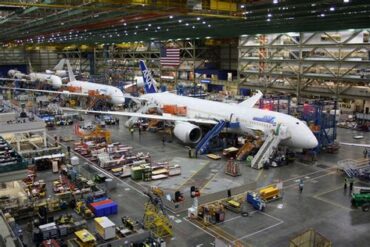
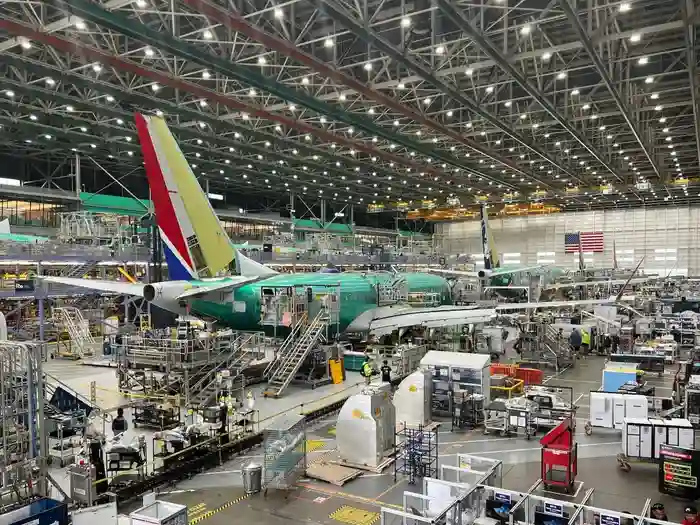
However, Boeing entered 2026 with a noticeably stronger manufacturing performance. During the first quarter, Boeing delivered 143 aircraft compared with Airbus’ 114. The improvement reflected years of efforts to stabilize production lines and resolve quality-control concerns that had hindered deliveries.
The progress demonstrated that Boeing’s existing product portfolio remained highly valuable. The manufacturer successfully maintained steady output of the 737 MAX 8, 737 MAX 9, and 787 Dreamliner, allowing deliveries to accelerate.
As the year progressed, Airbus recovered some ground. By May, Airbus had delivered 262 aircraft, slightly ahead of Boeing’s 250 deliveries. Meanwhile, Airbus recorded approximately 368 orders compared with Boeing’s 140 net orders.
Nevertheless, the narrow delivery gap represented a major achievement for Boeing. Only a few years earlier, such a recovery would have seemed unlikely.
Widebody Aircraft Became The Most Important Battlefield
While narrowbody jets dominate unit sales, widebody aircraft generate significantly higher margins. Consequently, competition in this segment carries enormous financial implications.
Boeing retained one of the strongest positions in the widebody market thanks to the continued popularity of the 787 Dreamliner family. The 787-9, in particular, remained one of the industry’s most sought-after aircraft because of its combination of efficiency, long range, and passenger capacity.
The larger 787-10 also gained traction among airlines seeking lower per-seat costs. Meanwhile, interest in the 777X family increased as carriers prepared for future fleet replacement cycles.
The upcoming 777-8F freighter attracted additional attention from cargo operators looking for modern, fuel-efficient aircraft capable of replacing aging fleets.
On the Airbus side, the A350 family experienced a resurgence. The A350-900 continued to attract customers, but the larger A350-1000 emerged as a surprise success. In 2025, the A350-1000 actually outsold its smaller sibling.
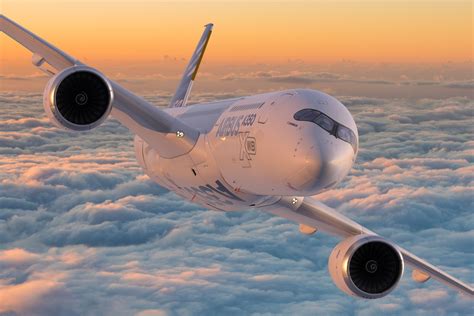
This trend carried strategic significance. The A350-1000 was specifically designed to replace older Boeing 777-300ER fleets and challenge the delayed 777-9. As airlines began planning long-term fleet renewals, both aircraft gained momentum.
Another unexpected success story involved the A330-900. Although overshadowed by the A350 and 787, the aircraft appealed to airlines seeking lower acquisition costs and easier integration into existing A330 fleets.
Because many airlines could receive A330neos sooner than new 787s, the aircraft found an increasingly valuable niche.
The Narrowbody Market Continued To Favor Airbus
Single-aisle aircraft remain the backbone of global aviation. This segment generates enormous order volumes and determines long-term market share.
The Boeing 737 MAX family remained highly competitive, particularly the MAX 8. The aircraft offered slightly greater range and capacity than the A320neo while maintaining comparable fuel efficiency.
However, Airbus possessed a decisive advantage through the A321neo. The aircraft became one of the most successful commercial jets ever built, accumulating more than 7,500 sales. Its exceptional range and economics made it attractive for both traditional airlines and low-cost carriers.
The 737 MAX 9 struggled to compete directly with the A321neo, but Boeing’s hopes increasingly centered on the larger MAX 10. Despite certification delays, the aircraft accumulated more than 1,400 orders because of its low operating costs.
Airbus also maintained leadership in the smaller narrowbody category through the A220 family.
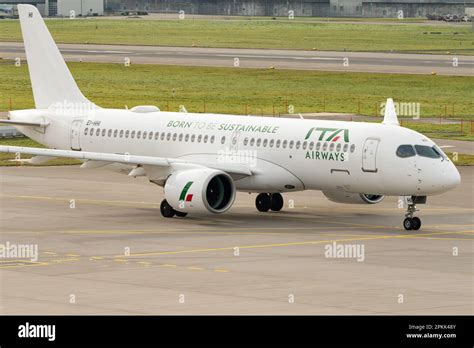
The A220 established itself as the preferred aircraft in its segment and surpassed competing products including the Embraer E2 and Boeing’s 737 MAX 7. Yet challenges persisted. Pratt & Whitney engine issues created supply chain bottlenecks that affected production and deliveries.
These same engine delays also impacted portions of the A320neo family, creating opportunities for Boeing to close the delivery gap.
Production Capacity Will Decide The Next Decade
Future victories will depend less on sales campaigns and more on manufacturing capacity. Both companies possess enormous backlogs, meaning the ability to build aircraft efficiently has become increasingly critical.
Boeing currently produces approximately 47 737 MAX aircraft monthly and intends to raise output to 52 units before eventually targeting 63 aircraft per month.
On the widebody side, Boeing manufactures eight 787 Dreamliners each month and plans to increase production to ten aircraft. Long-term ambitions include raising output to sixteen monthly units. Once certified, the 777X program could support production rates of four aircraft per month.
Airbus currently produces around 60 A320neo family aircraft monthly and aims to increase output to 75 aircraft. The company also plans to boost A220 production from eight aircraft per month to twelve.
The A350 production line faces ongoing component shortages, but Airbus intends to raise output to ten aircraft monthly and eventually reach twelve. Meanwhile, A330neo production is expected to increase gradually from four aircraft per month to five.
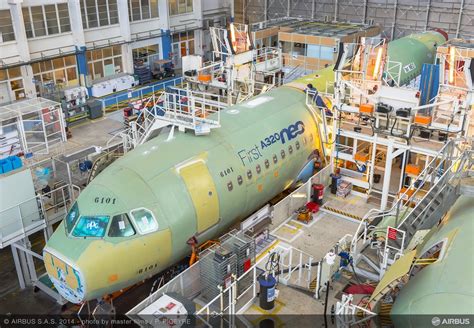
These numbers suggest Airbus should retain an overall delivery advantage in the long term due to its enormous narrowbody production scale. However, Boeing’s ambitions for higher 787 output and the eventual arrival of the 777X could shift the balance in the premium widebody segment.
Boeing’s Recovery Changed The Competitive Landscape
The narrative surrounding commercial aviation during the early 2020s largely focused on Airbus’ dominance. Yet by 2026, Boeing demonstrated that it remained far from defeated.
Airbus continued to excel in orders and maintained leadership in several market segments. Its A321neo dominated narrowbody demand, while the A350 family gained momentum among long-haul operators.
But Boeing quietly achieved something equally important. The company restored manufacturing stability and improved delivery performance. With customers prioritizing reliability and availability, those gains translated directly into revenue and renewed confidence.
The competition between Airbus and Boeing has never been solely about who sells the most aircraft. It is increasingly about who can build and deliver them efficiently. As production rates increase and supply chains stabilize, the rivalry entering the second half of the decade promises to become more intense than at any time since the dawn of the jet age.