The global aerospace rivalry between Boeing and Airbus has entered a new phase, marked by a symbolic yet strategically significant shift. For the first time since the 2018 MAX crisis, Boeing has surpassed Airbus in quarterly aircraft deliveries, signaling a notable—though nuanced—recovery for the American manufacturer.
In the first quarter of 2026, Boeing delivered 143 commercial aircraft, outpacing Airbus’ 114 deliveries and securing a 29-aircraft lead. This performance represents a 10% year-over-year increase for Boeing, while Airbus experienced a 16% decline over the same period. On the surface, the numbers suggest a decisive Boeing resurgence. However, a deeper look reveals a more complex story shaped by narrowbody dominance, supply chain disruptions, and shifting industrial momentum.
737 MAX Dominance Drives Boeing’s Delivery Surge
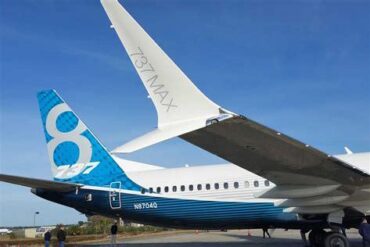
The backbone of Boeing’s Q1 success was unmistakably the 737 MAX program, which accounted for 114 out of 143 deliveries, or nearly 80% of total output. This overwhelming reliance underscores how critical the narrowbody segment has become in determining competitive advantage.
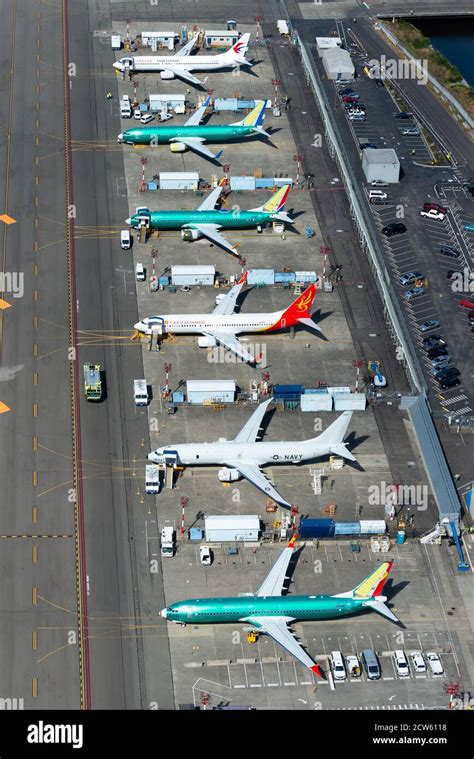
The 737’s performance reflects a dramatic recovery from years of crisis. Following the global grounding in 2019, subsequent regulatory scrutiny, and the reputational damage inflicted by safety concerns, Boeing has steadily rebuilt confidence in its flagship narrowbody. The program also faced another setback in 2024, when the Alaska Airlines door plug incident triggered renewed oversight and production constraints from regulators.
Despite these challenges, Boeing’s Q1 output marks its strongest first-quarter narrowbody delivery performance since 2018. Even more notable is that this achievement came despite a late-quarter disruption involving damaged wiring on approximately 25 undelivered aircraft, which pushed around ten deliveries into the second quarter. This highlights a key point: Boeing’s delivery engine is not just recovering—it is becoming increasingly resilient.
Widebody contributions, while present, played a secondary role. Boeing delivered 15 Dreamliners (787-9 and 787-10) alongside smaller numbers of freighters, including six 767Fs and eight 777Fs. Still, the narrative remains firmly centered on the 737, which has re-emerged as Boeing’s primary growth driver.
Airbus Struggles Under Engine Supply Constraints
While Boeing’s gains are notable, Airbus’ weaker quarter is equally critical to understanding the outcome. The European manufacturer’s delivery shortfall can be largely traced to ongoing issues with Pratt & Whitney, whose geared turbofan (GTF) engines power a significant portion of the A320neo family.
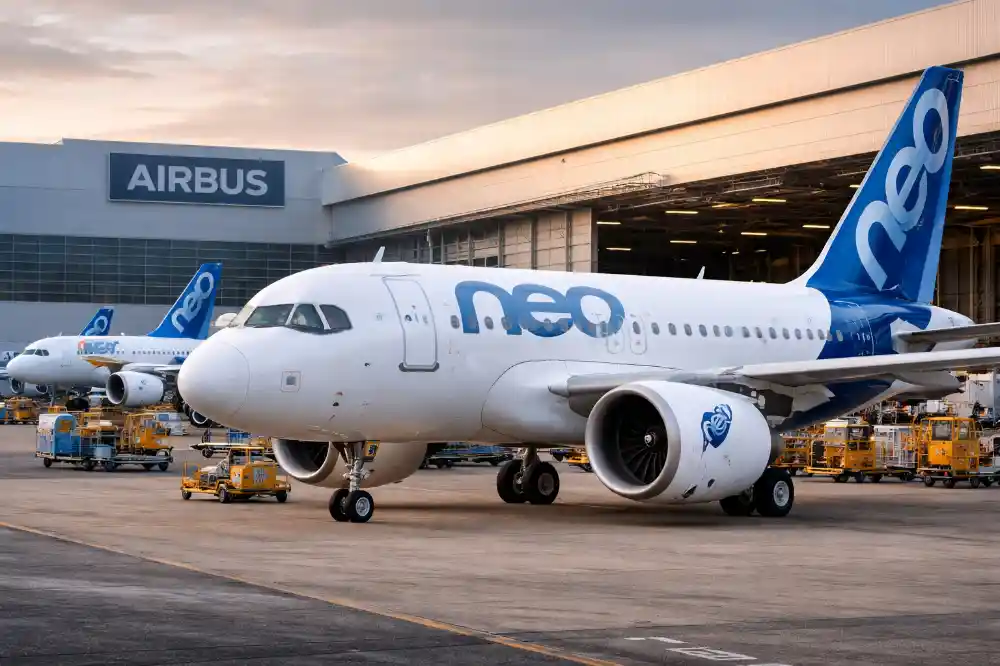
Engine shortages have severely disrupted Airbus’ production flow. Deliveries of A320-family aircraft fell by 25 units compared to Q1 2025, marking the company’s worst first-quarter narrowbody performance in over 20 years. The financial implications are substantial, with the shortfall equating to more than $3 billion in lost revenue at list prices.
The root of the issue lies in competing demands for limited engine supply. Pratt & Whitney continues to deal with the aftereffects of its GTF durability crisis, which has forced airlines to prioritize spare engines and maintenance support over new aircraft deliveries. Airbus has effectively been competing with its own customers for access to these constrained resources.
Airbus CEO Guillaume Faury has publicly expressed frustration, citing “significant engine shortages” as a major factor impacting 2026 delivery targets. The situation has forced Airbus to slow its production ramp-up plans, introducing uncertainty into what was previously a highly predictable growth trajectory.
United Airlines Emerges as Boeing’s Key Delivery Catalyst
A critical factor in Boeing’s Q1 performance has been the aggressive fleet expansion strategy of United Airlines, which emerged as the manufacturer’s largest customer during the quarter.
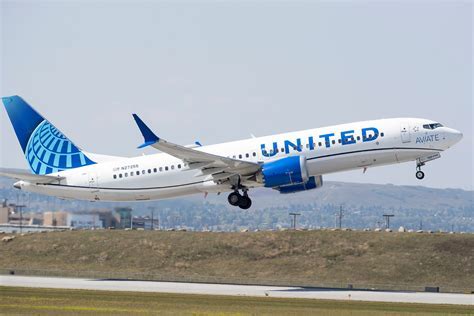
United took delivery of 29 aircraft, including 25 Boeing 737 MAX 9s and four 787-9 Dreamliners. This pace—equivalent to roughly two 737 deliveries per week—highlights the airline’s confidence in Boeing’s narrowbody platform and its broader fleet modernization strategy.
With a fleet of approximately 600 active 737 aircraft, United now ranks among the largest operators globally, just behind ultra-low-cost giant Ryanair in total 737 fleet size. The scale of this commitment provides Boeing with a stable delivery pipeline and reinforces the central role of the 737 program in its recovery.
Other notable deliveries added further depth to the quarter. Air India received its first new 787-9 from its major 2023 order, marking a new phase following privatization. Meanwhile, KLM Royal Dutch Airlines completed its Dreamliner fleet, and Lufthansa integrated additional 787-9s into its premium “Allegris” cabin rollout.
Production Expansion Signals Boeing’s Strategic Intent
Boeing’s immediate challenge is not winning a single quarter—it is sustaining momentum. To that end, the company is accelerating production capacity across its key programs.
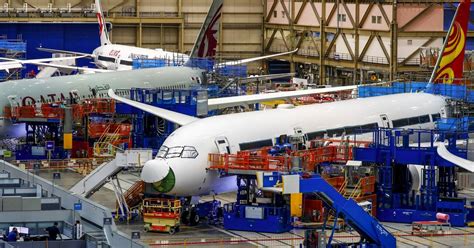
Plans are underway to open a fourth 737 production line in Everett by mid-2026, supporting a long-term target of 63 aircraft per month. At the same time, Boeing aims to increase 787 production from eight to ten units per month by the end of the year. These moves reflect a strategic push toward scale and consistency—both essential for long-term competitiveness.
The focus on production stability is particularly important given Boeing’s recent history. The MAX crisis, combined with pandemic-era disruptions and regulatory scrutiny, exposed vulnerabilities in manufacturing processes and quality control. Rebuilding trust now requires not just delivering aircraft, but doing so reliably and at scale.
A Temporary Lead or a Structural Shift?
Despite Boeing’s Q1 victory, the broader competitive landscape remains fluid. Airbus still holds a strong order backlog and is expected to recover once engine supply constraints ease. The current gap reflects not a permanent shift, but a combination of Boeing’s improving execution and Airbus’ temporary challenges.
Still, perception matters. Deliveries are the most direct measure of industrial performance, translating into revenue and customer confidence. By outperforming Airbus—even briefly—Boeing sends a clear signal to the market: it is once again capable of competing at the highest level.
The real test lies ahead. Sustaining delivery leadership will depend on Boeing’s ability to maintain production discipline while navigating regulatory oversight and supply chain pressures. For Airbus, the priority is clear—resolve engine shortages and restore operational consistency.
In this high-stakes duopoly, momentum can shift quickly. Q1 2026 may not mark a definitive turning point, but it undeniably resets the narrative. Boeing is no longer just recovering—it is competing again.