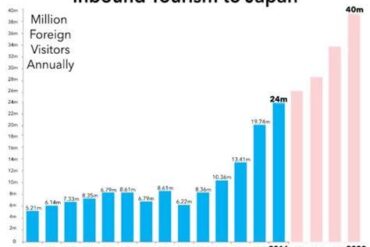
In May 2025, Japan’s tourism industry achieved a historic milestone, welcoming 3.69 million international visitors, marking the highest number ever recorded for this month. This substantial increase of 21.5% year-on-year underscores Japan’s emerging status as a global tourism powerhouse. Central to this surge were the iconic cities of Tokyo and Kyoto, renowned for their rich cultural heritage, bustling urban landscapes, and unique experiences that continue to captivate travelers from around the world. The remarkable influx of tourists not only highlights Japan’s sustained appeal but also sets the stage for a promising outlook for the remainder of the year.
The influx of nearly 3.7 million tourists in May 2025 reflects a broader trend of growth within Japan’s tourism sector, solidifying its place in the global tourism market. As the country navigates the complexities of overtourism, it has become increasingly evident that inbound tourism is no longer a fleeting trend but a vital economic driver. In light of these developments, Japan is actively implementing measures to manage tourist numbers while maintaining the integrity of its most cherished destinations.

Despite facing challenges related to overtourism, particularly in popular locations such as Tokyo and Kyoto, Japan’s recent record-breaking visitor numbers demonstrate an evolving tourism landscape. The government is acutely aware of the pressures that high visitor concentrations can place on local communities and infrastructure. To counteract these effects, Japan is adopting stricter regulations aimed at distributing tourist traffic more evenly across the country. These governance strategies include enhanced crowd management techniques and initiatives designed to promote lesser-known destinations, thereby relieving some of the pressure from heavily frequented areas.
In contrast to Japan’s proactive approach, China has adopted a markedly different strategy regarding its tourism sector. Since the beginning of 2024, China has eased visa restrictions and broadened its borders, striving to attract a greater number of international tourists. This shift represents part of a larger effort to rejuvenate its travel industry while ensuring economic stability. While Japan is focused on managing visitor flows through governance, China’s strategy emphasizes enhancing its cultural and natural offerings to appeal to global travelers.
The implications of overtourism are far-reaching for Japan, affecting both its economy and local communities. One significant consequence is the emergence of dual pricing, where locals and tourists pay different rates for the same goods and services. This phenomenon highlights the urgent need for effective resource management within the tourism industry. The Japanese government is keenly aware of these challenges and is committed to investing in strategies that will help mitigate the impact of overtourism, ultimately ensuring a sustainable tourism environment.
Japan’s focus on technology, including the integration of artificial intelligence (AI), is pivotal in managing visitor flows and improving overall infrastructure. By leveraging innovative technologies, Japan aims to create a more sustainable tourism framework that accommodates the growing number of visitors while preserving the authenticity of its cultural sites. However, even with significant government intervention, the challenges posed by the sheer volume of tourists at popular destinations remain a pressing concern that requires continuous attention.
Conversely, China’s tourism strategy hinges on narrative reconstruction rather than stringent management. As the nation reopens its borders, the emphasis shifts towards reframing the narrative surrounding its rich cultural heritage and diverse landscapes. This narrative aims to resonate deeply with international travelers, moving beyond traditional tour guide formats and outdated representations. Today’s travelers seek engaging experiences that connect them to the everyday life of the country. From grassroots activities like rural basketball tournaments to quirky local phenomena, China possesses a wealth of untapped cultural gems that can appeal to a global audience.
However, the challenge lies in effectively communicating these experiences to international visitors. Many of China’s new cultural tourism products lack the necessary context for a global audience, underscoring the need for a new generation of “contextual translators”—professionals capable of bridging the gap between local realities and international expectations. These storytellers must possess not only language skills but also an understanding of social trends and cultural nuances, enabling them to present China’s vibrant culture in a manner that is both relatable and engaging.
While Japan grapples with the need for strategies to divert tourist traffic, China focuses on crafting emotionally resonant narratives to enhance its tourism offerings. Both countries face significant challenges within their tourism industries, yet their paths forward are notably distinct. Japan’s tourism landscape is characterized by the necessity for governance and resource allocation, while China endeavors to build a compelling narrative that highlights its cultural wealth.
As Japan continues to refine its management strategies in response to record-breaking tourism numbers, the future of tourism in Asia appears poised for transformation. The contrasting approaches of Japan and China will likely shape the regional tourism industry over the next several years. With Japan’s commitment to sustainable tourism practices and China’s focus on narrative enhancement, both nations are set to navigate the evolving global travel market in their own unique ways.
In summary, the surge in tourism to Japan, particularly in Tokyo and Kyoto, signifies not only a remarkable recovery post-pandemic but also a pivotal moment in the country’s tourism evolution. With innovative strategies aimed at balancing visitor numbers and preserving local cultures, Japan stands at the forefront of a new era in global tourism, paving the way for continued growth and sustainability.