The aviation industry rarely looks backward. It is a sector defined by relentless innovation, fuel efficiency gains, and the constant pursuit of newer, quieter, and more economical aircraft. Yet every so often, a legacy aircraft defies the trend—and not out of nostalgia alone, but because it still solves a very modern problem. That is precisely what is unfolding as the Boeing 757 re-emerges in premium transatlantic flying, spearheaded by a boutique airline that understands the value of precision over scale.
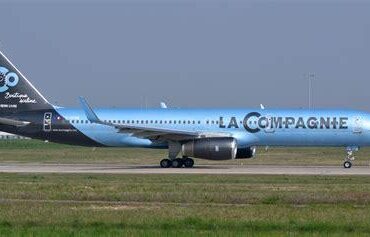
La Compagnie’s decision to reintroduce the Boeing 757 into its fleet, even temporarily, is not an act of sentimentality. It is a calculated move grounded in demand dynamics, operational flexibility, and a deep understanding of premium travel behavior. In an era dominated by aircraft like the Boeing 787-8 and Airbus A321neo, the return of a nearly three-decade-old jet might seem counterintuitive. But in reality, it highlights a powerful truth: the right aircraft, deployed in the right market, can outperform newer alternatives.
The reappearance of the 757 on transatlantic routes is also a reminder of how certain aircraft were ahead of their time. Designed with a unique blend of power, range, and runway performance, the Boeing 757 has always occupied a niche that newer aircraft have struggled to replicate perfectly. Its return, particularly in an all-business-class configuration, signals a subtle but important shift in how airlines are thinking about premium travel.

Why the Boeing 757 Still Makes Strategic Sense in 2026
At first glance, bringing back a 27-year-old aircraft into a premium operation seems like a contradiction. Airlines have spent years phasing out older jets in favor of more efficient models with lower operating costs. However, the Boeing 757 occupies a rare sweet spot that continues to hold strategic value.
Its range of approximately 3,900 nautical miles allows it to comfortably bridge transatlantic routes that are too thin for widebody aircraft yet too demanding for many narrowbodies. While the Airbus A321XLR is poised to dominate this segment in the future, current fleet availability constraints mean airlines must look for immediate solutions.
The 757’s powerful engines provide exceptional takeoff performance, particularly useful at airports with shorter runways or operational constraints. This capability allows airlines like La Compagnie to maintain flexibility in scheduling and routing—an advantage that cannot be easily replicated by newer aircraft without compromise.
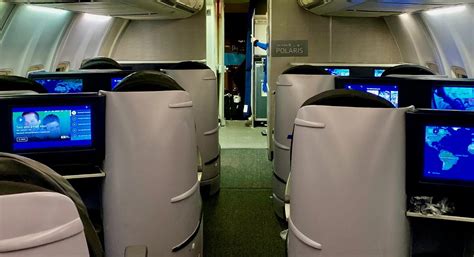
Equally important is the aircraft’s cabin adaptability. Configured with just 76 to 80 all-business-class seats, the 757 transforms into a highly efficient premium platform. The reduced passenger load enhances range, while the spacious layout aligns perfectly with the expectations of high-yield travelers.
La Compagnie’s Calculated Return to a Proven Platform
La Compagnie’s business model has always been unconventional, and that is precisely its strength. By focusing exclusively on business-class passengers, the airline eliminates the complexity of multi-cabin service while maximizing revenue per seat.
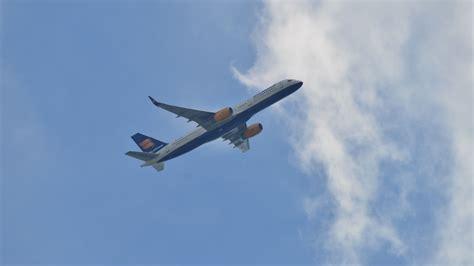
The temporary lease of a Boeing 757 from Icelandair is a textbook example of tactical fleet management. Rather than waiting for new aircraft deliveries, the airline is leveraging an available asset to capture peak summer demand across the Atlantic. With over 50 flights scheduled during high-traffic periods, the move is designed to boost capacity without long-term commitments.
Routes connecting Paris Orly and Milan Malpensa to Newark are particularly well-suited for this strategy. These city pairs generate consistent premium demand, driven by a mix of business travelers and increasingly affluent leisure passengers seeking comfort without the exorbitant fares of legacy carriers.
The economics are compelling. By maintaining a relatively low seat count while charging competitive business-class fares—often 30 to 50 percent below traditional airlines—La Compagnie positions itself as a “premium disruptor.” The Boeing 757, despite its age, fits seamlessly into this model.
The Rise of the Premium Leisure Traveler
One of the most significant shifts in aviation over the past decade has been the transformation of premium demand. Business travel, once the backbone of high-yield routes, has evolved in both volume and nature. Meanwhile, leisure travelers have moved decisively upmarket.
Today’s premium cabins are increasingly filled with passengers who are not traveling for corporate reasons but are willing to pay for comfort, privacy, and time efficiency. This trend has been accelerated by post-pandemic travel behavior, where experiences and personal well-being take precedence over cost minimization.
La Compagnie has capitalized on this shift with remarkable precision. Its simplified service model, competitive pricing, and curated onboard experience resonate strongly with this new demographic. The reintroduction of the Boeing 757 allows the airline to scale this offering during peak periods without diluting its brand identity.
The aircraft itself enhances the experience. With fewer passengers onboard, service becomes more personalized, boarding is quicker, and the overall journey feels less crowded. These intangible benefits often matter more to premium travelers than marginal differences in aircraft age or cabin technology.
All-Business-Class Flying: A Model That Refuses to Fade
The concept of an all-business-class airline has historically been met with skepticism. High operating costs, limited market size, and vulnerability to economic downturns have caused several ventures to fail. Yet the model persists—and in some cases, thrives.
What separates successful operators from failed experiments is discipline. The model works only in specific markets where demand is consistent, competition is manageable, and operational efficiency is tightly controlled. La Compagnie has demonstrated this balance, achieving profitability in a segment many considered unsustainable.
The Boeing 757 plays a crucial role in enabling this model. Its size is ideal—not too large to risk low load factors, yet not too small to limit revenue potential. Combined with its range capabilities, it allows airlines to connect high-value city pairs directly, avoiding the inefficiencies of hub-and-spoke systems.
There is also a psychological element at play. An all-business-class flight creates a sense of exclusivity that enhances perceived value. Passengers are not just buying a seat; they are buying into a curated travel environment.
A Competitive Landscape with Few True Rivals
Despite its appeal, the all-business-class segment remains sparsely populated. Aside from La Compagnie, only a handful of airlines have attempted to operate exclusively premium cabins in recent years.
BeOnd, a Maldives-based carrier, represents the most recent entrant. Its focus on luxury leisure routes highlights a different interpretation of the model, targeting vacation travelers rather than business-heavy corridors. However, operational challenges and external factors such as fuel costs have already tested its resilience.
Historically, other attempts—including Silverjet and PrivatAir—struggled to sustain operations. Their failures underscore the fragility of the model when exposed to volatile market conditions.
Even legacy airlines have experimented with premium-heavy configurations. British Airways’ all-business-class service between London City and New York once offered a uniquely tailored experience, complete with a refueling stop in Shannon. While innovative, it ultimately succumbed to changing market dynamics.
Against this backdrop, La Compagnie’s measured growth stands out. Its use of the Boeing 757 is not a reinvention but a refinement—a way to enhance capacity without overextending risk.
The Boeing 757: Engineering That Still Delivers
To understand why the Boeing 757 continues to find relevance, one must look beyond its age and examine its engineering fundamentals. Introduced in the early 1980s, the aircraft was designed to replace the Boeing 727 while offering significantly improved efficiency and performance.
Its twin-engine configuration, combined with early ETOPS certification, allowed it to operate transatlantic routes that were previously the domain of larger widebody jets. This capability effectively opened new markets, enabling airlines to connect secondary cities directly.
The cockpit design was equally revolutionary. Shared commonality with the Boeing 767 allowed pilots to transition between the two aircraft with minimal additional training—a concept that has since become standard in modern fleet planning.
Perhaps most notably, the Boeing 757 earned a reputation among pilots for its handling characteristics. Responsive, powerful, and forgiving, it is often described as one of the most enjoyable commercial aircraft to fly. This intangible quality contributes to its enduring legacy.

Efficiency vs. Capability: The Trade-Off That Keeps the 757 Relevant
Modern aircraft like the Boeing 787 and Airbus A321neo are undeniably more fuel-efficient. They incorporate advanced materials, aerodynamics, and engine technology that reduce operating costs significantly. However, efficiency is only one piece of the equation.
The Boeing 757 offers a combination of payload, range, and performance that remains difficult to match precisely. In certain scenarios—particularly transatlantic routes with moderate demand—it can outperform newer aircraft in terms of overall economic viability.
This is especially true when the aircraft is already available and does not require significant capital investment. Leasing a 757 for seasonal operations allows airlines to capture revenue opportunities without long-term financial exposure.
In other words, the aircraft’s relevance is not about competing with new models head-to-head. It is about filling gaps that newer aircraft cannot always address efficiently.
A Temporary Return with Lasting Implications
La Compagnie’s use of the Boeing 757 is, by design, temporary. The airline is awaiting the delivery of additional Airbus A321neo aircraft, which will eventually take over its core operations. Yet the implications of this interim solution extend far beyond a single season.
The move highlights the importance of flexibility in modern aviation. Airlines that can adapt quickly to demand fluctuations, fleet constraints, and market opportunities gain a decisive advantage. The ability to deploy an older but capable aircraft is part of that flexibility.
It also underscores the enduring value of well-designed aircraft. The Boeing 757 may be nearing the end of its operational life, but its continued relevance speaks volumes about the foresight of its original design.
The Emotional and Practical Legacy of an Aviation Icon
There is an undeniable emotional dimension to the Boeing 757’s return. For aviation enthusiasts, it represents a connection to an era when aircraft design prioritized performance and character as much as efficiency. For airlines, it remains a practical tool—one that continues to deliver value in specific contexts.
Passengers, too, benefit from this convergence of nostalgia and utility. Flying on a Boeing 757 today is not a step backward; it is a reminder that innovation is not always linear. Sometimes, the past still has something to offer the present.
Conclusion: A Strategic Comeback That Redefines Relevance
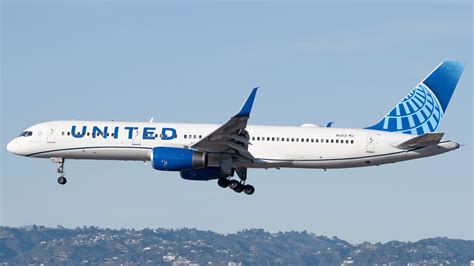
The return of the Boeing 757 to premium transatlantic flying is not a revival in the traditional sense. It is a strategic deployment of a proven asset in a market that demands precision, adaptability, and differentiation.
La Compagnie’s decision to bring the aircraft back into service reflects a broader truth about aviation: success is not determined solely by having the newest technology, but by using the right tools at the right time. The Boeing 757, with its unique blend of capability and character, continues to prove that relevance is not defined by age, but by purpose.
As the industry moves forward with next-generation aircraft, the 757’s brief resurgence serves as both a tribute and a lesson. It reminds us that innovation leaves a legacy—and sometimes, that legacy still has work to do.