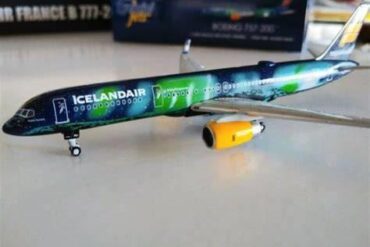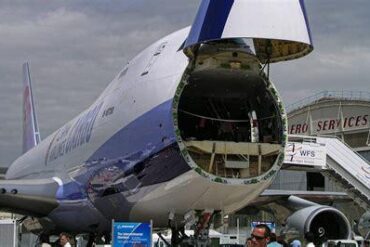
The Boeing 757-200 has long stood as a benchmark in narrowbody aviation, a true workhorse that blended capacity, performance, and range like few aircraft in commercial service. Designed in the 1980s and thriving through the late 1990s and early 2000s, the 757 carved out a unique position. From short-field performance to crossing the Atlantic with ease, it redefined what a narrowbody aircraft could do.
With its retirement inching closer for many operators due to aging airframes and rising maintenance costs, airlines have been seeking a viable successor. Boeing’s answer, the 737 MAX 10, steps forward. Yet the question looms: Can it really fill the shoes of the 757-200?
The 757-200: A Legacy That Still Lingers
Few aircraft command the kind of respect the 757-200 does. Its long, lean fuselage, coupled with a powerful set of engines from either Rolls-Royce or Pratt & Whitney, gave it a level of thrust and performance that bordered on widebody characteristics. Capable of carrying around 180 passengers in a typical two-class configuration and reaching 4,088 nautical miles, it was one of the few narrowbodies that could cross the Atlantic with regularity and ease.
Moreover, it could do so from secondary airports with short runways, such as New York’s LaGuardia or London City, offering route flexibility that even modern aircraft struggle to replicate. Airlines like Delta and United used the 757-200 for everything from premium transcon services to thinner transatlantic routes—missions that required just the right balance of performance and economics.
Introducing The 737 MAX 10: Boeing’s Best Shot
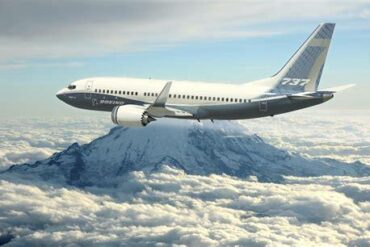
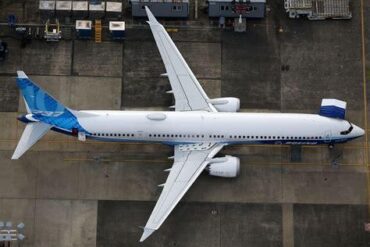
The 737 MAX 10 is the largest variant in the MAX family, boasting a stretched fuselage and a seating capacity of up to 230 passengers in a high-density layout. It features LEAP-1B engines, updated flight deck systems, winglet enhancements, and improved fuel efficiency that promises around 20% lower fuel burn and CO₂ emissions compared to previous-generation 737s.
Where it shines is fleet commonality. Airlines that already operate MAX 8s or MAX 9s can easily incorporate the MAX 10, reducing training and maintenance overhead. This plug-and-play approach makes it a compelling choice for carriers looking to increase seat capacity on domestic routes without introducing new complexities into their operations.
But despite its advantages, the MAX 10 has one crucial shortcoming: range.
The Range Conundrum: MAX 10 vs. 757-200
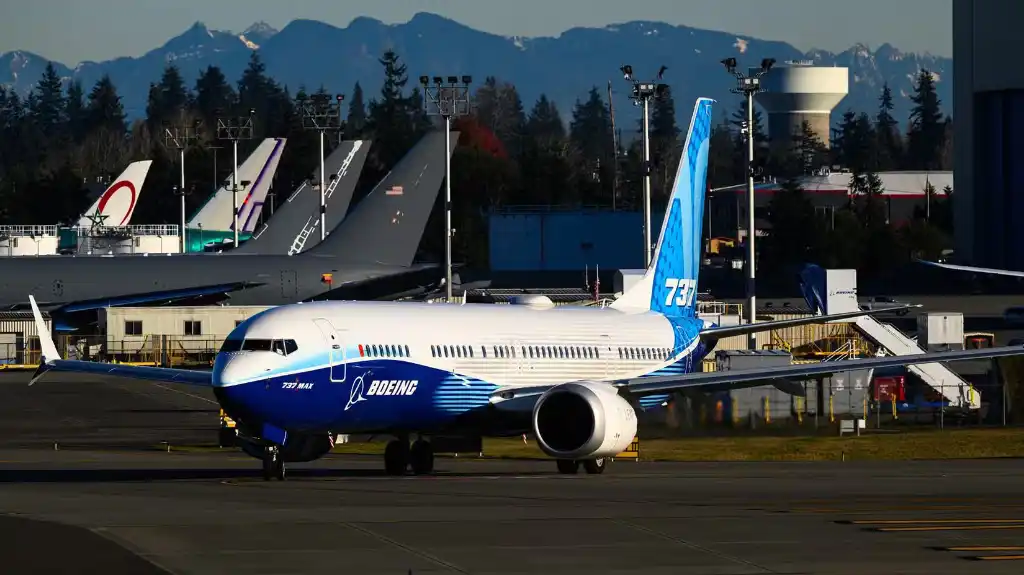
According to Boeing, the 737 MAX 10 has a maximum range of 3,100 nautical miles—a full 1,000 miles less than the 757-200. While that’s adequate for most domestic and regional routes, it falls short for many long-haul transatlantic missions.
For example, routes like Newark to Stockholm or Chicago to Edinburgh, which United frequently operates using the 757-200, are at or beyond the operational envelope of the MAX 10. These routes don’t support widebody traffic, but they also demand the kind of performance only the 757-200 can consistently deliver.
This range gap is not just a numerical difference—it represents lost opportunity. The inability to launch or maintain thinner long-haul routes due to aircraft limitations directly impacts airline network planning and profitability.
Passenger Experience: Where The MAX 10 Excels
One area where the MAX 10 does edge ahead is passenger comfort. The 757-200, despite its strengths, is a product of a different era. While many airlines have retrofitted interiors, the narrow cabin, low-slung bins, and dated lighting often betray its age.
The MAX 10 offers a modern cabin experience, complete with larger overhead bins, quieter engines, and LED mood lighting. From an onboard product perspective, it better aligns with what passengers now expect—even on shorter routes. As aircraft age, even the best performance specs cannot make up for a dated in-flight experience.
Delays and Regulatory Hurdles: MAX 10’s Rocky Road to Service
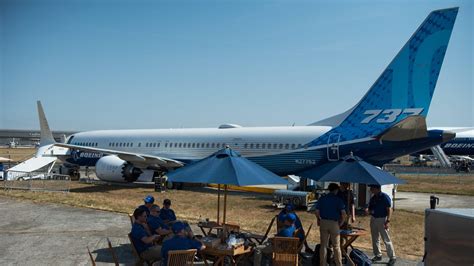
Although promising on paper, the MAX 10 has suffered through a drawn-out certification process. Due to increased FAA scrutiny following the MAX 8 incidents, Boeing’s newest variant has yet to receive regulatory clearance. The most pressing challenge remains its engine anti-ice system, which was flagged by regulators due to overheating risks.
As a result, United Airlines and other major customers are now sitting on airframes that have never flown passengers, some already 2.6 years old. The delay puts pressure on Boeing to resolve these issues swiftly, especially given that MAX 10 orders are critical to several airlines’ narrowbody renewal strategies.
A Split Strategy: Combining the MAX 10 and Airbus A321XLR
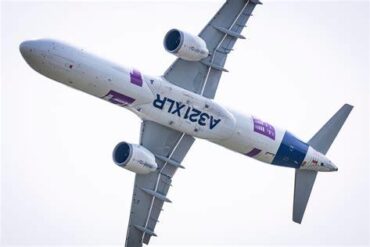
Perhaps the most telling industry shift is the recognition that no single aircraft can replace the 757-200. Many airlines, including United, are opting for a dual-aircraft strategy. The 737 MAX 10 will handle high-density, short- to medium-haul routes, while the Airbus A321XLR will tackle the longer, thinner missions that the 757-200 once dominated.
The A321XLR’s expected range of 4,700 nautical miles reclaims the territory vacated by the 757-200 and even goes further. With typical two-class seating for up to 220 passengers, it outpaces both the MAX 10 and the 757-200 in range and matches them in capacity.
Airlines that adopt both platforms—Boeing’s MAX 10 for domestic efficiency and Airbus’ XLR for international agility—are effectively covering the full mission profile once shouldered by the 757-200 alone.
Can The MAX 10 Replace The 757-200? Not Entirely
The reality is nuanced. The 737 MAX 10 offers a compelling replacement for the 757-200—but only within certain bounds. For domestic U.S. operations, it’s a natural successor. Airlines like Delta and United will find it efficient and economical for transcontinental routes, where its range is more than sufficient, and its capacity meets market demands.
However, for transatlantic and other long-haul narrowbody missions, the MAX 10 falls short. This isn’t a flaw per se—it’s a limitation based on design priorities. The MAX 10 was never meant to mirror the 757’s performance exactly. Instead, it represents a step forward in efficiency, cabin design, and fleet optimization, albeit at the cost of versatility.
Industry Sentiment and Future Outlook
Despite its limitations, the MAX 10 remains pivotal to Boeing’s future. With 167 orders from United alone, it will soon become a common sight at airports across North America. But certification delays and increasing competition from Airbus mean Boeing must act quickly to bring it to market.
At the same time, Airbus’ A321XLR continues to gain ground. Its extended range and capacity give it a unique selling point that directly addresses the void left by the 757-200.
In the long term, Boeing may need to consider a clean-sheet design that genuinely replaces the 757 in all mission types—a new mid-market aircraft (NMA) that could serve long, thin routes without compromise. Until then, the MAX 10 and A321XLR together form the closest functional replacement to one of aviation’s most legendary narrowbodies.
Final Verdict: A Partial Replacement With A Modern Edge
While the Boeing 737 MAX 10 cannot fully step into the shoes of the 757-200, it doesn’t need to. By serving a targeted segment of the narrowbody market, it allows airlines to increase efficiency and simplify operations on high-volume routes. For everything else, particularly those routes that made the 757-200 famous, airlines are already moving toward the A321XLR.
The MAX 10 is not a one-to-one successor. But in today’s aviation ecosystem—defined by fleet rationalization, emissions goals, and fuel efficiency—it offers enough value to be an essential piece of the puzzle. The era of the 757 may be ending, but the needs it fulfilled are evolving, not disappearing.