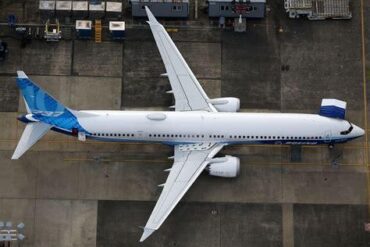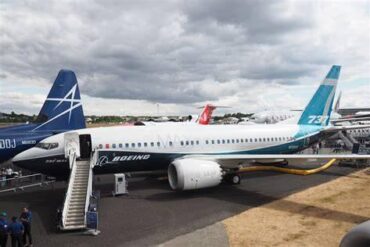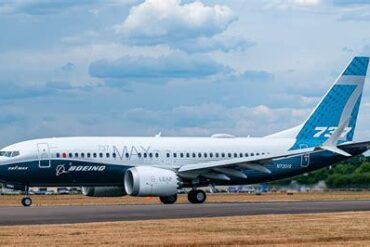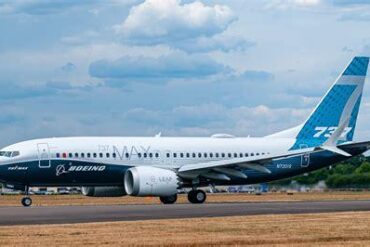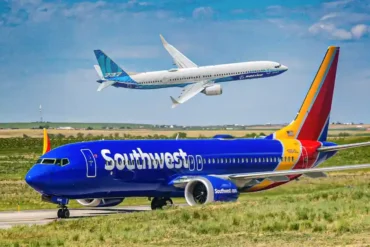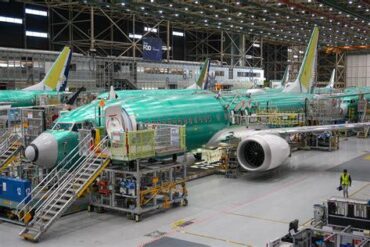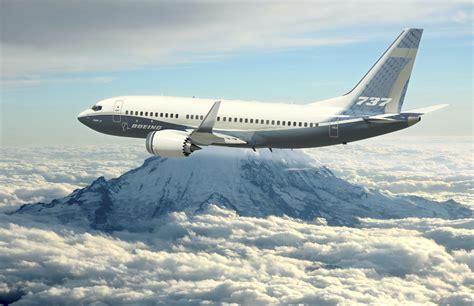
The Boeing 737 MAX is not just a commercial jetliner—it is the backbone of Boeing’s commercial aircraft production and one of the most strategically vital assets in modern aviation. Despite a turbulent past marred by controversy, the 737 MAX remains an industry workhorse and a technological symbol of efficiency, reach, and scale. As of mid-2025, this narrowbody jet comprises over 75% of Boeing’s commercial aircraft backlog, with 4,753 units ordered out of a total 6,282. No other aircraft within Boeing’s lineup has such gravitational pull on the company’s financial health or on the shape of global airline fleets.
The Engineering Heartbeat: LEAP-1B Engine Power
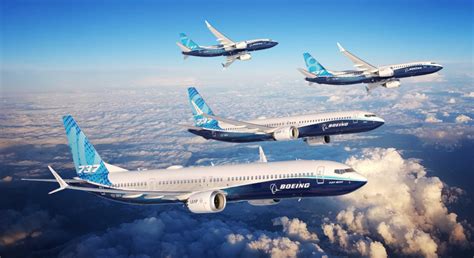
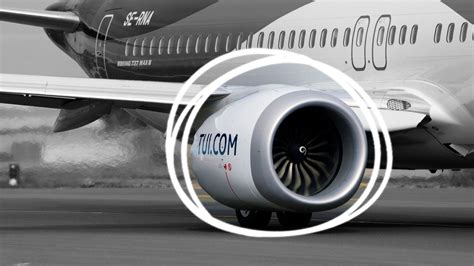
Central to the Boeing 737 MAX’s performance is the CFM International LEAP-1B engine, a product of a 50/50 joint venture between GE Aerospace (USA) and Safran (France). This engine isn’t just a mechanical component—it’s the enabler of MAX’s efficiency-first design. With a fan diameter of 69 inches and thrust capability of up to 28,000 pounds, the LEAP-1B provides the muscle the aircraft needs while cutting fuel consumption by 15% and lowering NOx emissions by up to 50% compared to earlier generations.
Designed to meet some of the world’s strictest noise and environmental standards, the LEAP-1B has carved out its dominance in the narrowbody engine market. Its only rival—the Pratt & Whitney GTF—doesn’t yet match its global install base. The LEAP-1B is used exclusively on all 737 MAX variants, making it the most commonly used narrowbody engine on earth.
Sales Power: A Legacy Tested but Undiminished
The 737 family traces its lineage to the 1960s, and its cumulative sales have historically outpaced all other commercial aircraft. However, in recent years, the Airbus A320 family has begun to overtake it in both orders and deliveries. A critical factor is age: the 737 was never originally designed for large-diameter engines, leading to reengineering that placed engines higher and more forward under the wing, necessitating systems like MCAS—a change that contributed to the two deadly crashes in 2018 and 2019.
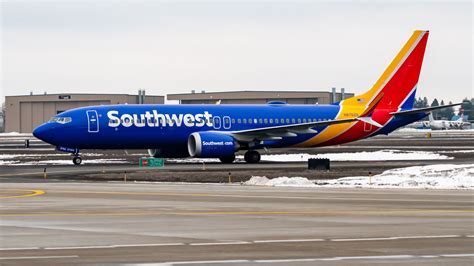
Despite this, the 737 MAX has surged back, aided by renewed safety certifications and aggressive airline reorders. Boeing’s current backlog of nearly 5,000 MAX jets places it among the two undisputed champions of the narrowbody market, alongside Airbus’s 7,128-strong A320neo family backlog. The aircraft remains integral to global carriers like Southwest Airlines, Ryanair, United, and American Airlines, forming the backbone of their short- to medium-haul operations.
Operational Reach: How Far the MAX Can Go
The Boeing 737 MAX family has been designed to offer a flexible, efficient range profile for airlines operating in diverse markets. The range capabilities, while varying between models, represent a significant leap from the prior 737 Next Generation (NG) series.
- 737 MAX 7: 3,800 nautical miles (longest range)
- 737 MAX 8: 3,500 nautical miles
- 737 MAX 9: 3,300 nautical miles
- 737 MAX 10: 3,100 nautical miles
- Business Jet (BBJ) variants: up to 6,600 nautical miles
These ranges allow the MAX to cover most transcontinental routes and intra-regional missions across North America, Europe, the Middle East, and Asia. However, it still falls short of Airbus’s A321LR (4,000 nm) and A321XLR (4,500 nm), which are gaining traction in the long narrowbody sector.
Cruise and Speed: Matched Performance for the Modern Age
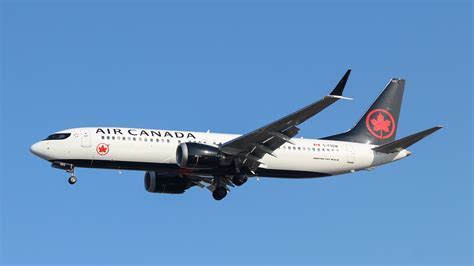
In terms of cruising speed, the 737 MAX performs comparably to its closest rivals. It typically cruises at Mach 0.79, equivalent to about 530 mph (853 km/h). This is nearly identical to the A320 and A321, which also fly at around Mach 0.78–0.79. Most modern commercial jets, particularly narrowbodies, have converged on this cruise envelope due to fuel efficiency considerations.
Aircraft manufacturers are not prioritizing speed gains. Unlike the era of the Concorde, today’s industry is focused on efficiency, emissions, and lifecycle cost reductions. Thus, Mach 0.79 remains the sweet spot for economy and performance in commercial aviation.
Weight and Capacity: Maximum Payload Efficiency
The Boeing 737 MAX is built to serve both high-density and long-range operations, offering configurations that suit the needs of budget airlines and full-service carriers alike:
- MAX 7: 172 seats, 177,000 lb max take-off weight
- MAX 8: Up to 210 seats, 182,200 lb MTOW
- MAX 9: 220 seats, 194,700 lb MTOW
- MAX 10: 230 seats, 197,900 lb MTOW
With a maximum thrust range of 26,786–29,317 lbf, depending on variant and configuration, the MAX delivers not just raw force, but carefully calculated performance for takeoff-heavy and high-altitude operations.
Lifespan and Longevity: A Marathon Performer
Where the Boeing 737 MAX truly stands out is in its designed lifespan. Built for up to 90,000 flight cycles or 55,000 flight hours, it dramatically outpaces the Airbus A320’s average of 60,000 flight hours or 24,000 cycles. This gives airlines the flexibility to operate these jets for 30 to 40 years, assuming proper maintenance and engine overhauls.
Despite this, aircraft often do not fulfill their full design life. Many are retired early due to economics—rising maintenance costs and fuel efficiency gaps compared to newer designs. Nevertheless, the MAX offers an extraordinarily long operating window for carriers that prioritize long-term ROI.
Market Power: MAX vs A320neo Family
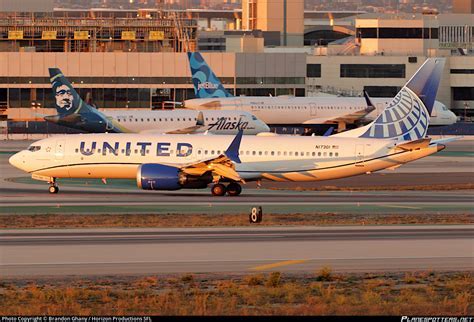
The Boeing 737 MAX and Airbus A320neo family now define the competitive structure of global narrowbody aviation. Where Airbus has surged ahead in total orders and newer extended-range variants, Boeing counters with:
- Higher design life
- More standardization (one engine type)
- Familiarity for long-time Boeing operators
Still, Airbus’s ability to offer different engine options (LEAP-1A and Pratt & Whitney GTF), and its range flexibility with the A321XLR, poses a direct threat to Boeing’s growth ambitions in the long-range narrowbody segment. Boeing’s response with the MAX 10 seeks to reclaim ground, but its FAA certification delays continue to slow momentum.
The Financial Future: A MAX-Driven Strategy
In 2025, Boeing has made it clear—the 737 MAX will continue to be the centerpiece of its commercial strategy for years to come. Speaking to Bloomberg in June, Boeing executives affirmed that replacing the MAX is not a near-term priority, due both to financial constraints and a market not yet ready for a next-generation narrowbody platform.
Given the backlog, existing infrastructure, and airline familiarity with the MAX series, this is a strategic decision grounded in realism. The cost of developing a new aircraft can run north of $15 billion, and Boeing is still working to stabilize its production lines and reputation after recent quality and delivery issues.
Conclusion: The Power of the Boeing 737 MAX
The true power of the Boeing 737 MAX lies not just in thrust, speed, or range, but in its sheer strategic and economic impact. It is a modern marvel of fuel economy, fleet standardization, and global reach. It may not break records for range or speed, but it continues to break barriers in commercial efficiency, longevity, and airline profitability.
In a world where cost per seat, emissions reduction, and turnaround time dictate airline margins, the Boeing 737 MAX remains one of the most powerful tools in the hands of global carriers. With nearly 5,000 aircraft on order and thousands already in the sky, its dominance is not just impressive—it’s essential to modern aviation.