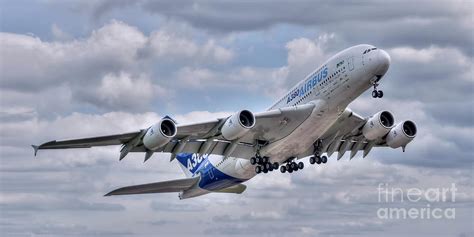
The Airbus A380 is not just another aircraft—it’s the largest, heaviest, and most powerful commercial jetliner ever created. Towering over the aviation landscape, this double-decker colossus represents the apex of aerospace engineering. Spanning 72.72 meters in length and propelled by four massive engines, the A380 defines excess in the most refined form, seamlessly marrying brute force with quiet efficiency.
What makes the A380 a true marvel isn’t just its size—it’s the immense thrust, exceptional payload capacity, and aerodynamic prowess that elevate it far above conventional widebodies. At full thrust, its four engines generate a combined output of nearly 300,000 pounds of force—equivalent to the power of six Boeing 737s.
Quadjet Power: The Beating Heart of the A380
At the core of the A380’s power are its two engine options: the Rolls-Royce Trent 900 and the Engine Alliance GP7200. Both are titanic in capability, delivering between 74,700 and 76,800 pounds of thrust per engine. This places each engine among the most powerful in commercial aviation history.
- Rolls-Royce Trent 900: 75,000–76,800 lbf (334–341 kN)
- Engine Alliance GP7200: 74,700 lbf (332 kN)
The Trent 900, originally intended for a Boeing 747 upgrade, found its true calling on the A380. Meanwhile, the GP7200, the result of a joint venture between GE Aerospace and Pratt & Whitney, was tailor-made for the A380’s needs—particularly effective in hot climates, making it ideal for Middle Eastern carriers.
The Sheer Force: Enough Thrust to Lift Cities
When fully powered, the A380’s engines can deliver nearly 300,000 lbf, allowing this 1.2 million-pound machine to rise gracefully from runways worldwide. This force is not just raw power—it’s controlled, elegant, and awe-inspiring.
During takeoff, the A380’s massive wings flex upward by up to 4 meters, enduring forces equivalent to 2,500 family cars each pushing with 110 horsepower. The 116-inch fan blades on each engine pull in 1.25 tonnes of air every second, optimizing fuel combustion while minimizing noise and emissions.
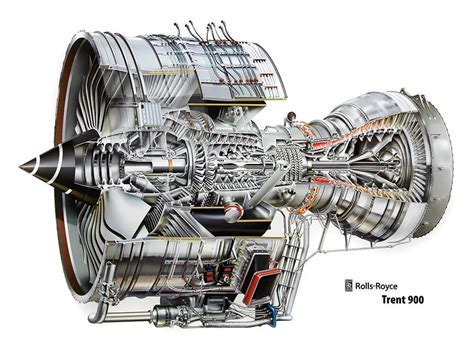
The Engine Wars: Trent 900 vs. GP7200
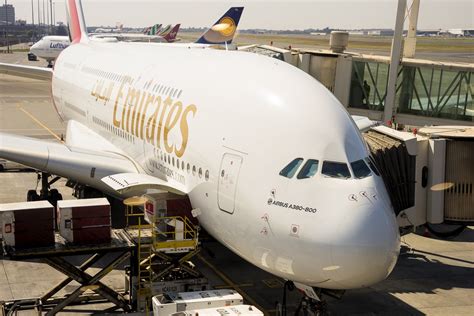
While the Trent 900 was the early favorite, chosen by two-thirds of the initial A380 customers, the GP7200 surged in popularity—primarily due to its adoption by Emirates, the A380’s largest operator. Emirates alone operates 90 A380s with GP7200s and 33 with Trent 900s, tilting the global in-service engine balance in favor of Engine Alliance.
Other major carriers using the Trent 900 include:
- Singapore Airlines
- Qantas
- British Airways
- Lufthansa
- ANA
- Thai Airways
Operators of the GP7200 include:
- Emirates
- Etihad Airways
- Qatar Airways
- Korean Air
- Air France
This competition helped refine both engine designs, with the Trent 900 focused on low maintenance costs and reliability, and the GP7200 on robust high-temperature performance and fuel efficiency.
Monumental Weights: The A380 Crushes the Scales
The Airbus A380 holds the record for the highest Maximum Takeoff Weight (MTOW) of any passenger aircraft ever built: 575,000 kg (1,268,000 lbs). This is nearly 30% more than the Boeing 747-8i and almost 80% more than the Boeing 777-9.
| Aircraft | MTOW |
|---|---|
| Airbus A380 | 575,000 kg (1.27M lbs) |
| Boeing 747-8i | 447,700 kg (987,000 lbs) |
| Boeing 777-9 | 351,534 kg (775,000 lbs) |
| Airbus A350-1000 | 319,000 kg (703,275 lbs) |
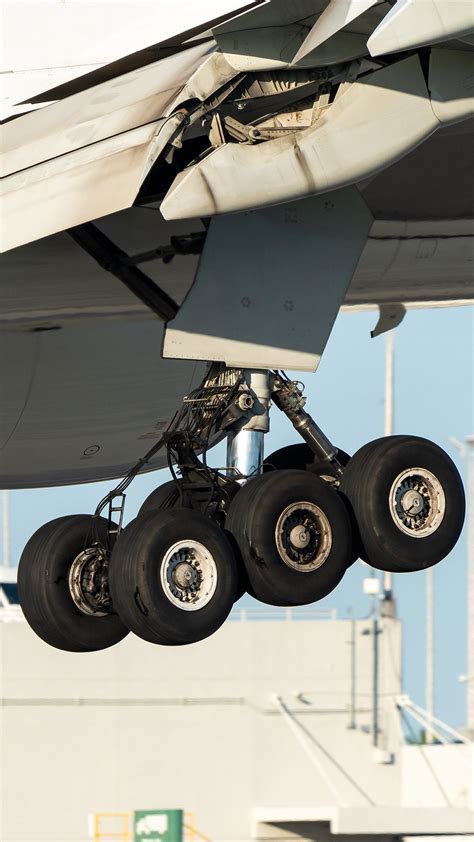
The A380’s Maximum Landing Weight (MLW) also dwarfs rivals at 394,000 kg (868,621 lbs). Supporting this colossal weight are 22 landing gear wheels, the most of any passenger jet.
Endurance Champion: Long-Range Luxury
The A380’s fuel capacity and aerodynamic range allow it to fly some of the world’s longest non-stop routes with over 500 passengers on board. While the aircraft is certified to carry up to 853 passengers in an all-economy configuration, most airlines opt for a luxurious three- or four-class layout.
Notable A380 long-haul routes include:
- Dubai – Auckland: 14,280 km / 17h 25m
- Dubai – Los Angeles: 13,420 km / 16h 15m
- Los Angeles – Melbourne: 12,825 km / 16h 00m
These distances are not just marketing numbers—they’re operational realities that showcase the A380’s unrivaled endurance.
Unmatched Cabin Quietness and Passenger Comfort
Despite its scale and engine output, the A380 is shockingly quiet. Its high bypass ratio engines—8.5:1 for the Trent 900 and 8.8:1 for the GP7200—significantly reduce cabin and external noise. In fact, the sound insulation is so effective that pilots have reported difficulty sleeping in crew rest areas due to the near-silence.
Passengers also benefit from lower cabin altitude, quieter cruise, and a roomier cabin than any other commercial aircraft, making the A380 an instant favorite among frequent flyers.
Two Engines, Two Markets: Why Airbus Offered Options
Most modern jets, like the 737 MAX or 787 Dreamliner, come with a single engine option for cost and efficiency. Airbus chose a different path for the A380, strategically offering two engine families to appeal to a broader customer base.
- Rolls-Royce targeted European and Asian carriers familiar with the Trent engine family.
- Engine Alliance zeroed in on Middle Eastern and North American markets, delivering an engine optimized for hot climates and lower fuel burn.
This dual-engine strategy helped Airbus land contracts with airlines from vastly different climates and operational models, though it also added complexity to the A380’s support and maintenance networks.
The Legacy of the Sky’s Giant
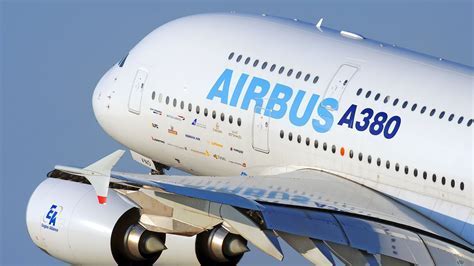
Though production of the A380 ended in 2021, its legacy endures. It remains the only aircraft in history to combine this level of thrust, size, range, and comfort. Despite its commercial limitations in an era increasingly favoring smaller twinjets, the A380 is a technological triumph.
No twinjet flying today—even the upcoming Boeing 777X—can match its maximum takeoff weight or passenger capacity. It stands as a testament to what is possible when engineering pursues ambition without compromise.
Conclusion: Power Beyond Comparison
The Airbus A380 is not just a large plane—it is a monument to aerospace ambition, powered by four of the most formidable engines ever bolted to a civilian aircraft. From its extraordinary thrust and unique dual-engine options to its quiet cabin and globe-spanning range, the A380 stands unmatched.
It may be nearing the twilight of its operational life, but in the annals of aviation, no aircraft has ever embodied the term “superjumbo” so completely. Its presence on the runway is nothing short of majestic. Its engineering—revolutionary. And its power—undeniably awe-inspiring.