The United Kingdom has approved a substantial mid-life upgrade program for its Titan and Trojan armoured engineering vehicles, securing a critical battlefield mobility capability for the British Army well into the next decade. Valued at approximately GBP 64.5 million, the program reflects a deliberate choice by the Ministry of Defence to preserve and modernise heavy engineering assets that enable armoured forces to manoeuvre, survive, and fight in high-intensity combat environments.
Announced in December 2025, the decision authorises the Defence Equipment and Support organisation to place a sole-source contract with Rheinmetall BAE Systems Land (RBSL), the original designer and manufacturer of both platforms. The contract is expected to be signed in late 2026, with upgrade activity extending into the early 2030s, ensuring operational relevance until at least 2033.
The approval comes at a time when European land warfare planning is increasingly shaped by lessons from recent conflicts, where obstacles, mines, and deliberate terrain denial have re-emerged as decisive tools. Against this backdrop, Titan and Trojan are not niche support vehicles but essential enablers that allow armoured formations to maintain tempo under fire.
Preserving Heavy Armour Mobility in Contested Terrain
Titan and Trojan are built on the Challenger 2 main battle tank chassis, a design choice that ensures their mobility, protection, and survivability match the heavy armour they support. This commonality allows British armoured brigades to operate as coherent combined-arms formations, without engineering assets becoming a vulnerability or bottleneck during offensive or defensive manoeuvre.
In practical terms, these vehicles turn obstacles from battle-stopping threats into solvable engineering problems. Whether confronting minefields, anti-tank ditches, destroyed infrastructure, or natural terrain gaps, Titan and Trojan allow commanders to breach, clear, and cross while remaining within the protection envelope of heavy armour.
The Strategic Logic Behind a Sole-Source Contract
The Ministry of Defence has justified the direct award to RBSL on technical and safety grounds. As Design Authority and Original Equipment Manufacturer, RBSL retains the specialised knowledge required to modify safety-critical systems without introducing unacceptable risks. Any attempt to re-engineer these platforms through an alternative supplier would carry significant hazards related to integration, certification, and long-term supportability.
The program structure reflects this risk-aware approach. An initial phase will focus on design, development, and demonstration, validating proposed upgrades before a second phase delivers manufacture and embodiment across the fleet. This phased model is typical for complex armoured vehicle modernisation, where reliability and crew safety are paramount.
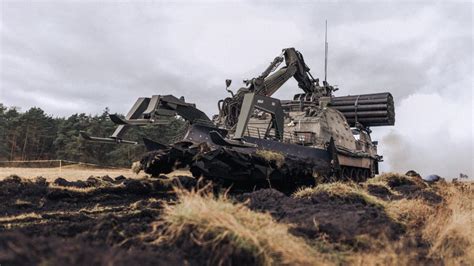
Trojan: Breaching Under Fire for Modern Armoured Warfare
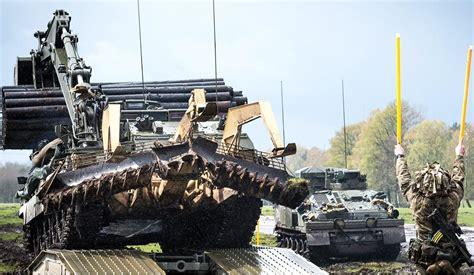
Operated by the Royal Engineers, Trojan is purpose-built to defeat the obstacle-dense battlefields characteristic of modern peer conflict. Its standard configuration includes a powerful dozer blade, mine plough, and excavator arm, giving crews multiple methods to breach obstacles while remaining under armour.
Trojan can also deploy full-width mine ploughs, carry fascines to fill ditches, and tow a trailer-mounted, rocket-propelled mine-clearing system. Once a lane is cleared, an integrated marking system guides following vehicles safely through the breach, a critical function when speed and coordination determine survival.
Self-defence and survivability are integral rather than optional. The vehicle mounts an L7A2 7.62 mm general-purpose machine gun and features full NBC protection, reinforcing its role as a forward-deployed asset operating under direct threat rather than from the rear.
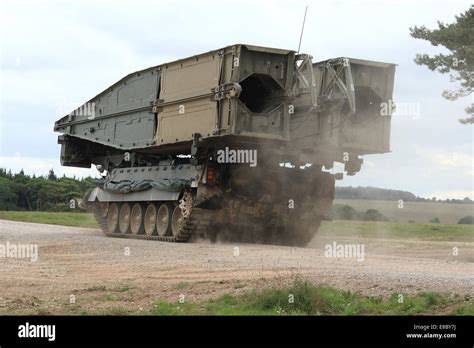
Titan: Bridging the Gaps That Halt Armoured Advances
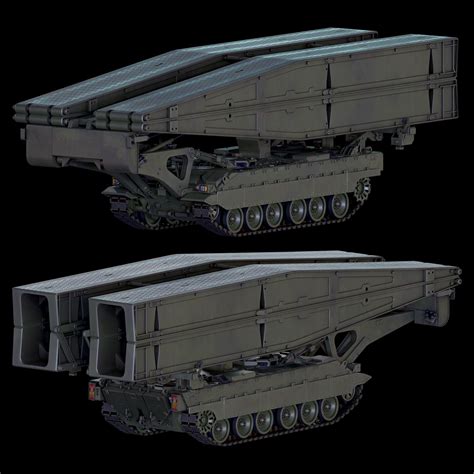
Titan provides the complementary capability of rapid gap-crossing, transforming rivers, craters, and demolished infrastructure into manageable obstacles. The system can deploy a 32-metre bridge, extendable to 44 metres using Automotive Bridge Launching Equipment, or employ a two-span configuration to cross gaps of up to 60 metres.
Powered by a Perkins CV12 diesel engine and weighing over 62 tonnes, Titan maintains a road speed close to 60 kilometres per hour, ensuring it can manoeuvre with main battle tanks during high-tempo operations. These characteristics prevent bridging operations from slowing exploitation or counter-attack phases, where time is often decisive.
What the Mid-Life Upgrade Is Expected to Deliver
While the Ministry of Defence has not released a detailed breakdown of upgrade elements, mid-life programs for armoured engineering vehicles typically focus on reliability, obsolescence management, and system integration. Likely areas include refreshed power and hydraulic systems, updated electronic architectures, and improved compatibility with modern command, control, and communications networks.
These changes are operationally significant. Engineering vehicles suffer some of the harshest mechanical stress on the battlefield, and degraded availability can halt an advance as effectively as enemy action. By addressing ageing components and obsolete subsystems, the upgrade aims to restore availability and predictability across the fleet.
Relevance to Europe’s Evolving Threat Environment
The decision to invest in Titan and Trojan underscores a broader shift in British land warfare priorities. Precision fires and long-range strike capabilities remain essential, but recent conflicts have demonstrated that ground must still be seized, crossed, and held. Mines, rubble, and obstacles have proven to be low-cost, high-impact methods of shaping the battlefield.
In this environment, heavy armoured engineering vehicles are indispensable. They enable armoured brigades to breach prepared defences, restore mobility under fire, and exploit success before the enemy can reorganise. Titan and Trojan are the systems that make manoeuvre possible when terrain and enemy action are designed to deny it.
By committing to this upgrade through 2033, the UK is signalling that battlefield engineering is not an auxiliary function but a core combat capability. The modernised Titan and Trojan fleet will remain a quiet but decisive factor in British Army operations, ensuring that when obstacles are placed in the path of heavy armour, they can be overcome with speed, protection, and confidence.