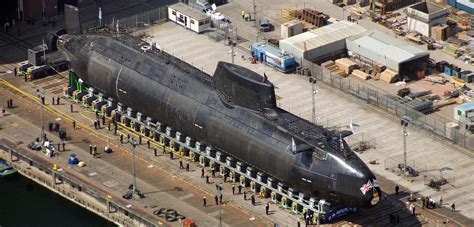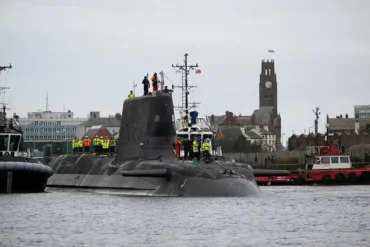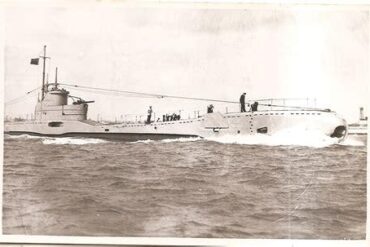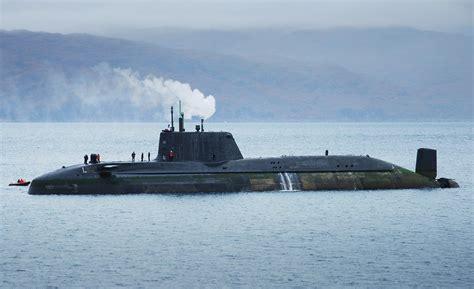
On June 30, 2025, the Royal Navy initiated a pivotal milestone in the evolution of its nuclear submarine fleet by commencing the Mid-Life Re-Validation Period (MLRP) of HMS Astute (S119). Marking 15 years of uninterrupted front-line duty—the longest first commission in British submarine history—HMS Astute’s transition into overhaul at HMNB Devonport represents not only a routine refit but a strategic investment in the UK’s underwater combat capabilities for the coming decades.
The Significance of HMS Astute’s Mid-Life Refit
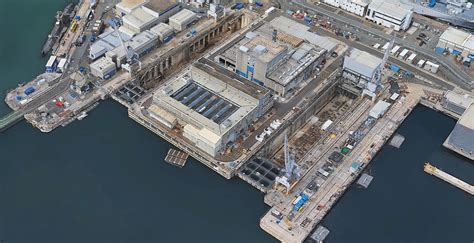
The MLRP is being conducted by Babcock International in Devonport’s No. 14 dry dock, an industrial epicenter for submarine overhauls, including those for the UK’s Vanguard-class strategic deterrent boats. While Astute-class submarines are based at HM Naval Base Clyde in Scotland, deep-level modernisations are traditionally performed in Devonport due to its dry dock capacity, nuclear handling credentials, and specialist workforce.
The comprehensive nature of the refit underlines HMS Astute’s value as a frontline platform. As the first boat of the Astute class, she will serve as the technical benchmark for subsequent life-extension works on her sister ships. The scope of MLRP includes:
- Structural refurbishment of the pressure hull
- Replacement and upgrade of major mechanical and hydraulic systems
- Modernisation of the submarine’s combat suite, sensors, and electronic systems
This programme is also expected to generate extensive engineering insights that will inform the Successor SSNR programme, the future class of British nuclear-powered attack submarines designed under the AUKUS alliance.
Enhancing Combat Systems: Sonar, Missiles, and Optronics
A critical component of HMS Astute’s overhaul is the enhancement of her Thales Sonar 2076 suite, an advanced integrated system comprising bow, flank, towed array, and intercept sensors. The submarine is also equipped with the Atlas DESO 25 echosounder, which enables high-resolution seabed mapping in both shallow and deep water operations—essential for undersea cable defense, covert insertion, and submarine warfare.
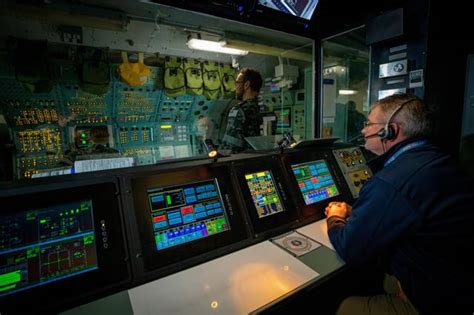
Astute’s Thales CM010 optronic masts, replacing traditional periscopes, are being updated to boost resilience and visual performance in challenging sea states. These masts are equipped with low-light-level TV (LLLTV) and infrared sensors, enhancing target acquisition, surveillance, and night operations.
Weapon-wise, HMS Astute retains six 533 mm torpedo tubes and internal stowage for up to 38 weapons, including:
- Spearfish heavyweight torpedoes for anti-submarine and anti-ship warfare
- Tomahawk Block IV land-attack cruise missiles, capable of precision strikes over 1,600 kilometers
The Royal Navy began phasing in the Block V upgrade to Tomahawk in 2024, which offers improved targeting, navigation, and survivability against modern air defenses. Integration with this new missile standard will be a central deliverable of the MLRP.
Reactor and Propulsion: No Refuelling Required
HMS Astute is powered by a Rolls-Royce PWR2 pressurised water reactor (Core H variant), designed to run for the boat’s 25-year service life without refuelling. This feature eliminates one of the most time-consuming and hazardous processes in nuclear vessel maintenance, allowing the MLRP to concentrate on mechanical, electronic, and tactical upgrades.
The powerplant drives a steam turbine system connected to a pump-jet propulsor, providing stealth and propulsion efficiency. Two MTU 600 kW diesel generators support onboard power needs, and auxiliary propulsion systems are in place for redundancy. Astute can reach submerged speeds of approximately 30 knots, with a test depth beyond 300 meters, and endurance of up to 90 days, primarily constrained by food storage for her 98-member crew.
Operational Achievements and Deployments
Over the past 15 years, HMS Astute has forged a pioneering operational record:
- First Astute-class submarine to transit the Suez Canal
- Participated in extended weapons trials at the Atlantic Undersea Test and Evaluation Center (AUTEC) in the United States
- Deployed to Australia as part of the 2021 UK Carrier Strike Group, joining HMS Queen Elizabeth
- Conducted multiple NATO patrols and operations in UK and European waters
- Took part in Operation HIGHMAST (2025) alongside other NATO surface and subsurface assets
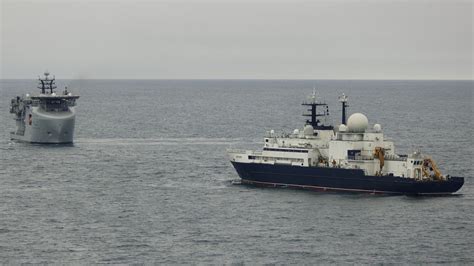
One of her more publicised moments occurred in November 2024, when HMS Astute reportedly surfaced near the Russian Navy’s Yantar, a surveillance ship suspected of monitoring NATO undersea infrastructure. The maneuver served as a strategic deterrent, signaling the Royal Navy’s vigilance over transatlantic undersea cables and critical nodes.
Legacy of Challenges: Navigational, Technical, and Security Incidents
Despite its successes, HMS Astute’s first commission was not without complications. In 2010, the submarine ran aground off the Isle of Skye, resulting in a command reshuffle. A tragic incident followed in 2011, when a guard change during a port call in Southampton led to a shooting inside the control room. Lt Cdr Ian Molyneux was killed, and the assailant, Able Seaman Ryan Donovan, received a life sentence.
The submarine also experienced multiple technical setbacks:
- Corrosion and leaks in her primary reactor cooling circuit
- Faulty mechanical parts and hydraulic actuators
- Substandard optronic periscope performance in heavy seas
- Delays in achieving top speed during early sea trials (confirmed resolved by 2015)
These issues were documented in internal Ministry of Defence reports and shaped subsequent procurement and QA processes for the Astute class.
Design, Dimensions, and Class Legacy
HMS Astute measures 97 meters in length, with a beam of 11.3 meters, and a submerged displacement of approximately 7,400 to 7,800 tonnes. Her acoustic stealth features include over 39,000 sonar-absorbing tiles lining the hull, reducing detectability by enemy sensors.
The submarine is operated by 98 crew, with accommodations for up to 109 personnel, offering dedicated bunk space—a first for Royal Navy SSNs. She was the lead vessel in a planned class of seven, all built by BAE Systems Submarines in Barrow-in-Furness. Subsequent boats include:
- HMS Ambush
- HMS Artful
- HMS Audacious
- HMS Anson
- HMS Agamemnon (joining later in 2025)
- HMS Achilles (renamed from Agincourt, expected in 2028)
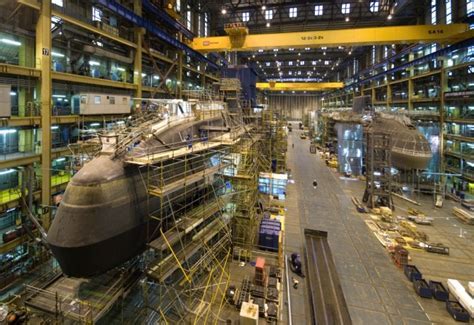
The programme has faced delays and cost overruns, with reviews by the National Audit Office and Defence Select Committee highlighting challenges in early-stage design maturity and workforce training.
Strategic Importance and Future Outlook
The timing of HMS Astute’s MLRP coincides with shifting strategic priorities for the Royal Navy, particularly in the Indo-Pacific and North Atlantic. As tensions rise in these theaters, submarine forces play an increasingly pivotal role in deterrence, intelligence gathering, and maritime strike.
The Successor SSNR class, currently in design development by BAE Systems and Rolls-Royce, is intended to replace the Astute fleet starting in the late 2030s. These submarines will reflect the operational lessons drawn from Astute’s service life—especially in terms of platform reliability, sustainability, and integration with allied forces under AUKUS.
Astute’s mid-life modernisation is not merely an engineering task—it is a strategic recalibration. By revalidating the class’s first hull, the Royal Navy ensures the viability of its nuclear attack submarine force into the 2030s and beyond. It also signals to allies and adversaries alike that Britain is committed to maintaining undersea dominance in an era of renewed great power competition.