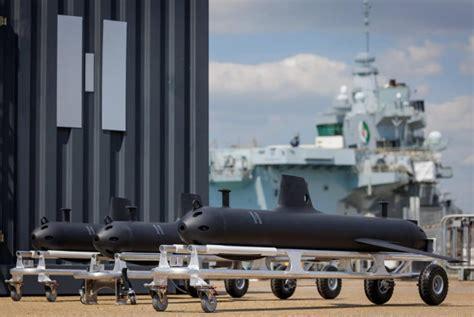
The United Kingdom has officially commenced mass production of the SG-1 Fathom autonomous underwater drones, marking a significant milestone in British maritime defense strategy. Spearheaded by Helsing Resilience Factory, this initiative represents a seismic shift in how the Royal Navy approaches undersea surveillance, infrastructure security, and subsurface strategic deterrence.
A Sovereign Leap: Enhancing Undersea Vigilance Through Domestic Innovation
At the core of this development is the British Ministry of Defence’s decisive move to insulate critical defense technologies from global supply chain vulnerabilities. By manufacturing the SG-1 Fathom entirely within UK borders, the government reinforces both strategic autonomy and long-term operational resilience. The Helsing Resilience Factory—equipped with hardened digital infrastructure, additive manufacturing techniques, and distributed logistics frameworks—has become the epicenter of this sovereign production capability.
The shift to indigenous production ensures continuity in high-alert scenarios and decreases dependence on foreign components, a lesson sharply learned in recent years amid escalating geopolitical tensions.
Game-Changing Design: Silent Propulsion, Stealth, and Endurance
The SG-1 Fathom isn’t just another unmanned underwater vehicle—it is a silent sentinel designed to operate undetected for up to 90 days beneath the waves. Its revolutionary buoyancy-driven propulsion system enables it to glide without the noise signatures of traditional propellers, rendering it nearly invisible to passive sonar.
This makes it exceptionally suitable for missions in contested maritime zones, including:
- Long-duration intelligence gathering in sensitive regions
- Surveillance of critical subsea energy pipelines and data cables
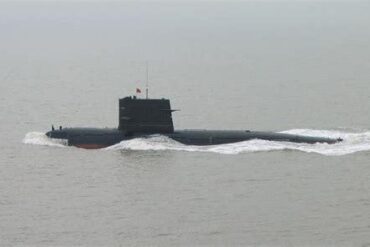
- Covert tracking of foreign submarine activity
Such capability dramatically extends the reach and persistence of the British Royal Navy without risking manned platforms or escalating presence.
Modular Payload: Tailored Missions, Scalable Strategy
What sets the SG-1 apart is its modular payload architecture. The drone can be rapidly reconfigured with mission-specific equipment such as:
- Synthetic aperture sonar for precise seabed imaging
- Environmental sensors for oceanographic mapping
- Passive acoustic arrays for submarine detection
Anticipated future upgrades include electronic surveillance modules and underwater communication relays, expanding its utility across intelligence, surveillance, reconnaissance (ISR), and even communication bridge roles.
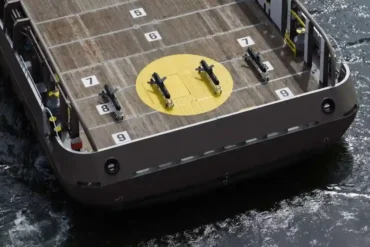
The glider’s compact form and minimal launch requirements—capable of deployment from small naval vessels or commercial support ships—further enhance its strategic flexibility. Crews of just a few personnel can ready and recover a unit, dramatically reducing the logistical footprint.
Networked Intelligence: AI-Driven Swarm Operations
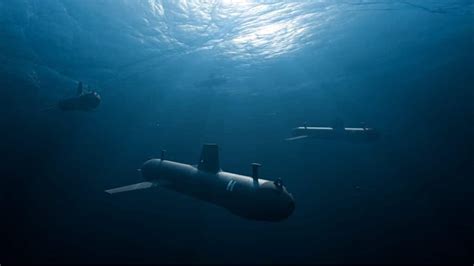
The SG-1 Fathom’s design embraces collaborative autonomy. Using advanced AI developed by Helsing UK, multiple gliders can operate in coordinated swarms, exchanging real-time data and autonomously adjusting their routes based on changing mission parameters.
These swarms are not merely synchronized in movement—they form an intelligent, self-optimizing network that can:
- Monitor vast oceanic zones simultaneously
- Detect anomalies and alert human operators
- Reallocate sensor coverage dynamically based on threat detection
This AI-networked approach mirrors a fundamental transformation in military doctrine—one where unmanned systems take on greater roles in persistent, high-risk, and geographically dispersed missions.
Field Tests and Operational Roadmap
Initial test deployments of the SG-1 have taken place in the Hebridean Sea, an ideal environment for stress-testing endurance, coordination, and navigational autonomy under real-world conditions. According to Ministry of Defence sources, these trials have involved both individual and multi-unit deployments, validating the platform’s swarm interoperability and autonomous capabilities.
Feedback from these tests is being fed back into Helsing’s development loop via secure engineering pipelines, ensuring rapid refinement ahead of the drone’s Full Operational Capability (FOC) target by late 2026.
Strategic Relevance: Responding to Emerging Threats
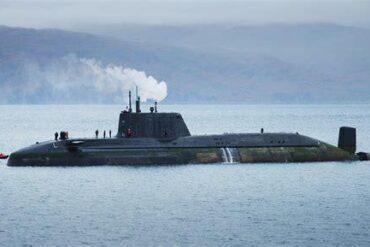
With adversarial submarine incursions increasing in frequency and stealth, particularly in the North Atlantic and Arctic routes, the SG-1 fills a critical surveillance void. Its quiet presence enables persistent tracking without the overt footprint of manned submarines or surface vessels.
Moreover, with growing threats to subsea infrastructure—including fiber optic cables, energy conduits, and sensor arrays—the Fathom gliders act as both watchdog and deterrent. Their presence signals capability without confrontation, offering an asymmetric advantage in peacetime and crisis conditions alike.
Export Potential and NATO Interest
While the UK has not formally announced export agreements, defense insiders confirm that multiple NATO allies have expressed interest in adopting or jointly developing variants of the SG-1 platform. Interest is particularly strong among navies operating in:
- The Baltic Sea, where Russian submarine activity continues to rise
- The Eastern Mediterranean, amid contested maritime claims
- The Arctic Circle, where thawing passages open new surveillance demands
These inquiries indicate a broader Western naval recognition of the need for persistent, low-cost undersea ISR solutions.
A Template for Future Force Structures
The SG-1 is more than a tactical tool—it is a blueprint for the next-generation unmanned maritime force structure. Its deployment aligns with the Royal Navy’s strategic pivot toward:
- Distributed, sensor-based operations
- Reduction in dependency on high-value crewed platforms
- Persistent presence in grey-zone conflicts
These gliders offer a way to extend British naval influence far beyond its fleet size, particularly in contested waters where constant human presence is neither cost-effective nor politically advisable.
Conclusion: The Silent Vanguard of a New Maritime Era
With the SG-1 Fathom, the UK enters a new epoch of underwater sovereignty and strategic foresight. It merges innovation in propulsion, modular design, AI networking, and sovereign manufacturing into a cohesive maritime platform that embodies the future of naval operations.
As global maritime tensions rise and the undersea domain becomes increasingly contested, the SG-1 stands not just as a sensor—but as a signal. A signal that British naval power will no longer be measured solely in tonnage, but in intelligence, persistence, and presence beneath the waves.