On July 8, 2025, the United Kingdom unveiled plans for a groundbreaking AI-powered underwater drone manufacturing facility in Plymouth, marking a strategic milestone in modern maritime defense. Known as the “Resilience Factory,” the £350 million ($477 million USD) venture represents one of the largest investments in Europe’s unmanned naval capabilities. Developed in partnership with Helsing, a German artificial intelligence defense innovator, the facility will produce cutting-edge submarine drones that directly respond to the growing Russian naval threat in the North Atlantic and Arctic regions.
Strategic Imperative: Reinforcing NATO’s Undersea Edge
The development of this new factory is not a reactive measure but a deliberate reinforcement of undersea deterrence as tensions with Russia continue to intensify. Over the past decade, NATO nations have increasingly voiced concern over Russian submarine incursions in critical zones—ranging from the GIUK Gap to vulnerable undersea cable routes in the Arctic Circle. Britain, as a central naval power in the alliance, is now taking the technological lead in re-establishing dominance in this shadowy domain.
The Resilience Factory’s mission is not merely national. It plays directly into broader NATO objectives by feeding a pipeline of autonomous, networked systems that enable persistent undersea surveillance, anti-submarine warfare (ASW), and critical infrastructure protection—areas where traditional crewed assets have become stretched, vulnerable, and expensive to operate.
Enter the SG 1 Fathom: Silent, Smart, and Strategic
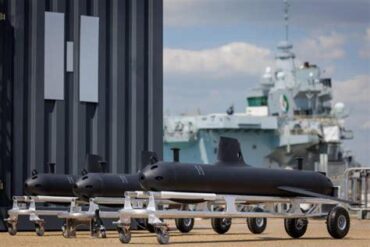
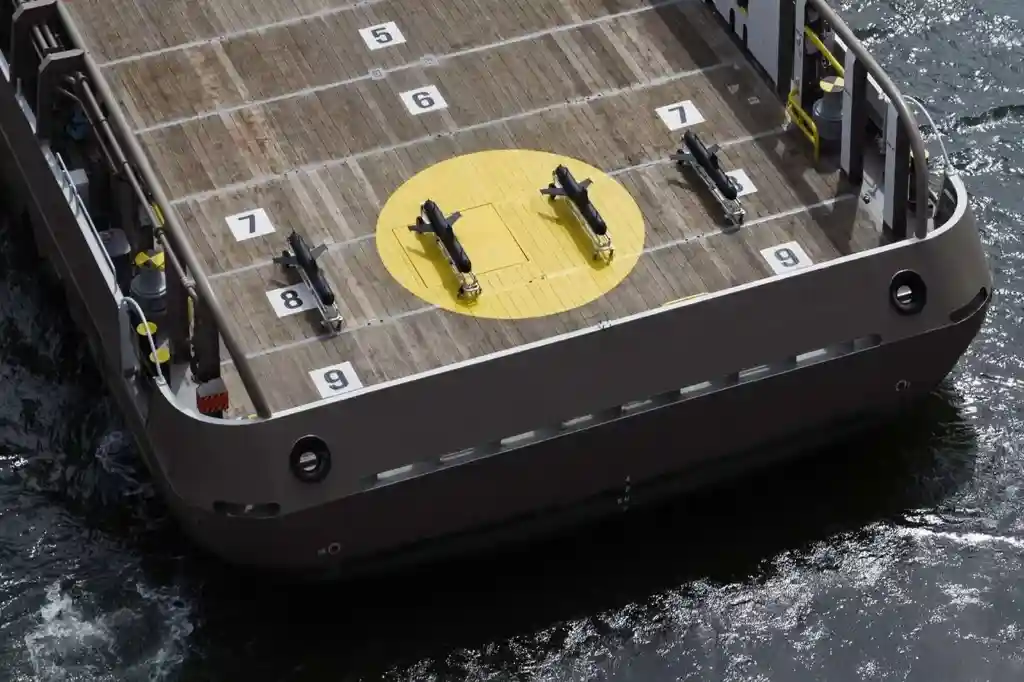
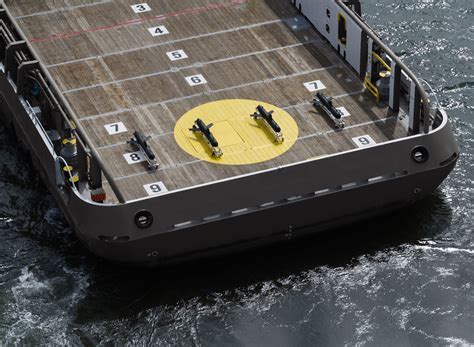
At the core of this initiative is the SG 1 Fathom, a next-generation autonomous underwater glider. Unlike conventional submersible drones, this vehicle is purpose-built for long-duration, covert operations deep below the ocean surface. Weighing approximately 60 kilograms and measuring two meters in length, it can dive to 1,000 meters, exploiting ocean currents for near-silent propulsion that evades sonar detection.
Powered by Helsing’s Lura AI system, the SG 1 Fathom utilizes sophisticated acoustic models capable of:
- Detecting underwater sounds up to 10x quieter than existing sonar systems
- Classifying objects and contacts 40x faster than legacy platforms
- Operating as part of a networked swarm, sharing real-time data via encrypted channels
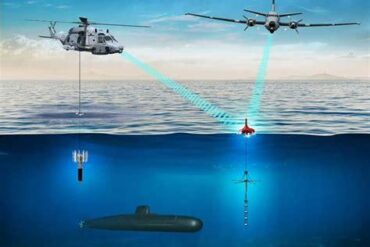
This enables a single human operator to supervise multiple drones simultaneously, creating an intelligent mesh that functions akin to a digital SOSUS—reviving Cold War concepts with 21st-century autonomy.
Lessons from the Sea: NATO Trials Shape a Modern Arsenal
Helsing’s glider is not an experimental prototype—it is the result of years of field testing during NATO maritime exercises across the North Atlantic and Baltic Sea. Incorporating Royal Navy feedback and insights from P-8 Poseidon deployments, the SG 1 Fathom has been refined for greater depth, endurance, and environmental resilience.
These drones significantly reduce risk to human personnel, eliminate the need for long surface vessel patrols, and operate at a fraction of the cost. In contested waters where Russian submarines seek stealth, the gliders offer persistent presence and situational awareness that few existing systems can match.
Project Cabot and the Rise of Hybrid Naval Doctrine
The factory directly aligns with Project Cabot, the Royal Navy’s broader push to blend crewed ships with uncrewed autonomous systems in an integrated maritime architecture. Cabot’s vision emphasizes real-time ISR (intelligence, surveillance, reconnaissance) via autonomous platforms, enabling rapid response across the fleet without overreliance on manned patrols.
From tracking adversarial submarines to securing undersea cables, the gliders will act as critical eyes and ears beneath the surface. Unlike legacy platforms that require constant human direction, these AI-enabled systems adapt dynamically to underwater acoustic changes, adjusting patrol routes and target profiles in real time.
Plymouth’s Industrial Revival Through Defense Innovation
The choice of Plymouth as the production site is no coincidence. Historically tied to the Royal Navy, the city is now being reimagined as a hub for marine autonomy and advanced manufacturing. The Resilience Factory is expected to create hundreds of skilled jobs in:
- Autonomous systems engineering
- Robotics and AI integration
- Marine hardware manufacturing
- Underwater acoustics and sonar design
This regeneration brings long-term economic dividends while establishing sovereign capability for unmanned maritime assets—a crucial hedge against future geopolitical supply chain disruptions.
Strategic Partnerships with European Defense Innovators
Helsing’s work on the factory is supported by industry heavyweights including Ocean Infinity and QinetiQ, deepening the UK’s ties with trans-European defense innovation. These companies bring expertise in autonomous ocean monitoring, systems integration, and defense software, ensuring the drones produced in Plymouth are not only mission-ready but export-capable.
Countries across Scandinavia, the Baltics, and the Indo-Pacific have already expressed interest in similar systems, given rising tensions in their own maritime regions. By leading the charge, the UK positions itself not just as a consumer of NATO security but as a trusted supplier of high-tech defense solutions.
A Blueprint for the Future of Naval Warfare
The timing of the Resilience Factory launch is no accident. Amid shifting alliances, hybrid warfare, and cyber-kinetic threats, undersea dominance has re-emerged as a primary strategic frontier. Unlike traditional surface skirmishes, submarine warfare is opaque, deniable, and deeply asymmetric. That makes persistent surveillance and rapid intelligence sharing a must-have—not a luxury.
By betting on AI-powered autonomy, Britain is preparing for an era where machines and algorithms patrol the deep, offering round-the-clock deterrence and dramatically enhancing the Royal Navy’s reach. These efforts mirror broader NATO goals to modernize force posture in the Atlantic while maintaining escalation dominance without resorting to high-profile surface deployments.
Timeline and Output Expectations
According to statements from the Ministry of Defence, initial contracts are already signed, and production is set to begin in late 2025. The first operational units are expected by Q2 of 2026. Within its first two years, the facility aims to produce hundreds of drones, eventually scaling to thousands annually depending on strategic demand.
These timelines will allow the Royal Navy to rapidly close capability gaps in its anti-submarine warfare grid while feeding NATO’s collective capacity to track and respond to unconventional underwater threats.
Conclusion: A Signal Beneath the Waves
The establishment of the Resilience Factory in Plymouth sends a loud and clear message—not just to Moscow, but to allies and adversaries alike. It signals that undersea deterrence is evolving, and the UK intends to be at the helm of that transformation. By embracing artificial intelligence, autonomous systems, and strategic industrial policy, London is reasserting its role as a maritime innovator in the 21st century.
In a world where battles are increasingly decided by sensors rather than sailors, this investment doesn’t just build drones—it builds resilience.