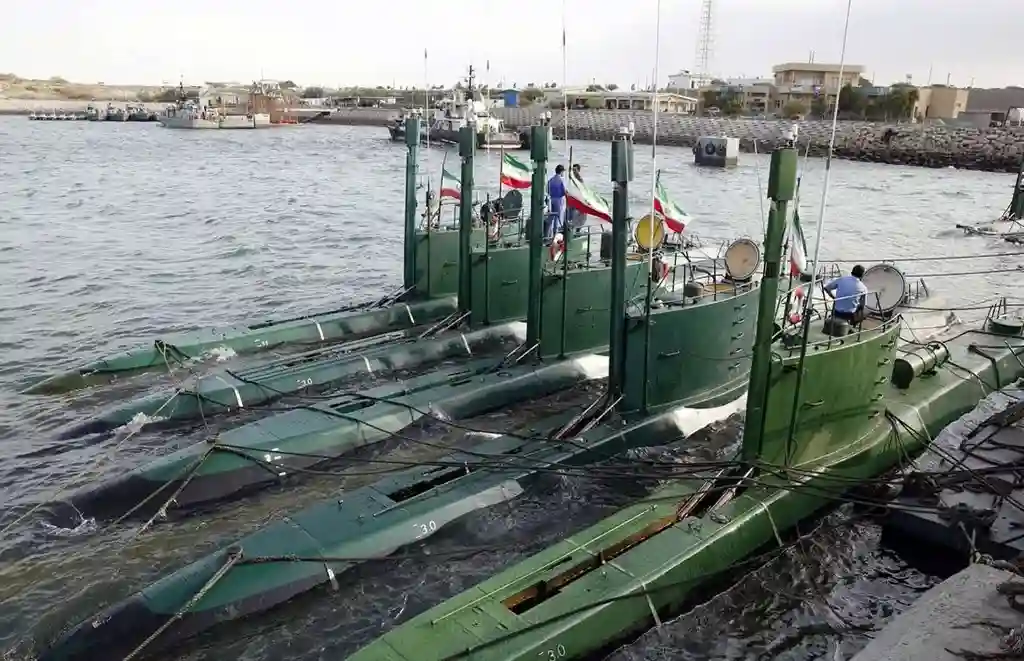
The strategic temperature of the Persian Gulf has risen again, not through dramatic fleet battles or missile salvos, but through the quiet multiplication of small, hard-to-track submarines designed for one purpose: to complicate the operating calculus of the United States Navy. Iran’s deployment of more than 20 Ghadir-class midget submarines marks a deliberate intensification of its asymmetric maritime doctrine, one that leverages geography, acoustics, and tactical patience rather than brute naval parity.
As U.S. carrier strike groups continue rotational and surge operations in Middle Eastern waters, Tehran’s undersea posture has shifted from symbolic presence to mature operational readiness. The focus is no longer on whether Iran can confront American sea power in open ocean combat—it cannot—but on how effectively it can erode freedom of maneuver inside one of the world’s most strategically compressed waterways.
The Persian Gulf, narrow, shallow, and acoustically chaotic, is uniquely suited to this form of naval chess. Within it, the smallest submarines may exert the largest psychological and operational pressure.
Extreme Littoral Warfare: Designed for the Gulf’s Harsh Geometry
The Ghadir-class is purpose-built for what naval strategists describe as extreme littoral warfare—combat conducted in shallow coastal waters where depth, salinity, and seabed clutter degrade traditional detection systems.
Displacing roughly 117 tons surfaced and 125 tons submerged, the submarine is tiny by global standards. Yet its compact hull is precisely what allows it to thrive in the Gulf’s restrictive bathymetry. Larger submarines risk grounding or becoming acoustically exposed in such waters; the Ghadir, by contrast, can slip through shipping lanes, oil field structures, and island chains with predatory discretion.
The Gulf is not an open maritime arena. It is a maze layered with:
- Commercial tanker traffic
- Offshore oil platforms
- Fishing fleets
- Artificial islands
- Dense sonar-confusing seabed formations
In this environment, detection ranges shrink and false contacts multiply. A small diesel-electric submarine operating on battery power becomes less a vessel and more a mobile ambush node.
Iran’s naval doctrine embraces this environmental advantage. Rather than projecting power outward, the Ghadir fleet is optimized to weaponize proximity—turning Iran’s coastline into a defensive strike envelope.
Origins and Fleet Expansion
Open-source intelligence assessments consistently link the Ghadir’s lineage to North Korea’s Yono-class midget submarine. At least one Yono hull is believed to have been transferred to Iran in the early 2000s, providing the technological template for domestic production.
Iran subsequently modified and serially constructed its own variant, gradually expanding the fleet. Current estimates place the operational inventory between 20 and 23 boats, though Iran maintains opacity around exact numbers—an intentional ambiguity that complicates adversary planning.
From a force-structure perspective, quantity matters more than individual capability. A flotilla of small submarines can disperse across chokepoints, stage layered ambushes, and maintain operational presence even after sustaining losses.
This is deterrence by distributed persistence rather than capital-ship prestige.
Armament: Compact but Lethal
Despite their size, Ghadir submarines carry credible offensive payloads. Their primary armament consists of two 533 mm torpedo tubes, capable of deploying heavyweight torpedoes such as the Iranian Valfajr.
There are also persistent reports linking the class to the Hoot supercavitating torpedo, a high-speed weapon concept designed to travel underwater at extreme velocities by riding a gas bubble. While real-world operational reliability remains debated, even limited deployment would compress defensive reaction windows for targeted vessels.
Where the Ghadir becomes strategically flexible is in its secondary mission sets.
Mine warfare is a central function. A mini submarine can covertly seed naval mines in shipping corridors or chokepoints, creating long-duration hazards that outlast the submarine’s patrol.
Special operations insertion is another role. The platform can deploy and recover combat divers, enabling sabotage missions against ports, hulls, or offshore infrastructure.
Each mission operates below the threshold of open naval warfare while still imposing strategic cost.
Submarine-Launched Missile Evolution
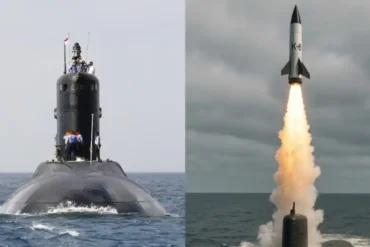
Iran has also experimented with extending the Ghadir’s reach beyond torpedo range. In 2019, Iranian authorities announced the successful launch of a Jask anti-ship cruise missile from a Ghadir-class submarine.
The concept involves an encapsulated “swim-out” missile that exits the torpedo tube before breaching the surface and igniting. The reported Jask-2 variant is believed to share technological lineage with the Nasr-1 anti-ship missile family.
If operationally mature, this capability introduces a standoff engagement layer. Instead of closing to short-range torpedo distance, a Ghadir could theoretically target escort vessels from farther out, complicating defensive screening geometry around a carrier strike group.
Targeting remains the limiting factor. Submarines require accurate external cueing—via drones, patrol craft, or coastal radar—to employ missiles effectively. Yet even a partial capability forces U.S. escorts to defend against both underwater and over-surface threats simultaneously.
Acoustic Camouflage and Bottom-Resting Tactics
The most consequential advantage of the Ghadir is neither its weapons nor its numbers—it is the physics of the Gulf itself.
Sound behaves unpredictably in the Persian Gulf due to salinity gradients, temperature layers, and heavy sediment suspension. These factors create thermoclines—temperature boundaries that bend sonar waves—and acoustic shadow zones where detection becomes unreliable.
Layer onto that the roar of tanker engines, drilling activity, and dense maritime traffic, and the undersea soundscape becomes chaotic.
Inside this acoustic fog, a small diesel-electric submarine running silently on battery becomes exceptionally difficult to track.
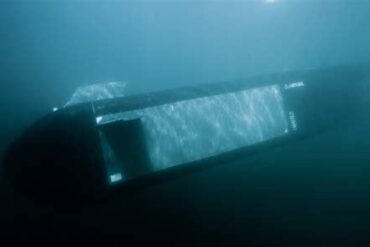
One tactic highlighted in naval analyses is bottom-resting. The submarine powers down and settles on the seabed, blending into terrain both acoustically and physically. Sonar returns may interpret it as rock or debris unless visually confirmed.
It is ambush warfare in its most patient form: wait, watch, strike once.
Threat Dynamics Against U.S. Carrier Strike Groups
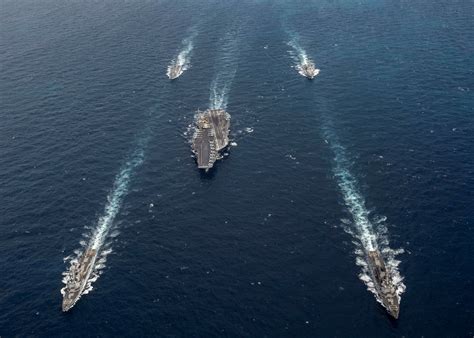
A U.S. carrier strike group is among the most heavily defended naval formations on Earth. Layered escorts, airborne surveillance, and anti-submarine warfare (ASW) assets create a protective envelope around the carrier.
The Ghadir does not attempt to penetrate this shield head-on.
Instead, Iran’s doctrine aims to stretch, distract, and fatigue it.
A plausible operational scenario would involve:
- Covert minefields seeded along transit routes
- Multiple submarines dispersed across chokepoints
- Coordinated positioning near the Strait of Hormuz
- Targeting of escorts and logistics vessels rather than the carrier itself
This creates what analysts describe as a potential maritime kill box—not guaranteeing a hit, but raising probability enough to influence operational decisions.
Even a single successful torpedo strike against a destroyer or supply ship would carry outsized strategic and political consequences.
Operational Friction as Strategic Effect
The genius—if one may use the term clinically—of the Ghadir program lies in cost asymmetry.
A nuclear-powered aircraft carrier costs billions and symbolizes national power projection. A midget submarine costs a fraction of that yet can force the carrier to:
- Increase standoff distance
- Reduce operating speed
- Expand ASW patrol zones
- Commit helicopters and drones continuously
This is operational friction converted into strategic leverage.
The objective is not sea control. It is risk inflation—raising the danger threshold high enough that adversaries must expend disproportionate time, resources, and caution.
Geography amplifies this effect. The Strait of Hormuz narrows to roughly 21 nautical miles at its tightest point, compressing maneuver space for large vessels and making predictable transit lanes unavoidable.
U.S. Countermeasures and Detection Efforts
The United States Navy is neither blind nor passive in this contest.
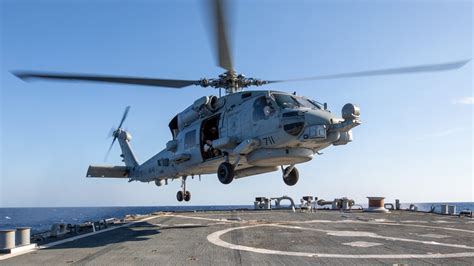
Carrier strike groups deploy MH-60R Seahawk helicopters equipped with dipping sonar, sonobuoys, and torpedoes optimized for littoral ASW missions. These airborne hunters extend detection reach beyond shipboard sonar limits.
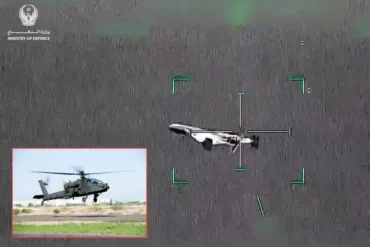
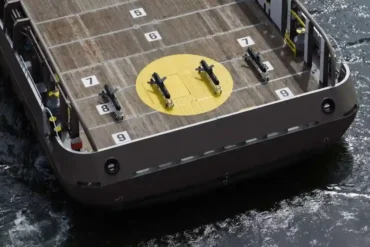
Unmanned systems are increasingly central. Surface drones and unmanned underwater vehicles enhance maritime domain awareness, scanning for anomalies and mapping seabed changes that might indicate mines or resting submarines.
Yet technology does not nullify geography.
Anti-submarine warfare in the Persian Gulf remains a contest against clutter, time, and uncertainty. Each contact requires classification. Each false return consumes attention.
Mini submarines are designed to live inside that ambiguity.
Strategic Logic Behind Iran’s Mini-Submarine Investment
Iran’s naval modernization has never sought symmetry with blue-water fleets. Instead, it reflects a deliberate embrace of asymmetric denial strategy—developing capabilities that exploit adversary vulnerabilities rather than mirroring their strengths.
Mini submarines align perfectly with this logic.
They are:
- Cheaper to produce
- Easier to conceal in coastal bases
- Harder to detect in shallow waters
- Suitable for mining and sabotage missions
Most importantly, they transform Iran’s coastline into an active defensive battlespace.
Rather than contesting distant seas, Iran concentrates on making nearby waters operationally hazardous.
This approach mirrors broader Iranian military doctrine across domains: ballistic missiles, fast attack craft swarms, and drone fleets all aim to impose cost without requiring conventional parity.
The Undersea Variable in Gulf Power Projection
As U.S. carriers operate near Iranian waters, the Ghadir fleet emerges as one of the few assets capable of imposing credible risk.
It does not promise decisive victory. It promises complication.
That distinction matters.
Naval warfare is often shaped less by fleet destruction than by freedom of maneuver—the ability to move, project airpower, and sustain logistics without prohibitive threat.
By deploying more than 20 Ghadir submarines, Iran signals its intent to contest that freedom within the Gulf’s confines.
The result is a persistent undersea variable: small hulls, silent batteries, waiting beneath one of the world’s most strategically vital waterways—where depth is shallow, noise is constant, and even the largest warships must tread carefully.