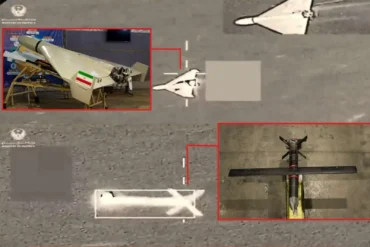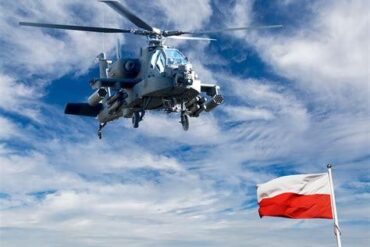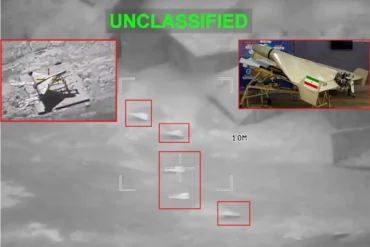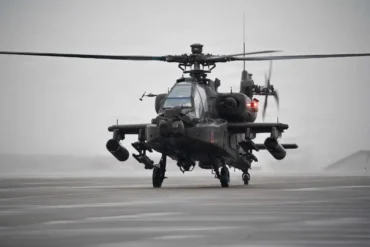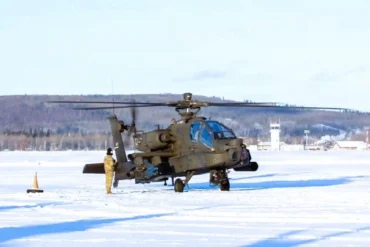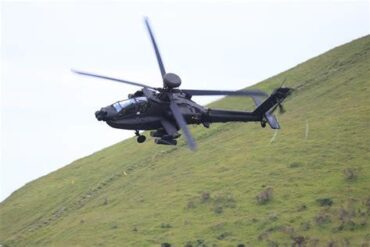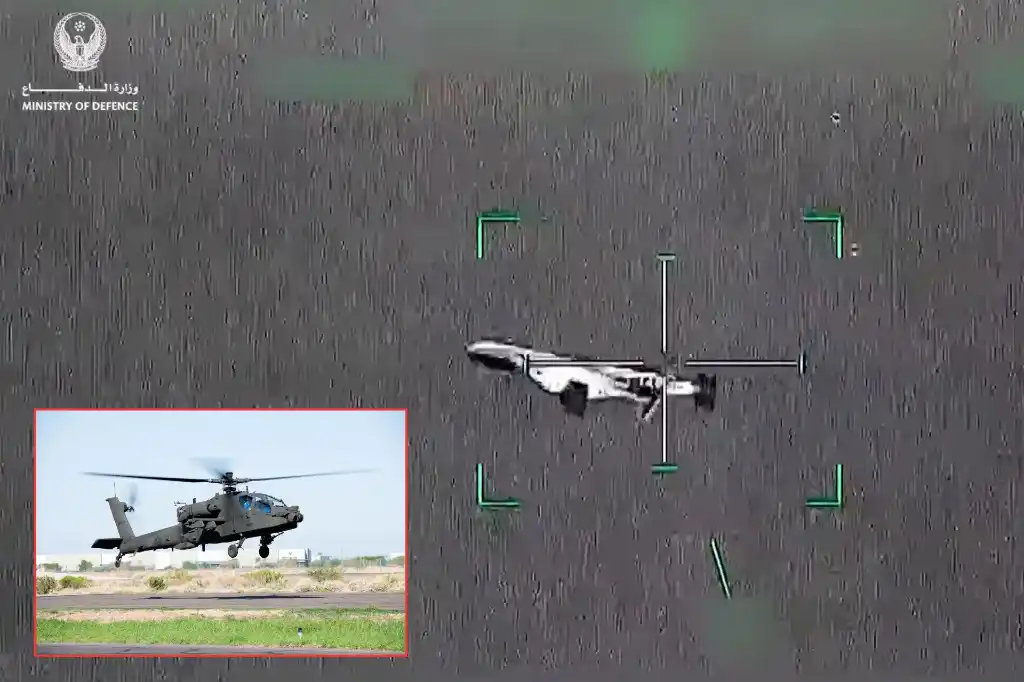
The United Arab Emirates has revealed dramatic footage of its AH-64E Apache Guardian attack helicopters intercepting and destroying Iranian Shahed one-way attack drones over the Persian Gulf, demonstrating a striking evolution in modern counter-drone warfare. The engagement, confirmed by the UAE Ministry of Defence, shows Emirati pilots using the Apache’s powerful 30 mm M230 chain gun to eliminate low-flying unmanned aerial vehicles before they could threaten critical infrastructure or maritime routes.
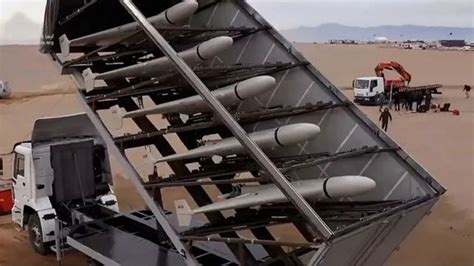
The operation unfolds against a backdrop of escalating regional tensions and an increasing reliance on long-range loitering munitions by Iranian-aligned forces. These drones, designed to function as expendable airborne weapons, have become a defining feature of modern asymmetric warfare. By deploying attack helicopters as interceptors, the UAE has showcased an agile and cost-effective approach to neutralizing aerial threats that traditionally challenge missile-based air defense systems.
According to defense officials, the incident forms part of an ongoing defensive campaign aimed at protecting shipping lanes, offshore energy facilities, and coastal infrastructure throughout the Persian Gulf. The footage captures Emirati Apaches maneuvering at low altitude over open water, tracking incoming drones and engaging them with controlled bursts of cannon fire. Each engagement demonstrates how rotary-wing platforms can provide rapid response capabilities against small, slow-moving targets that might otherwise evade conventional defenses.
The Growing Drone Threat in the Persian Gulf
The appearance of Shahed-series drones over Gulf waters is not an isolated event but part of a broader pattern of aerial threats facing regional states. Over the past decade, Iran has invested heavily in developing low-cost unmanned strike systems, which can be launched in large numbers to overwhelm sophisticated air defense networks.
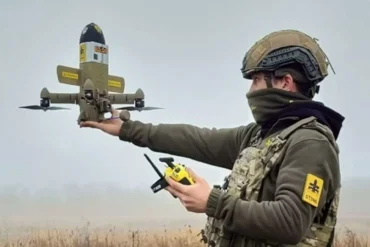
These drones typically operate at low altitude and relatively slow speeds, making them difficult targets for radar systems optimized to detect fast aircraft or ballistic missiles. Their small radar signatures and modest heat emissions complicate detection, particularly when launched in coordinated waves designed to saturate defensive systems.
In the Gulf region—home to some of the world’s most critical energy infrastructure and maritime chokepoints—even a small number of successful drone strikes can cause significant economic and strategic disruption. Oil terminals, desalination plants, ports, and offshore platforms represent high-value targets that require constant protection.
The UAE, like several neighboring states, has therefore built a layered air defense architecture combining long-range missile systems, early warning sensors, and airborne surveillance platforms. The Apache engagement represents the final defensive layer—an agile, close-range interception capability capable of destroying threats that slip through outer defenses.
AH-64E Apache: From Tank Hunter to Drone Interceptor
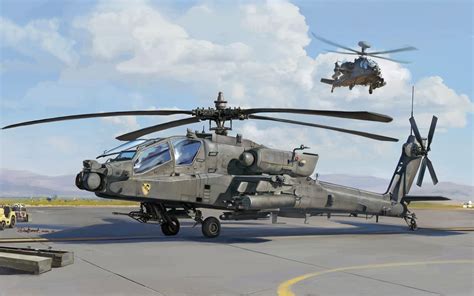
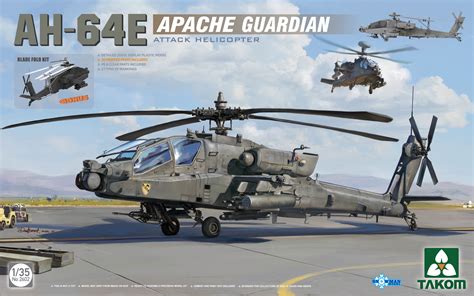
Originally designed during the Cold War to destroy armored formations, the AH-64 Apache has evolved into one of the most versatile attack helicopters ever built. The latest variant operated by the UAE, the AH-64E Guardian, incorporates extensive digital upgrades that transform it into a networked battlefield platform.
Manufactured by Boeing, the AH-64E integrates advanced avionics, improved engines, and sophisticated communication systems that allow it to exchange targeting information with ground forces, surveillance aircraft, and air defense networks. This digital connectivity enables Apache crews to locate and track targets far beyond visual range.
One of the helicopter’s most distinctive systems is the AN/APG-78 Longbow radar, mounted above the rotor hub in a dome-shaped housing. This millimeter-wave radar can detect and classify dozens of targets simultaneously, including small aerial objects. The sensor functions effectively even in poor visibility conditions such as dust, fog, or nighttime operations—conditions common over the Gulf’s coastal environments.
These capabilities allow the Apache to act as a mobile sensor and interceptor, rapidly repositioning to areas where drone threats are detected.
The M230 Chain Gun: Precision Firepower Against Drones
Central to the interception captured in the Emirati footage is the Apache’s formidable M230 30 mm chain gun. Mounted beneath the helicopter’s nose, the electrically driven autocannon fires 30×113 mm ammunition at a rate of roughly 625 rounds per minute, delivering devastating firepower with remarkable precision.
Unlike fixed forward-firing weapons on many aircraft, the M230 is mounted on a flexible turret, allowing it to rotate and track targets across a wide arc. This mobility is enhanced by the Apache’s helmet-mounted sight system, which allows the pilot or gunner to aim the weapon simply by turning their head. Wherever the crew looks, the gun can follow.
Against lightly built drones, this system is extremely effective. High-explosive dual-purpose rounds detonate upon impact, shredding the lightweight structures of loitering munitions and destroying their propulsion systems almost instantly. A short burst from the cannon is usually sufficient to neutralize a target.
Compared with missile interceptors, the cannon provides another major advantage: cost efficiency. Each missile launched from ground-based air defense systems can cost hundreds of thousands of dollars, while the drones they intercept may be produced for only a fraction of that price. Engaging such threats with cannon fire dramatically improves the cost-exchange ratio, preserving expensive missile stocks for more advanced threats.
UAE Apache Fleet and Modernization Efforts
The United Arab Emirates has been one of the most experienced operators of the Apache platform in the Middle East. The country first acquired AH-64A models in the 1990s, integrating them into its rapidly modernizing armed forces as part of a broader defense transformation.
Over the years, Abu Dhabi has invested heavily in upgrading its fleet. Modernization programs throughout the 2010s transitioned many aircraft to the AH-64E Guardian configuration, significantly improving operational capability. Today, the Emirati Air Force operates around thirty Apache helicopters, forming a key component of its attack aviation units.
These aircraft have received extensive enhancements, including advanced sensors, modern communication systems, and integration into national air defense command networks. Such upgrades allow Apache crews to operate not merely as independent strike platforms but as part of a coordinated defensive ecosystem that includes radars, missile batteries, and surveillance aircraft.
Layered Defense Against Mass Drone Attacks
The engagement over the Persian Gulf highlights an emerging reality of modern warfare: mass drone attacks are becoming increasingly common. Nations and non-state actors alike have recognized that relatively inexpensive unmanned systems can threaten even the most sophisticated military forces.
A swarm of dozens of drones can overwhelm radar tracking systems, saturate missile batteries, and exploit gaps in defensive coverage. The challenge is not merely technical but logistical. Every missile fired represents a valuable and limited resource, while adversaries can produce drones in large numbers.
For this reason, militaries are increasingly turning to multi-layered defensive strategies. Long-range missile systems intercept high-speed threats such as ballistic missiles, while medium-range defenses engage cruise missiles and aircraft. Close-range systems—including guns, lasers, and aircraft—provide the final protective barrier.
Attack helicopters fit neatly into this architecture. Their mobility allows them to patrol wide areas, intercept drones approaching from unexpected directions, and engage targets using relatively inexpensive ammunition. In effect, the Apache becomes a roaming anti-drone platform, capable of reacting faster than many ground-based systems.
Strategic Implications for Regional Security
The Emirati operation carries significant implications for the broader security environment of the Middle East. As drone technology proliferates, regional militaries are adapting quickly, experimenting with new tactics and platforms to counter emerging threats.
By deploying attack helicopters as drone hunters, the UAE demonstrates how traditional military equipment can be repurposed to address modern challenges. The approach blends mobility, precision firepower, and cost efficiency—qualities that may prove essential in an era when unmanned systems dominate the lower tiers of aerial warfare.
The footage released by the UAE Ministry of Defence also serves a strategic communication purpose. Publicly showcasing successful drone interceptions sends a clear message about the country’s readiness to defend its territory, infrastructure, and maritime interests.
For defense analysts, the event illustrates a broader transformation underway across global militaries. The battlefield of the future will likely feature dense layers of sensors, missiles, drones, and manned aircraft, all interacting in complex defensive networks.
In that evolving environment, a helicopter firing a 30 mm cannon at a buzzing unmanned drone might seem almost old-fashioned. Yet the physics remain elegantly simple: a well-aimed projectile travels faster than a propeller-driven drone can react. Sometimes the most effective solutions emerge not from entirely new inventions but from reimagining existing tools for new kinds of battles.