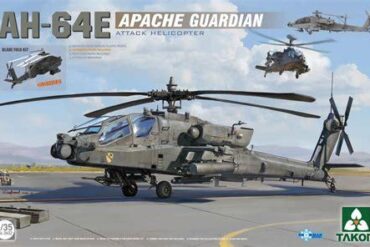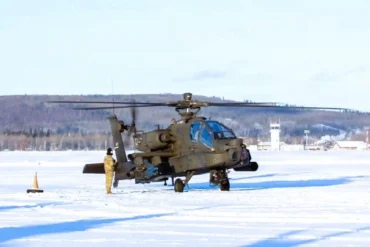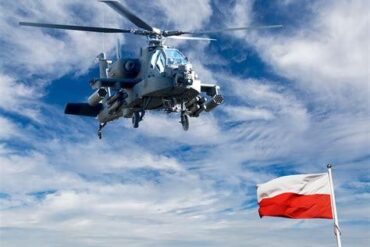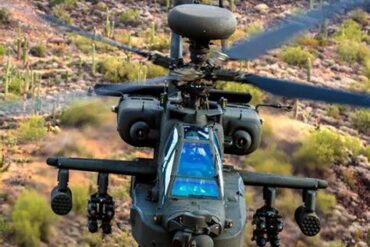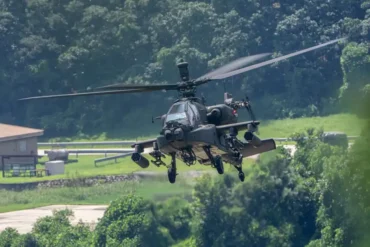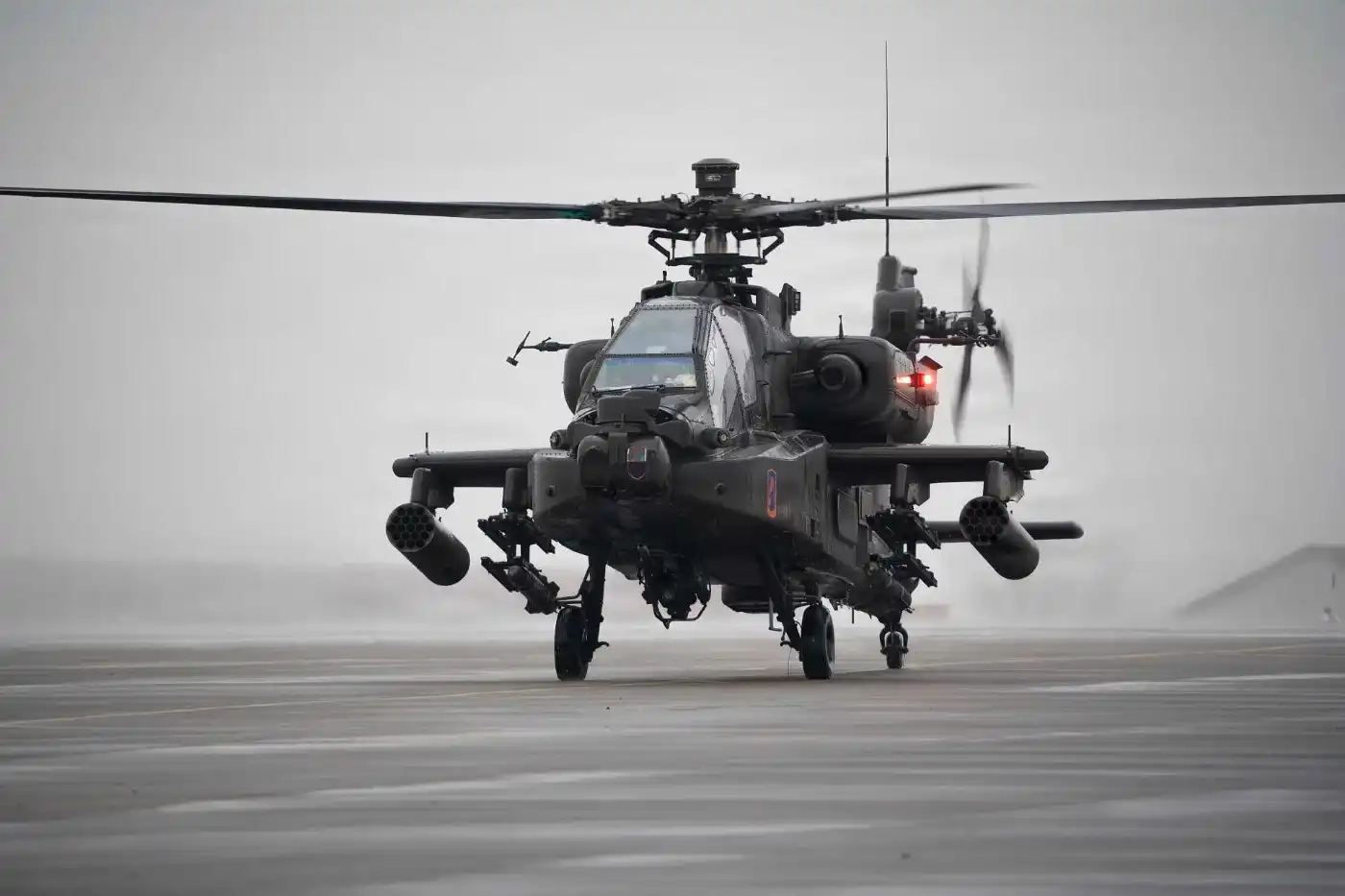
Israel’s move to acquire the latest-generation AH-64E Apache Guardian attack helicopters from the United States marks a decisive step in reshaping its rotary-wing combat capability for the next era of warfare. Approved by the U.S. Department of State and notified to Congress by the Defense Security Cooperation Agency on January 30, 2026, the proposed Foreign Military Sale covers 30 new-build AH-64E helicopters, associated mission systems, training, and long-term logistical support, with an estimated value of $3.8 billion.
The decision comes at a moment when Israel’s operational environment is becoming more compressed, faster-moving, and technologically saturated. Precision-guided weapons, layered air defenses, and the mass proliferation of unmanned systems have transformed the battlefield into a space where survivability, networking, and real-time intelligence matter as much as raw firepower. Within that context, the AH-64E is not simply a replacement platform; it represents a generational leap designed to keep Israel’s attack helicopter force relevant well into the 2030s.
For the Israel Air Force, the sale signals a strategic transition away from aging Apache variants whose upgrade potential is nearing exhaustion. While Israel has historically extended the life of its aircraft through deep local modernization, the structural and digital limits of earlier Apache models are increasingly difficult to overcome. The Guardian offers a clean-sheet evolution—one engineered from the outset for high-intensity, multi-domain conflict rather than incremental adaptation.
Strategic Context Behind Israel’s Apache Upgrade
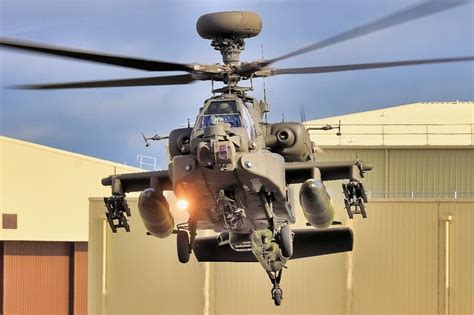
According to The Military Balance 2025, Israel currently operates 46 attack helicopters, comprising 26 AH-64A Peten and 20 AH-64D Saraf airframes. Both types have served as core assets in Israel’s strike and close air support missions for decades, benefiting from extensive domestic upgrades in avionics, weapons integration, and electronic warfare. Yet their underlying architectures date back to the Cold War and early post–Cold War periods, when networking, cyber resilience, and unmanned teaming were not design priorities.
The shift to the AH-64E addresses this mismatch head-on. Rather than continuing to stretch legacy airframes, Israel would gain a platform optimized for today’s battlespace, where helicopters must operate under persistent sensor coverage and constant threat from surface-to-air missiles and armed drones. The Guardian’s design philosophy reflects lessons learned from recent conflicts, where survivability depends on information dominance as much as maneuverability.
From a force-planning perspective, acquiring 30 AH-64E helicopters would allow Israel to consolidate its attack fleet around a single, future-proof standard, simplifying sustainment while significantly expanding combat capability. This rationalization is particularly important as maintenance costs for older variants continue to rise and spare parts become harder to source.
Propulsion and Airframe Enhancements for Demanding Conditions
One of the most immediate improvements offered by the AH-64E lies in propulsion and flight performance. The helicopter is powered by T700-GE-701D engines, providing increased power margins that directly translate into higher payload capacity and superior hot-and-high performance—a critical factor in Middle Eastern operating environments. These engines allow the Guardian to carry heavier weapon loads without sacrificing agility or range.
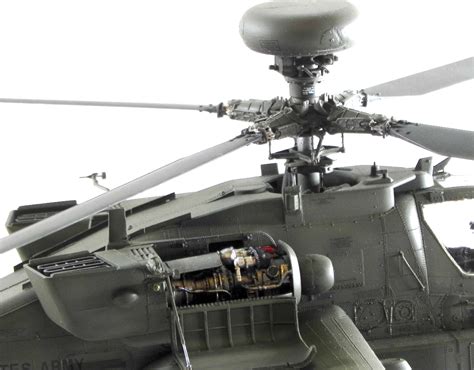
Equally important is the upgraded composite main rotor system, derived from technology developed for the canceled RAH-66 Comanche program. This rotor enables higher cruise speeds and extended operational reach, reducing transit times and increasing time on station. Compared to earlier AH-64A and AH-64D variants, the E-model demonstrates improved stability and responsiveness during low-level flight, where attack helicopters are most vulnerable.
These enhancements are not cosmetic. They directly address operational constraints experienced by earlier Apaches when flying heavily armed missions in high-temperature conditions, ensuring that the Guardian can deliver consistent performance across Israel’s diverse operational theaters.
Digital Architecture and Network-Centric Warfare
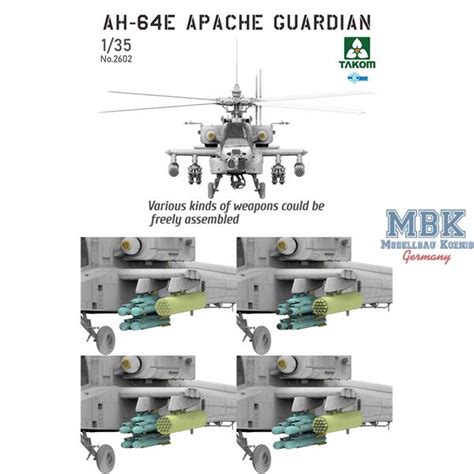
While propulsion improvements are visible, the most transformative changes are embedded in the AH-64E’s digital backbone. The Guardian introduces an open systems architecture designed for rapid software updates and seamless integration of new sensors, weapons, and communication links. This contrasts sharply with legacy platforms, where adding new capabilities often requires costly and time-consuming hardware modifications.
The aircraft’s advanced mission computer and enhanced cockpit displays provide pilots with a fused, real-time picture of the battlespace. Information from onboard sensors, external platforms, and allied forces is integrated into a coherent tactical view, reducing crew workload and accelerating decision-making during complex strike missions.
For Israel, whose operational doctrine emphasizes speed, precision, and coordination across air and ground forces, this level of connectivity is a force multiplier. The AH-64E is designed not merely to fight, but to share and exploit information across the joint force in real time.
Sensor Fusion and Precision Targeting Superiority
The Guardian’s sensor suite represents a substantial leap over earlier Apache configurations. At its core is the AN/APG-78 Longbow Fire Control Radar, capable of detecting, classifying, and prioritizing dozens of targets simultaneously while the helicopter remains masked behind terrain. This capability allows crews to engage threats without exposing the aircraft to direct fire.
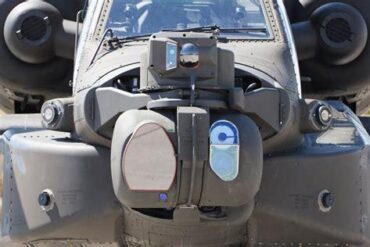
Complementing the radar are the Modernized Target Acquisition and Designation Sight and the Modernized Pilot Night Vision Sensor, which deliver higher-resolution imagery, longer detection ranges, and more reliable target tracking in degraded visual environments. Together, these systems enable the AH-64E to operate effectively in darkness, dust, smoke, and electronic clutter.
For Israel, which often conducts operations in dense, complex terrain, this sensor fusion translates into faster target identification and more precise engagement, reducing collateral risk while increasing mission success rates.
Manned-Unmanned Teaming as a Core Capability
A defining feature of the AH-64E is its native support for manned-unmanned teaming. Unlike earlier Apache variants that rely on limited external solutions, the Guardian is engineered to receive and exploit real-time sensor feeds from unmanned aerial systems. This allows Apache crews to scout beyond line of sight, identify targets without direct exposure, and cue weapons with unprecedented speed.
In practical terms, this capability expands the helicopter’s operational envelope. Unmanned platforms can be pushed forward into high-risk areas, feeding targeting data back to the AH-64E, which can then engage from stand-off distances. For Israel, facing adversaries that prioritize concealment and dispersion, this integration is particularly valuable.
Survivability in a High-Threat Environment
Modern battlefields are unforgiving to slow, exposed platforms, and the AH-64E reflects a hard-earned focus on survivability. The Guardian incorporates upgraded missile warning systems, advanced radar frequency interferometers, improved countermeasure dispensers, and deeper integration with digital electronic warfare suites.
These systems are optimized to counter both infrared- and radar-guided threats, acknowledging the proliferation of advanced air defenses across the region. Rather than relying on a single defensive measure, the AH-64E employs a layered approach designed to detect, deceive, and defeat incoming threats before they can reach the aircraft.
For Israeli planners, this survivability package is essential. The Guardian is built to operate inside contested airspace, not just on its fringes, aligning with Israel’s requirement for persistent, close-in strike capability.
Emerging Role in Counter-Drone Operations
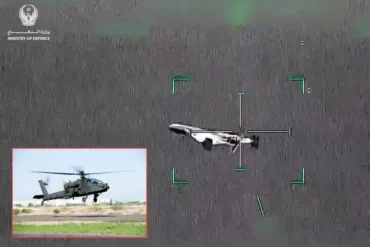
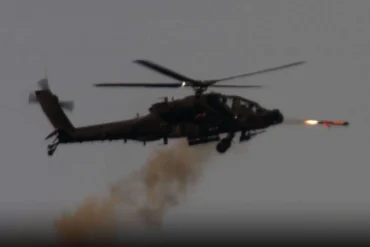
Originally conceived as an anti-armor platform, the Apache is now evolving into a multi-role combat system. U.S. Army testing conducted in 2025 demonstrated that the AH-64E can effectively engage unmanned aerial systems using a mix of the 30mm M230 Chain Gun, precision-guided rockets such as APKWS, and advanced missiles including Hellfire and AGM-179 JAGM.
These trials highlighted how the Apache’s sensor fusion and fire control radar can be adapted to detect and track aerial targets that were not part of its original mission set. The helicopter’s ability to transition rapidly between ground attack and counter-UAS roles reflects a flexibility increasingly demanded by modern conflicts.
For Israel, which faces one of the most drone-dense threat environments globally, this capability is more than theoretical. The AH-64E’s proven adaptability reinforces its value as a platform capable of responding to both traditional and emerging threats without sacrificing effectiveness.
Long-Term Implications for Israeli Air Power
If implemented as approved, the acquisition of 30 AH-64E Apache Guardians would position the Israel Air Force to maintain a decisive attack helicopter advantage well into the next decade. Beyond the immediate boost in capability, the deal reflects a broader commitment to technological superiority and operational adaptability.
In a region defined by rapid military innovation, dense air defenses, and hybrid threats, the AH-64E offers Israel a platform designed not just to survive, but to dominate. By combining precision firepower, advanced networking, and robust survivability, the Guardian aligns seamlessly with Israel’s long-standing emphasis on qualitative edge—ensuring that its rotary-wing forces remain a central pillar of national defense in an increasingly complex battlespace.