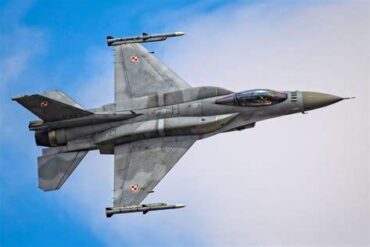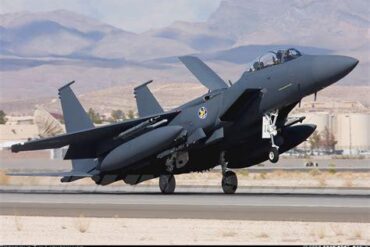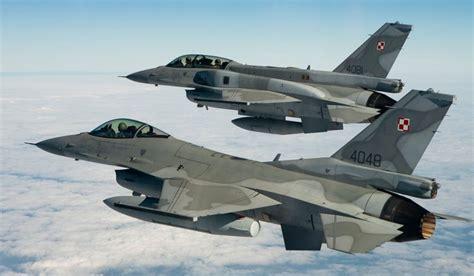
Poland has taken another decisive step in reinforcing its national defense by awarding a $3.8 billion contract to the United States for the modernization of its F-16 C/D Block 52+ fighter jets. The agreement, officially signed on August 13, 2025, will upgrade the fleet of 48 aircraft to the advanced F-16V standard, ensuring Poland’s combat aviation remains capable of facing the mounting security challenges posed by the ongoing war in neighboring Ukraine.
A Historic Upgrade for Poland’s F-16 Fleet
Poland originally acquired its fleet of F-16s in the early 2000s, replacing outdated Soviet-era aircraft and cementing closer defense ties with the United States. Over the last two decades, these fighters have not only safeguarded Poland’s national airspace but have also participated in NATO missions, including Baltic air policing and international deployments. However, with the rapid evolution of military technologies and the unprecedented threats from Russia’s aggression, Warsaw deemed the current fleet insufficient for modern battlefield demands.
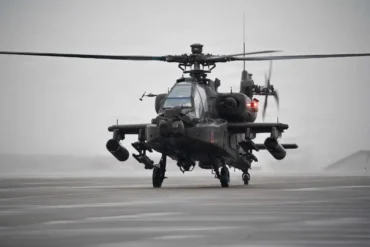
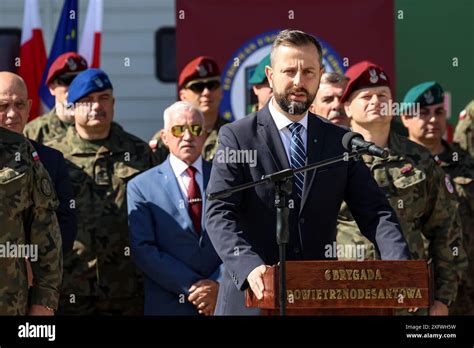
According to Deputy Prime Minister and Defense Minister Władysław Kosiniak-Kamysz, Poland’s F-16s must integrate seamlessly with new-generation systems, including the F-35 Lightning II, M1A2 Abrams tanks, and AH-64E Apache attack helicopters, to guarantee full-spectrum deterrence.
The Scope of the $3.8 Billion Contract
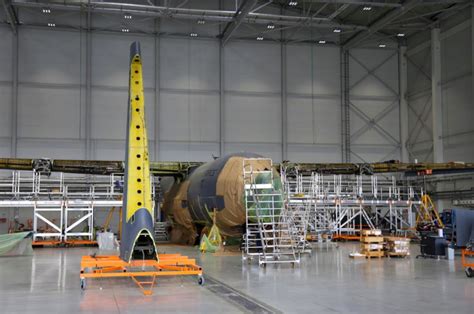
The modernization program will be spearheaded by Lockheed Martin as the prime contractor, working closely with Poland’s domestic defense industry. The overhaul will predominantly take place at Military Aviation Works No. 2 (WZL-2) in Bydgoszcz, a facility operated by the state-owned Polish Armaments Group (PGZ). This arrangement underscores Poland’s strategy of pairing foreign acquisitions with local industrial development and technology transfers.
The program’s timeline spans 2030 to 2038, with upgraded aircraft gradually reentering service during this period. Key enhancements include:
- AN/APG-83 SABR AESA radar: A next-generation active electronically scanned array radar for greater detection range, electronic warfare resilience, and target-tracking precision.
- Advanced mission computers: Boosting onboard processing power for complex data fusion, enabling faster decision-making in contested airspaces.
- AN/APX-126/127 IFF system: An advanced friend-or-foe identification capability critical in joint NATO operations.
- Integration of AGM-158 JASSM missiles: Extending Poland’s precision strike capability with long-range standoff munitions.
Strategic Implications for Poland and NATO
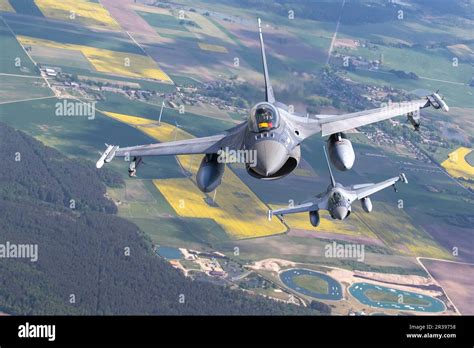
The upgrade represents far more than a technical overhaul; it is a geostrategic signal of Poland’s alignment with the United States and its commitment to NATO’s collective defense. Since Russia’s invasion of Ukraine in February 2022, Warsaw has accelerated defense procurement, making it one of the most heavily armed NATO members in Europe. With defense spending projected to reach 4.7% of GDP in 2025, Poland is now devoting a record $51.3 billion to its military, positioning itself as NATO’s front-line power in Eastern Europe.
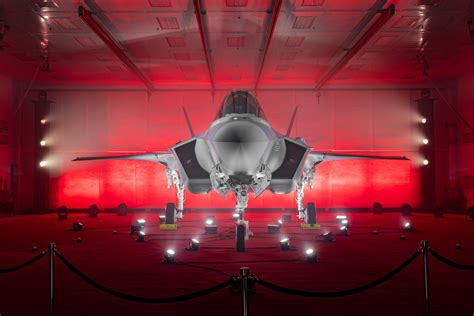
The modernization will also ensure seamless integration between Poland’s F-16 fleet and the 32 F-35A Lightning II stealth fighters it purchased in 2020. Delivery of the first F-35s is expected in 2026, making Poland the first operator of the fifth-generation fighter in Eastern Europe, ahead of the Czech Republic and Romania.
Expanding the Polish Air Force’s Future Options
Beyond the modernization of its existing F-16s, Poland is considering expanding its fighter fleet by two squadrons. The defense ministry is analyzing three potential paths:
- Acquisition of 32 additional F-35s, doubling its stealth fighter capability.
- Procurement of the Eurofighter Typhoon, designed by Airbus, BAE Systems, and Leonardo, offering strong air superiority capabilities.
- Purchase of Boeing’s F-15EX Eagle II, a modernized heavy fighter with unparalleled weapons capacity.
Each of these options carries strategic and industrial implications, from deepening U.S. defense ties to balancing European defense cooperation.
Poland’s Broader Defense Modernization Strategy
The F-16 upgrade is just one element in Poland’s sweeping rearmament program since 2022. Recent acquisitions include:
- 96 AH-64E Apache attack helicopters in a $10 billion deal with Boeing.
- 250 M1A2 Abrams SEPv3 main battle tanks in a $4.75 billion agreement.
- Korean-made FA-50 light attack aircraft, with Poland establishing a dedicated servicing center at WZL-2.
This multifaceted modernization reflects Warsaw’s understanding that defense requires layered capabilities—from air superiority to armored power projection and missile deterrence. Poland’s location on NATO’s eastern flank gives these decisions regional importance, as the country acts as both a shield and logistics hub for supporting Ukraine and deterring further Russian advances.
Strengthening the Polish Defense Industry
By channeling a significant portion of the modernization work to Military Aviation Works No. 2, Poland ensures that its domestic defense industry gains valuable expertise. This move reflects the government’s broader goal of combining foreign acquisitions with domestic industrial development. Tomasz Smura of the Casimir Pulaski Foundation emphasizes that technology transfer and local know-how have become increasingly central to Poland’s defense policy, regardless of the ruling government.
As WZL-2 already services F-16s, C-130 Hercules transport aircraft, and Soviet-era equipment, the modernization contract secures long-term employment for thousands of Polish engineers and technicians, strengthening national defense sovereignty while integrating Poland deeper into Western supply chains.
The Role of the F-16V in NATO Operations
Once upgraded, Poland’s F-16s will operate at the F-16V “Viper” standard, the most advanced variant of the fighter jet. This ensures interoperability with other NATO members that have modernized their fleets, including Greece, Taiwan, and South Korea. Enhanced reconnaissance, secure communications, and advanced radar will allow Poland to take on greater leadership roles in NATO air missions across Europe.
The inclusion of the AGM-158 JASSM standoff missile dramatically expands Poland’s ability to conduct deep precision strikes against enemy infrastructure from secure distances, a capability that plays directly into NATO’s strategy of deterring Russian aggression without direct confrontation.
Conclusion: A Milestone in Poland’s Defense Evolution
The $3.8 billion F-16 modernization deal underscores Poland’s unwavering commitment to transforming its armed forces into one of the most capable militaries in Europe. By upgrading its fighter jets, acquiring cutting-edge weaponry, and deepening its partnership with the United States, Warsaw is positioning itself as a regional military heavyweight and a cornerstone of NATO’s eastern flank.
As the first F-35s arrive in 2026 and upgraded F-16Vs roll out from 2030 onward, Poland will field one of the most modern, integrated, and formidable air forces on the continent. This modernization not only strengthens national security but also reshapes the balance of airpower in Eastern Europe, sending a clear message to both allies and adversaries: Poland is prepared to defend its skies and NATO’s front line.