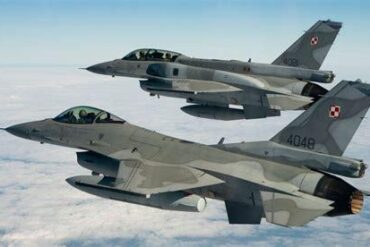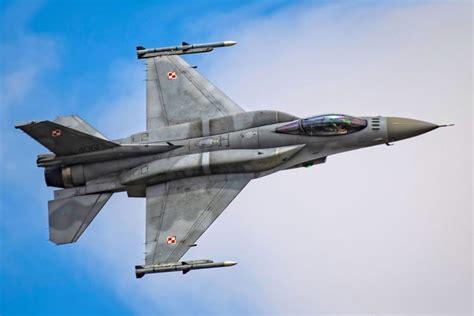
The Kingdom of Bahrain has moved decisively to secure the future of its frontline fighter force with a newly approved $445 million U.S. sustainment package, ensuring that the Royal Bahraini Air Force (RBAF) maintains full operational readiness of its F-16 fleet through the coming decade. The sale, authorized under U.S. Foreign Military Sales procedure on December 1, 2025, includes a vast inventory of aircraft components, radar elements, missile containers, ground handling assets, laboratory equipment, and high-demand guidance system spares intended to preserve performance reliability for Bahrain’s expanding fleet of F-16 Fighting Falcons.
This latest package significantly boosts an earlier $47 million sustainment case and marks a continuation of Bahrain’s long-term modernization roadmap — one that increasingly positions the Gulf state among the most capable F-16 operators in the region. U.S. documents confirm that Bahrain will face no integration obstacles given its decades of experience with the aircraft, signaling a seamless continuation of upgrades, maintenance schedules, and mission-generation capacity.
Strategic Upgrade Pipeline Strengthens Operational Durability
The newly approved sustainment pipeline builds on activities already established inside the first support framework, widening scope to include major and minor airframe modifications, ongoing technical assistance, repair-and-return supply circulation, spare launcher units, and mission-critical software publications. The logistical framework extends into engineering studies, transport support, consumable replenishment, and dedicated maintenance tooling, forming a holistic ecosystem that centers on future-proofing Bahrain’s fighter capability rather than merely preserving its current status.
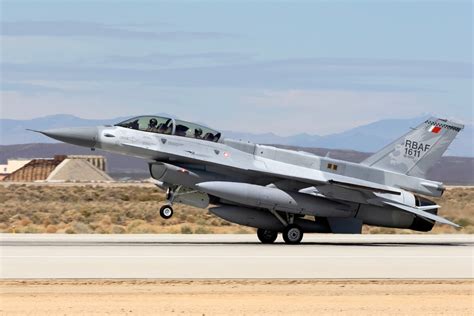
This continuity is essential. Bahrain’s F-16 squadrons remain a core national defense asset, playing a pivotal role in coalition air operations and contributing to regional deterrence. The U.S. statement stresses that the deal guarantees Bahrain’s ability to counter emerging security challenges, sustain interoperability with U.S. and allied air forces, and retain credible combat presence across the Gulf air domain. Lockheed Martin Aeronautics and General Electric Aerospace will support the program as principal contractors, continuing decades of industrial partnership.
A Modernization Journey Rooted in 1980s Procurement Strategy
Bahrain’s F-16 story stretches back almost four decades. In the late 1980s, the nation assessed top-tier Western and Russian fighter platforms — F-15, F-18, Tornado, Mirage 2000, and several Soviet-built designs — ultimately selecting the F-16 Block 40 for its blend of reliability, long-term upgrade capacity, and favorable sustainment economics. By adopting the aircraft, Bahrain became the first F-16 operator in the Gulf region and the fifteenth globally.
Under the Peace Crown I program in 1987, Bahrain acquired eight F-16C and four F-16D models, receiving initial deliveries in 1990 — just months before the Gulf War. Bahraini pilots flew defensive missions from January 25, 1991, shifting to offensive operations the following day, marking the combat debut of the nation’s F-16 fleet. Post-war, Bahrain evaluated additional procurement proposals including U.S. Navy F-16N aggressor aircraft, surplus F-16A/B units, and embargoed Pakistani Falcons — but rejected all options due to supportability issues and high flight hours.
The second procurement wave, Peace Crown II, arrived in 1998, adding ten more F-16C Block 40 aircraft under a $303 million contract. Through the 1990s, Bahrain integrated LANTIRN targeting pods, Maverick AGM-65 missiles, and precision-guided bomb capability, later gaining AIM-120B AMRAAM clearance to execute modern long-range air intercepts.
Block 40 to Block 70: A Leap Toward Regional Air Superiority
The F-16 Block 40 itself remains a formidable fighter — built for 9G performance, equipped with APG-68V(5) radar, GPS-assisted digital flight controls, NVG-compatible cockpits, and LANTIRN navigation for dead-of-night attack profiles. But Bahrain’s transformation accelerated in 2017, when the U.S. approved $2.785 billion for 19 new F-16V Block 70 aircraft and a companion $1.082 billion program to upgrade 20 existing Block 40s. A separate 2019 authorization worth $750 million introduced AIM-120C-7, AIM-9X, AGM-88 HARM, Harpoon Block II, GBU-39 SDB-1, and AGM-154 JSOW — dramatically enhancing Bahrain’s strike reach and integrated air defense penetration.
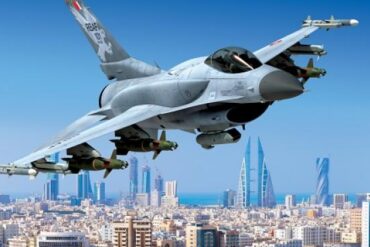
The F-16 Block 70 — sometimes branded F-16V or Viper — represents the most advanced production-standard Fighting Falcon ever built. Its upgrades include AN/APG-83 AESA radar, conformal fuel tanks for extended endurance, a reinforced 12,000-hour life airframe, advanced mission computers, IRST sensor adoption, and 29,000-pound thrust class engines. Bahrain became the first customer to receive brand-new Block 70 airframes, with manufacturing beginning in Greenville, South Carolina, and multiple jets already ferried into the Kingdom for fleet induction.
Why the $445 Million Sustainment Agreement Matters Now
Bahrain currently fields approximately twenty Block 40 fighters and at least five operational Block 70 jets, with delivery queues stretching well into 2026 as Lockheed Martin targets 19–21 aircraft output annually for global customers. Ensuring seamless operational availability across two generations of airframes is the cornerstone logic behind this sustainment sale — without it, modernization risks outrunning maintenance infrastructure.
The new sustainment deal therefore acts like the nervous system linking Bahrain’s historical fleet to its emerging next-generation Viper arm. Rather than aging out, Royal Bahraini F-16 squadrons appear poised for sharper combat readiness, longer service life, and deeper multirole integration into regional mission tasking.
Regional Balance, Interoperability, and the Gulf Power Equation
This agreement does not alter the Gulf region’s balance of airpower — it reinforces it. Washington’s notification emphasizes that Bahrain’s purchase supports defensive stability, coalition alignment, and interoperability with U.S. and partner air forces, ensuring that joint combat readiness remains frictionless. Bahrain’s air arm is being armed for persistence, not provocation.
In an era defined by rapid military technology turnover, the $445 million sustainment package is far more than a spare-part container. It is a strategic insurance policy, guaranteeing that Bahrain’s F-16 force — once the Gulf’s pioneer — remains combat-credible, fully networked, and continuously modernized for the missions ahead.