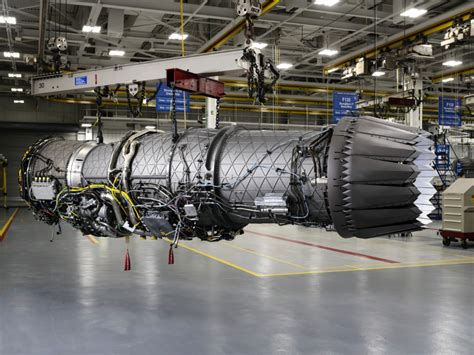
Pratt & Whitney’s $1.6 billion maintenance and sustainment contract with the United States Navy marks a decisive reinforcement of the service’s long-term commitment to the F135 engine, the sole propulsion system powering the F-35 Lightning II. The agreement, reaching through November 2026, folds together deep maintenance, depot-level repairs, advanced software support, and global logistics intended to keep the world’s largest fifth-generation fighter program operating at peak reliability. The timing of the deal is telling, arriving amid renewed public scrutiny over the cost of sustaining the F-35 fleet even as militaries worldwide depend on it more than ever.
The contract underscores how intricate the engine ecosystem has become. The F135 is not a traditional powerplant; it is a dense bundle of metallurgy, cooling architecture, digital diagnostics, and adaptive controls that require relentless attention. The Navy’s choice to consolidate sustainment under Pratt & Whitney preserves continuity in a program where downtime becomes a strategic liability. With more than 1,000 F-35s delivered across allied air forces, the need for harmonized maintenance grows increasingly urgent.
The company’s responsibilities reach far beyond basic upkeep. Pratt & Whitney will oversee spare-parts provisioning, propulsion-integration support, software updates, and on-wing engineering assessments, along with the global logistics spine that distributes parts, specialists, and data streams to international operators.
The F135 engine’s reputation for complexity is not an exaggeration; sustaining it requires a synchronized effort that touches every layer of its architecture. This new contract fuels a global maintenance matrix that includes component overhaul, hot-section rotation, lubrication-system servicing, turbine diagnostics, and digital health-monitoring pipelines designed to detect turbine distress long before it disrupts a flight schedule. Technicians perform borescope inspections on-site, while analysts monitor wear patterns through real-time engine data, generating a predictive-maintenance cycle that supports round-the-clock operations.
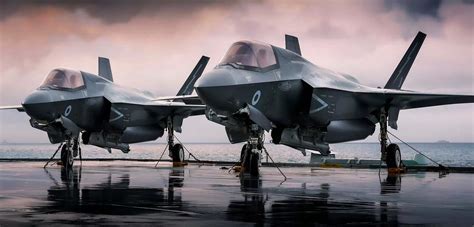
This sustainment package also anchors a series of engineering improvements meant to increase time-on-wing and reduce engine removals, giving the Navy more predictable sortie rates. In a fleet where each aircraft represents a multirole node in a larger network of distributed lethality, reliability is not an administrative perk—it is a combat requirement.
Strategic Payoff for Both Pratt & Whitney and the U.S. Navy
From Pratt & Whitney’s perspective, the award strengthens its position as an indispensable cornerstone of the F-35 enterprise. By sustaining control of the maintenance network, the manufacturer secures long-term access to operational data—data that will inevitably inform the F135 Engine Core Upgrade, designed to furnish future Block 4 jets with enhanced thermal capacity and improved thrust margins. In a competitive engine-support industry, maintaining ownership of the F135’s sustainment ecosystem provides economic resilience and substantial leverage in future propulsion programs.
For the U.S. Navy and Joint Program Office, this contract stabilizes readiness across a fleet expected to surpass 3,000 aircraft worldwide. A uniform maintenance standard avoids the chaos of fragmented logistics across allied nations. Shared parts pipelines, shared diagnostic frameworks, and shared engineering baselines keep multinational F-35 operators flying on the same rhythm, ensuring the program remains interoperable rather than fractured.
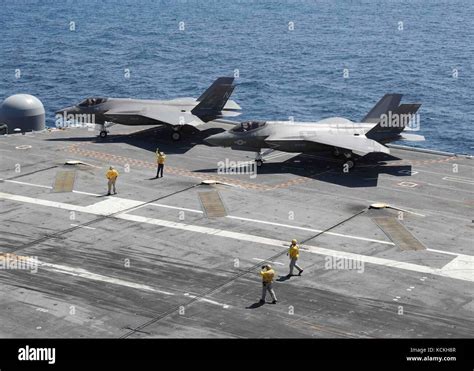
The significance reaches beyond technical reliability. As geopolitical tensions escalate across both the Pacific and Europe, the U.S. is signaling a firm intention to keep the F-35 not merely deployed, but dominant. The sustainment contract cements the aircraft’s role as the backbone of next-generation American air power—an ecosystem supported by steady investment rather than reactive maintenance.
A Reinforced Propulsion Backbone for the Most Advanced Fighter Program on Earth
The $1.6 billion agreement is ultimately a reassurance to allies and a strategic declaration that the F-35 fleet will not experience the creeping vulnerabilities that come with deferred maintenance or fragmented supply chains. Pratt & Whitney’s ability to sustain the propulsion core of the program anchors the long-term viability of every F-35 variant—Air Force F-35As, Marine Corps F-35Bs, and Navy F-35Cs alike.
In an era where air-power competition increasingly depends on networked aircraft, thermal management, software agility, and endurance, the engine becomes the quiet center of gravity. This contract ensures that the F135 will receive the steady, disciplined attention required to keep the world’s most prolific fifth-generation fighter flying at full strength.
The deal is more than a financial award; it is a vote of confidence in a propulsion system that continues to shape the balance of air dominance across continents.