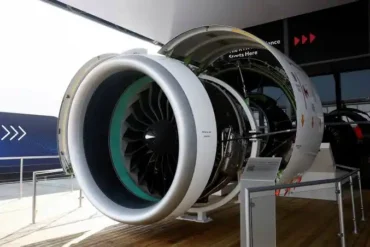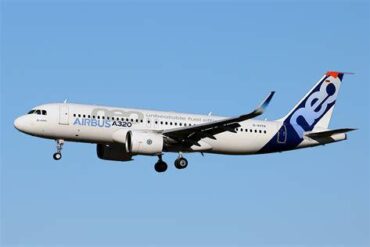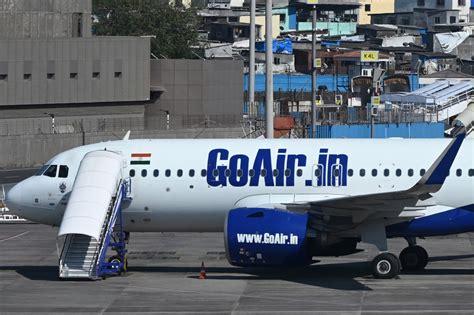
Airbus has delivered a pointed message to one of its most critical suppliers. In releasing its 2025 annual results, the European aerospace giant publicly attributed its inability to accelerate A320 family production to ongoing engine delivery shortfalls from Pratt & Whitney, signaling rare and unusually direct frustration within the tightly coordinated commercial aviation supply chain.
The language was unmistakable. Airbus stated that Pratt & Whitney’s “failure to commit” to the agreed number of engines is negatively affecting production guidance and slowing the ramp-up trajectory for its best-selling narrowbody aircraft. For a results announcement—typically restrained and diplomatically phrased—the wording stood out. It underscored how deeply engine supply constraints are cutting into Airbus’s strategic ambitions at a time of record demand for single-aisle jets.
A320 Production Targets Face Engine Bottlenecks
Airbus had planned to reach a production rate of 75 A320 family aircraft per month, a milestone reflecting sustained global demand for fuel-efficient narrowbody jets. Instead, the company now expects to reach between 70 and 75 aircraft per month by the end of 2027, stabilizing at 75 thereafter. The adjustment may appear modest numerically, but in high-volume manufacturing terms it represents thousands of seats and billions in revenue deferred.
The A320 family remains the backbone of Airbus’s commercial business. In its annual press materials, the company dedicated significantly more attention to the narrowbody program than to its widebody A330 and A350 lines combined. That editorial emphasis mirrors financial reality: short- and medium-haul aircraft are driving airline fleet renewal strategies, particularly as carriers prioritize lower fuel burn and operational flexibility.
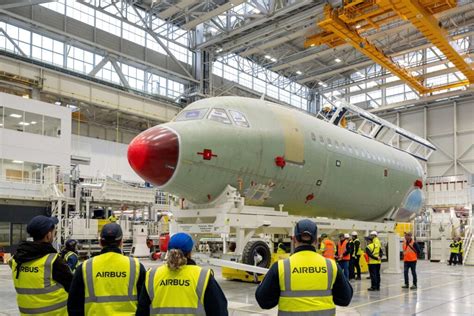
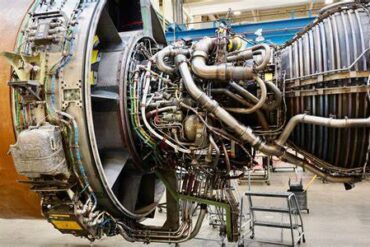
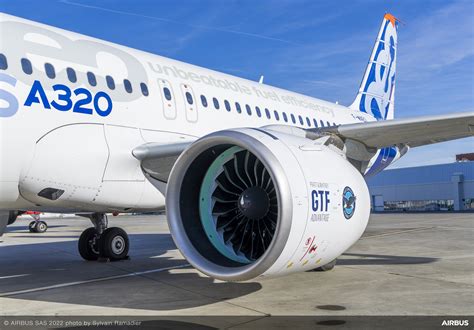
The bottleneck stems from supply constraints affecting Pratt & Whitney’s geared turbofan engines. These powerplants, selected by many A320neo operators for their efficiency advantages, have been under scrutiny due to durability inspections and supply-chain complexity. The ripple effects are now clearly visible in Airbus’s production cadence.
2025: Financial Strength Despite Industrial Friction
Ironically, the engine delays emerged against a backdrop of strong financial performance. Airbus recorded €73.4 billion in revenue, a 6% year-on-year increase, and delivered 793 aircraft in 2025. Adjusted EBIT rose 33% to €7.13 billion, reflecting both healthy margins and sustained delivery volume.
Chief Executive Guillaume Faury described 2025 as a “landmark year,” emphasizing robust global demand and progress across Airbus’s diversified portfolio. The company’s defense, space, and helicopter divisions helped balance commercial volatility, capturing heightened defense momentum and reinforcing Airbus’s broader industrial resilience.
Workforce growth mirrored this expansion. Airbus increased headcount by approximately 5%, reaching 165,294 employees by the end of 2025. Its net cash position also strengthened, rising 4% year-on-year to €12.171 billion. These indicators demonstrate that the company is not facing a demand crisis, but rather a supply constraint concentrated in a critical subsystem.
Orders Surge, But Cancellations Temper Momentum
Airbus crossed a psychological threshold in 2025 by securing 1,000 gross commercial aircraft orders, a 13.9% increase over the previous year. The figure reinforces the structural demand underpinning global fleet renewal. Airlines continue to prioritize next-generation narrowbodies as fuel costs, environmental regulation, and network flexibility shape long-term strategy.
Yet the order book also reflected volatility. Airbus recorded 111 cancellations during the year, resulting in 889 net orders. While still higher than 2024’s total, the margin of growth narrowed considerably compared to gross orders. Cancellations, though not unusual in aviation cycles, highlight the financial pressures and strategic recalibrations airlines face in uncertain macroeconomic conditions.
Despite this churn, Airbus’s commercial backlog stands at an imposing 8,754 aircraft. That backlog secures years of production visibility, but it also intensifies the urgency of resolving supply constraints. Each delayed engine delivery compounds scheduling challenges across final assembly lines and customer handovers.
The Strategic Stakes for Airbus and Pratt & Whitney
Engine manufacturers occupy a uniquely powerful position in aerospace. Airframers can adjust interior configurations or minor structural components, but engines are fundamental, long-lead items. Delays cannot be easily substituted or accelerated without deep industrial coordination. Airbus’s public criticism suggests that internal negotiations have reached a threshold where transparency became necessary.
Pratt & Whitney, for its part, faces the complex task of scaling production while addressing inspection requirements and supply-chain fragility. The geared turbofan architecture offers measurable fuel efficiency gains, yet advanced technology often carries industrial growing pains. The present challenge lies not in demand for the engine, but in the capacity to deliver at rate.
The episode illustrates a broader truth about modern aerospace manufacturing: success is limited not by orders, but by synchronized execution. The narrowbody market is in expansion mode, airlines are eager for new jets, and Airbus has the financial strength to ramp up. The constraint is mechanical and logistical rather than commercial.
Outlook: Controlled Growth Under Supply Discipline
Airbus’s revised guidance signals realism rather than retreat. Stabilizing at 75 A320-family aircraft per month remains an ambitious benchmark, especially given the industry’s pandemic-era disruptions. The company appears committed to disciplined scaling rather than overpromising in a constrained environment.
In the near term, the balance of power within the supply chain will hinge on engine throughput. If Pratt & Whitney accelerates commitments and clears bottlenecks, Airbus’s ramp-up trajectory could regain momentum. If constraints persist, production smoothing may become the new operational norm.
For now, the numbers tell a dual story: financial strength and industrial friction coexisting within the same balance sheet. Airbus has demand, cash, and workforce growth on its side. What it needs—plainly and publicly stated—is more engines.