The modern aviation industry is facing a manufacturing crisis few passengers will ever notice, yet nearly every airline on Earth is being affected by it. The problem is not a lack of pilots, airport slots, aluminum, or even demand for travel. Instead, one of the biggest bottlenecks in global aerospace production comes down to a highly specialized industrial machine that has not entered service on time.
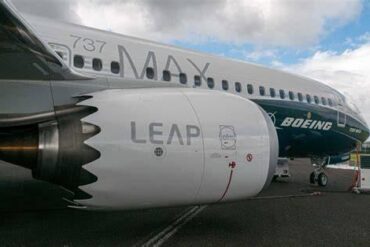
At the center of this disruption is the LEAP engine program developed by CFM International, the powerhouse engine supplier jointly owned by GE Aerospace and Safran. Its LEAP engines power the world’s two most important commercial aircraft families: the Airbus A320neo and the Boeing 737 MAX. Together, these jets form the backbone of modern short- and medium-haul air travel.
That dominance has transformed a single engine program into one of the most strategically important industrial systems in the global economy. Airlines may compete fiercely against each other, but they now share one critical dependency: the ability of CFM to manufacture enough LEAP engines fast enough to keep aircraft deliveries moving.
The consequences of falling behind are already visible across the industry. Airbus deliveries dropped sharply during the opening months of 2026, Boeing continues navigating production constraints, airlines are extending older aircraft leases, and delivery timelines are stretching further into the future. Hidden underneath all of it is a delayed $175 million forging press in France that was supposed to expand production capacity for some of the most critical parts inside modern jet engines.
Why Narrowbody Aircraft Control Global Aviation Growth
To understand why this bottleneck matters so much, it is important to understand the role narrowbody aircraft play in modern aviation. Aircraft like the A320neo and 737 MAX are not niche products. They are the workhorses of the airline industry, responsible for the majority of global passenger movements every single day.
Roughly 70% of the world’s commercial aircraft fleet consists of narrowbody jets. These aircraft dominate domestic routes, regional international flights, low-cost carrier operations, and high-frequency short-haul networks. In rapidly expanding aviation markets throughout Asia, the Middle East, and parts of Latin America, narrowbodies are the primary tools airlines use to grow capacity.
Unlike large long-haul aircraft, narrowbodies maximize utilization. Airlines can schedule them on multiple sectors per day, rapidly rotate them between airports, and optimize profitability through dense seating configurations and lower operating costs. Their efficiency makes them the financial engine of modern airline business models.
That is where the LEAP engine became extraordinarily important.
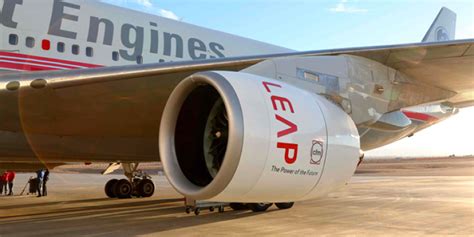
CFM’s LEAP-1A powers the Airbus A320neo family, while the LEAP-1B powers the Boeing 737 MAX. This gives CFM something extremely rare in aerospace manufacturing: dominance across both competing aircraft platforms simultaneously. Whether airlines buy Airbus or Boeing aircraft, there is a strong probability those jets will rely on LEAP engines.
The engine itself became popular because of its economics. Compared to older-generation engines, LEAP powerplants offer up to 15% better fuel efficiency, lower carbon emissions, quieter operations, and reduced operating costs. Since fuel can represent nearly one-third of airline operating expenses, even relatively modest efficiency gains translate into enormous savings over an aircraft’s service life.
Airlines responded aggressively. As more carriers standardized fleets around LEAP-powered aircraft, demand accelerated further. Today, the engine family commands an estimated 60–70% share of new narrowbody engine selections worldwide.
That success created an unintended vulnerability: the aviation industry became heavily dependent on one production ecosystem.
The Hidden Complexity Inside A Modern LEAP Engine
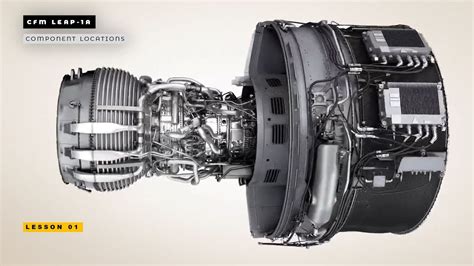
Modern jet engines are among the most sophisticated industrial machines ever created. While aircraft fuselages appear visually complex, the real technological intensity lies inside the engines themselves.
Each LEAP engine contains thousands of precision-manufactured components engineered to survive some of the harshest conditions in commercial transportation. Turbine sections operate in temperatures exceeding 2,700°F, while rotating assemblies endure immense centrifugal forces during flight cycles lasting thousands of hours.
Producing these components requires advanced metallurgy, ceramic matrix composites, ultra-precise machining, and specialized forging techniques that only a limited number of facilities worldwide can perform.
Even a relatively small supply interruption can ripple through the entire aerospace production system.
Unlike automotive manufacturing, aerospace production cannot easily substitute components or suppliers overnight. Every part requires certification, quality validation, and exact compliance with aviation safety regulations. A single delayed turbine disk or forged shaft can halt completion of an entire engine.
That challenge becomes exponentially more severe when manufacturers attempt to scale production rapidly.
CFM is targeting more than 2,000 LEAP engine deliveries during 2026, a historic production goal driven by record airline demand and enormous aircraft backlogs at Airbus and Boeing. However, reaching that number requires synchronization across a deeply interconnected global supply chain involving metallurgy specialists, forging plants, machining centers, coating suppliers, electronics manufacturers, and highly trained aerospace labor.
The industry is now discovering the physical limits of that system.
Airbus Deliveries Are Already Slowing Down
The effects of engine shortages are no longer theoretical. They are already appearing in real delivery figures.
Airbus reported a significant decline in aircraft deliveries during the first quarter of 2026, with engine shortages identified as the primary cause. Despite strong airline demand and full production lines, aircraft could not be completed because engines were unavailable on schedule.
This exposes a critical reality about modern aircraft assembly.
Engines are typically installed near the end of the production process. By the time an aircraft reaches that stage, manufacturers have already invested enormous amounts of labor, capital, logistics coordination, and factory capacity into the airframe. When engines fail to arrive, nearly completed aircraft remain parked unfinished.
Inside the aviation industry, these aircraft are often referred to as “gliders” — fully assembled jets without engines.
Those unfinished aircraft create cascading operational problems. Factory space becomes occupied longer than planned, working capital remains tied up in incomplete deliveries, logistics systems become congested, and production schedules lose efficiency.
The financial implications are massive.
Aircraft manufacturers recognize revenue only when aircraft are formally delivered to customers. Delays involving even a few dozen jets can shift billions of dollars between financial quarters. For airlines, the uncertainty disrupts fleet planning, route launches, staffing schedules, maintenance forecasting, and network expansion strategies.
Some airlines are now extending leases on older aircraft longer than originally intended simply because replacement aircraft are arriving late.
That introduces another layer of consequences: older jets consume more fuel, generate higher emissions, and require more maintenance. Ironically, delays affecting newer efficient aircraft are slowing environmental progress throughout global aviation.
The $175 Million Forging Press Delaying Global Aircraft Production
One delayed industrial machine has become symbolic of the entire crisis.
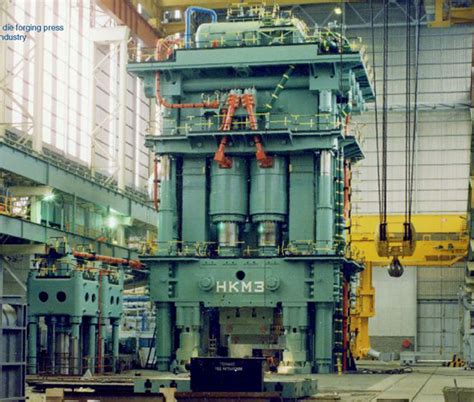
Safran has been developing a massive 33,000-ton hydraulic forging press in France intended to dramatically expand production capacity for critical aerospace engine components. The machine carries a reported cost of roughly $175 million and was expected to become one of the most important pieces of industrial infrastructure supporting LEAP engine manufacturing.
Its role is highly specialized but absolutely essential.
Forging presses shape ultra-high-strength metal alloys into turbine disks, shafts, and structural engine components capable of surviving extreme heat and mechanical stress inside modern jet engines. These processes do not simply shape metal. They refine internal grain structures, improve durability, and create the mechanical integrity required for aerospace certification.
The scale of the machine is extraordinary. Aerospace forging presses of this size rank among the largest manufacturing systems used anywhere in the aviation sector.
The planned facility was expected to produce approximately 14,000 precision-forged aerospace parts annually, helping relieve one of the most constrained production bottlenecks within the LEAP supply chain.
But the machine is delayed until 2029.
That delay created a multi-year gap between expected demand growth and available forging capacity. In practical terms, the aerospace industry anticipated new industrial capability that now will not arrive for years.
The consequences are enormous because forged component manufacturing cannot be expanded quickly elsewhere. Building equivalent infrastructure requires years of planning, environmental approvals, construction, equipment installation, workforce development, and aerospace certification.
In many ways, the missing forging press represents the deeper problem confronting aerospace manufacturing today: demand is expanding faster than industrial infrastructure can realistically scale.
Boeing And Airbus Share The Same Engine Bottleneck
Historically, Boeing and Airbus competed partly through supply chain diversification. If one manufacturer faced disruptions, the other could sometimes maintain stronger production stability through different suppliers or industrial structures.
The LEAP engine changed that equation.
Because CFM supplies both the A320neo and 737 MAX programs, disruptions inside the LEAP ecosystem affect both aerospace giants simultaneously. That creates a rare industrial dependency where one engine manufacturer effectively defines the maximum pace of narrowbody aircraft expansion worldwide.
This dependency becomes even more significant when examining current aircraft backlogs.
Combined narrowbody orders at Airbus and Boeing exceed 12,000 aircraft. At current production rates, many airlines already face waiting periods stretching years into the future for new deliveries.
Every slowdown inside engine manufacturing extends those timelines further.
The challenge is not merely about assembly capacity. Airbus and Boeing could theoretically increase airframe production faster than current levels. The real limitation is whether enough engines can be manufactured, tested, certified, and delivered on schedule.
That shift fundamentally changes how aviation growth is measured.
For decades, analysts focused heavily on aircraft assembly lines as the main indicator of aerospace output. Today, the critical metric increasingly revolves around engine supply chains, forged component availability, and advanced materials manufacturing.
The bottleneck moved deeper into the industrial ecosystem.
Billions Of Dollars Are Being Invested — But Time Is The Real Problem
GE Aerospace is responding aggressively to the crisis with approximately $1 billion in manufacturing and supply chain investments during 2026. The spending includes factory upgrades, advanced production systems, workforce expansion, and supplier support initiatives designed to stabilize engine output.
Part of the investment is specifically targeting durability improvements within high-pressure turbine systems. More durable engines spend longer periods operating before requiring major maintenance, reducing demand for replacement and spare engines.
That indirectly improves production availability for new aircraft deliveries.
However, aerospace manufacturing operates on timelines fundamentally different from most industries.
New factories cannot simply appear within months. Specialized suppliers must undergo certification processes that often require years. Skilled aerospace labor cannot be instantly trained at scale. Metallurgy systems, forging facilities, and precision machining centers require enormous capital investments combined with rigorous regulatory approval.
Even when money is available, industrial capability still takes time to build.
This explains why supply chain constraints remain stubborn despite enormous financial commitments across the aviation sector.

Why The LEAP Engine Now Defines The Pace Of Global Aviation
The global aviation industry has entered an unusual phase where demand is no longer the primary limitation on growth. Passenger traffic continues rebounding strongly, airlines want more aircraft, and manufacturers hold record order books.
Yet expansion is slowing anyway.
The constraint now comes from industrial throughput deep inside the aerospace supply chain, particularly in engine manufacturing and forged component production. Because LEAP engines power the dominant narrowbody aircraft families at both Airbus and Boeing, their production rate effectively establishes the ceiling for worldwide narrowbody fleet growth.
If engine production misses targets by even a modest margin, the impact spreads globally.
Airlines receive fewer aircraft, leasing costs rise, fleet modernization slows, older jets remain in service longer, and route expansion becomes more cautious. The effects ripple across airport planning, airline profitability, maintenance operations, fuel consumption, and environmental strategies.
The delayed forging press in France may appear insignificant compared to giant aircraft assembly lines or billion-dollar airline orders. In reality, it demonstrates how modern aviation increasingly depends on highly specialized industrial infrastructure hidden far from public view.
Aircraft may symbolize global mobility, but behind every delivery schedule lies an intricate chain of metallurgy, engineering precision, and manufacturing coordination operating near absolute capacity.
Right now, one missing machine is reminding the entire aviation industry of a brutal industrial truth: the world can only build aircraft as fast as it can build engines.