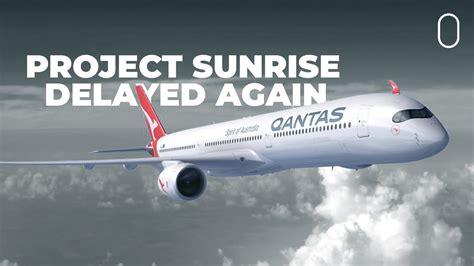
The dream of flying nonstop from Sydney to London or New York has captivated the aviation industry for decades. Through its ambitious Project Sunrise initiative, Australia’s flag carrier, Qantas, aims to redefine long-haul travel by launching the world’s longest commercial passenger flights, eliminating traditional stopovers and shrinking total journey times by several hours.
Yet despite years of planning, engineering breakthroughs, and billions invested, the historic project continues to encounter delays. Airbus has now shifted delivery of Qantas’ first specially modified Airbus A350-1000ULR aircraft to April 2027, underscoring the immense complexity involved in transforming ultra-long-haul aviation from concept into commercial reality.
Far from indicating a failing program, the postponements reveal something far more significant: the extraordinary industrial, regulatory, and logistical challenges required to build aircraft capable of sustaining 22-hour nonstop operations across vast oceans.
The bottlenecks slowing Project Sunrise are not confined to a single factory floor. They span global supply chains, specialized manufacturing processes, certification hurdles, and strategic fleet planning, creating one of the most intricate aerospace programs of the modern era.
The Latest Delay: Why Airbus Pushed Deliveries Into 2027
Airbus recently confirmed that deliveries of the bespoke A350-1000 aircraft destined for Project Sunrise would slip from late 2026 into April 2027. While any schedule revision inevitably sparks concerns about program health, industry insiders emphasize that the delay stems primarily from broader manufacturing pressures rather than deficiencies in aircraft design.
The commercial aerospace sector continues to grapple with lingering disruptions that emerged during the pandemic years. Supply networks that once operated with remarkable precision remain under considerable strain, affecting virtually every major aircraft manufacturer.
Airbus has openly acknowledged that shortages involving specialized components, advanced materials, and highly skilled labor are constraining production across its entire portfolio. These challenges affect not only flagship widebody programs such as the A350 family but also high-volume aircraft like the A320neo series.
Because modern aircraft manufacturing depends upon thousands of suppliers spread across dozens of countries, even relatively minor disruptions can cascade rapidly throughout production schedules. A delayed shipment from a single supplier can stall assembly work on multiple aircraft simultaneously.
For Project Sunrise, those vulnerabilities are amplified considerably.
Unlike standard airliners, Qantas’ aircraft require unique modifications unavailable elsewhere in Airbus’ production ecosystem. Consequently, any interruption involving specialized parts immediately impacts the program’s timeline, leaving virtually no opportunity to recover lost schedule margin.
Why Project Sunrise Aircraft Are Unlike Any Other A350
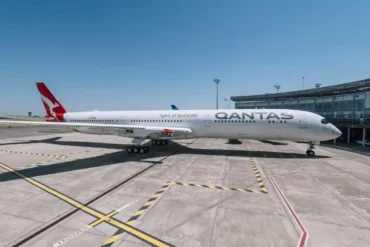
The aircraft selected for Project Sunrise may carry the familiar A350-1000 designation, but the reality is that these jets differ substantially from conventional examples already flying worldwide.
At the center of the transformation lies an entirely new fuel architecture designed specifically for ultra-long-range missions.
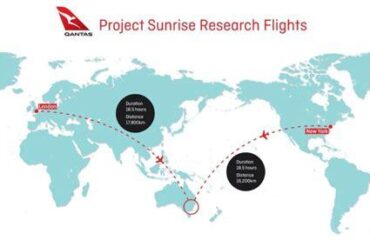
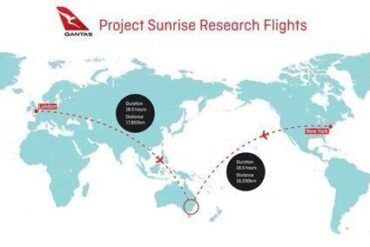
To enable nonstop flights exceeding 17,000 kilometers (10,573 miles), Airbus engineers developed an enormous integrated rear center fuel tank capable of carrying approximately 20,000 liters (5,283 gallons) of additional fuel.
This extra capacity extends range by roughly 1,000 nautical miles, pushing the aircraft into performance territory previously considered commercially unattainable.
However, integrating such a system is vastly more complicated than simply installing auxiliary tanks.
The additional fuel reservoir forms an integral part of the aircraft’s load-bearing structure, embedded directly within the rear fuselage. This fundamentally alters weight distribution, structural loads, and aerodynamic behavior throughout the aircraft.
Every section of the airframe surrounding the tank must therefore be manufactured, assembled, and tested differently.
The consequence is a highly specialized assembly sequence that demands extraordinary precision.
Workers cannot simply add the tank after the aircraft structure is complete. Instead, fuselage sections must be joined around the integrated fuel system during core structural assembly. If any component associated with the tank arrives late—from isolation valves to structural reinforcements—the entire production station may remain idle.
In aerospace manufacturing, idle stations create severe downstream consequences because subsequent assembly phases cannot begin until preceding tasks are completed.
As a result, Project Sunrise aircraft have become particularly sensitive to disruptions among niche suppliers responsible for manufacturing bespoke components.
Global Supply Chain Problems Continue To Restrict Airbus Production
The aviation industry’s supply chain crisis has proven far more persistent than many analysts initially anticipated.
Modern aircraft consist of millions of individual parts sourced from an international network of highly specialized suppliers. Many of these companies operate with limited redundancy, producing unique components unavailable from alternative manufacturers.
During the pandemic, workforce reductions, factory shutdowns, and supplier bankruptcies destabilized this ecosystem. Although passenger demand has rebounded strongly, rebuilding industrial capacity has taken considerably longer.
Today, Airbus faces shortages involving:
- Titanium and aerospace-grade alloys
- Electronic microcomponents
- Cabin equipment systems
- Advanced composite materials
- Specialized structural fasteners
- Highly trained aerospace technicians
The labor issue remains especially challenging.
Widebody aircraft assembly requires workers possessing years of experience in precision manufacturing disciplines ranging from composite construction to avionics integration. Recruiting and training replacements cannot occur overnight.
Consequently, Airbus must carefully allocate limited resources across numerous production programs simultaneously.
For standard aircraft, manufacturers occasionally possess flexibility to reshuffle schedules or substitute components. Project Sunrise, however, offers almost no such adaptability because of its unique configuration.
Every specialized delay therefore reverberates throughout the entire production chain.
Certification Requirements Are Creating Additional Pressure
Building an aircraft capable of flying for nearly an entire day without landing represents only one aspect of the challenge.
Convincing global aviation regulators that such operations can be conducted safely is arguably even more demanding.
European regulators, led by the European Union Aviation Safety Agency (EASA), have subjected Project Sunrise modifications to exceptionally rigorous scrutiny.
Because the aircraft incorporates a novel integrated fuel system, regulators require extensive evidence demonstrating that the design satisfies every modern safety requirement concerning:
- Structural integrity
- Crash survivability
- Fire protection
- Fuel isolation
- Emergency procedures
- System redundancy
The integrated rear fuel tank has received particular attention.
Authorities must verify that the structure can withstand extreme aerodynamic loads, turbulence events, hard landings, and abnormal operating scenarios without compromising passenger safety.
Achieving certification demands enormous quantities of engineering documentation, computer simulations, laboratory evaluations, and physical testing.
Each design refinement introduced during this process can trigger additional validation work, extending timelines further.
Rather than slowing progress unnecessarily, these procedures ensure that aircraft operating unprecedented mission profiles meet the highest possible safety standards.
Flight Testing Cannot Be Rushed
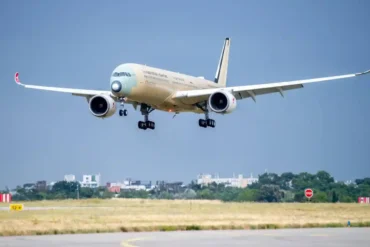
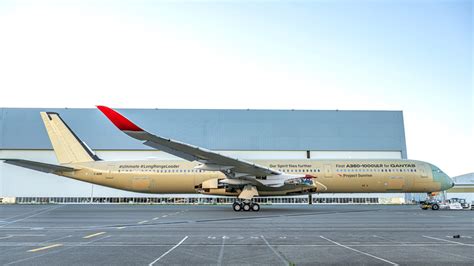
A major milestone occurred when Airbus launched its dedicated flight-test campaign using the first Project Sunrise test aircraft, designated MSN 707.
The aircraft completed its maiden flight successfully, spending approximately three hours and forty-three minutes in the air while climbing above 41,000 feet.
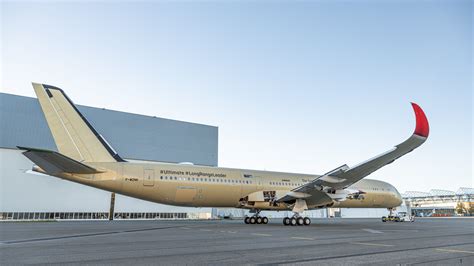
This achievement marked the transition from theoretical engineering analysis to real-world validation.
During testing, engineers assess hundreds of performance variables, including fuel consumption, handling qualities, aerodynamic efficiency, systems behavior, and operational reliability.
Ultra-long-range aircraft introduce additional complexities because crews must verify performance across mission profiles rarely attempted in commercial aviation.
Testing includes evaluating how the aircraft behaves:
- At extremely high takeoff weights.
- During prolonged cruise segments.
- Under varying fuel distribution conditions.
- Following system abnormalities or failures.
- During extended diversion scenarios.
Every flight generates enormous volumes of data requiring detailed analysis before submission to regulators.
This process imposes a rigid timeline that cannot be compressed substantially without compromising certification integrity.
Even if manufacturing accelerated dramatically tomorrow, regulatory approval would still depend upon completing an exhaustive test campaign.
Qantas Has No Viable Alternative Aircraft
Perhaps the most significant strategic vulnerability facing Qantas is the absence of a practical backup solution.
For conventional fleet renewals, airlines often retain flexibility by selecting competing aircraft models, leasing interim capacity, or switching between variants.
Project Sunrise offers no such luxury.
The operational requirements—nonstop flights from Sydney to London and New York with commercially viable payloads—sit at the extreme edge of contemporary aircraft performance.
Initially, Boeing proposed its forthcoming 777-8X as a contender. However, repeated delays affecting the broader 777X program effectively removed it from serious consideration.
This left the modified Airbus A350-1000 as the sole aircraft capable of satisfying Qantas’ demanding specifications.
No existing airliner currently in service possesses the necessary combination of:
- Range
- Payload capability
- Fuel efficiency
- Operational economics
- Passenger comfort
Without an alternative platform, Qantas remains entirely dependent upon Airbus’ production schedule.
Every delivery revision therefore forces broader adjustments throughout the airline’s network planning strategy.
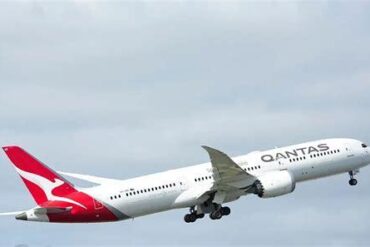
Older aircraft, including portions of the Boeing 787 and Airbus A380 fleets, must remain in service longer than originally envisioned, complicating maintenance planning, crew scheduling, and fleet modernization objectives.
The Economics Of Ultra-Long-Haul Flying Still Look Strong
Repeated delays inevitably raise questions regarding commercial viability.
Skeptics often argue that flights approaching 22 hours consume enormous quantities of fuel simply to carry the fuel needed for later portions of the journey, potentially undermining profitability.
While technically accurate, this analysis overlooks the premium revenue model underpinning Project Sunrise.
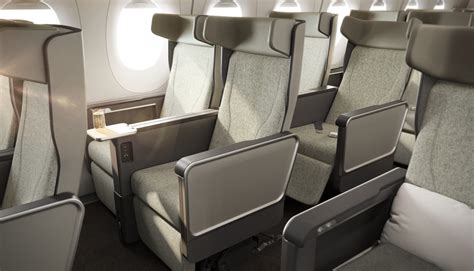
Qantas intends to configure its A350-1000ULR fleet with only 238 seats, dramatically fewer than a conventional A350-1000.
The layout prioritizes premium cabins, offering a significantly higher proportion of business and premium economy seating.
This strategy reflects extensive market research indicating that business travelers and affluent leisure passengers are willing to pay substantial premiums to avoid time-consuming intermediate stops.
Eliminating transfers through major hubs in the Middle East or Asia can reduce total journey times by several hours while also removing many traditional travel inconveniences.
Importantly, Qantas already possesses compelling evidence supporting this business case.
Its existing nonstop services connecting Perth with London and Rome have consistently generated strong passenger demand, impressive load factors, and high customer satisfaction scores.
These routes effectively served as real-world laboratories validating consumer appetite for nonstop ultra-long-haul travel.
Consequently, few industry analysts believe current delays threaten the project’s long-term commercial rationale.
Assembly Progress Shows The Program Is Still Moving Forward
Despite delivery delays, tangible progress continues inside Airbus facilities in Toulouse.
The ongoing flight-test campaign demonstrates that the program has advanced well beyond the conceptual stage. Engineering efforts are increasingly focused on validating operational performance rather than solving fundamental design challenges.
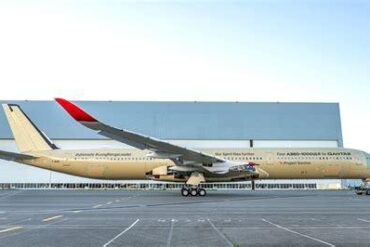
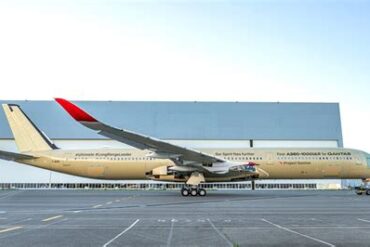
Meanwhile, the second production aircraft—destined to become Qantas’ first delivered Project Sunrise jet—has already entered advanced stages of final assembly.
Once structural work concludes, the aircraft will move through paint, cabin installation, systems integration, and engine installation before commencing its own test activities.
As additional flight data accumulates, Airbus and Qantas will simultaneously finalize pilot training programs, maintenance procedures, operational manuals, and route preparations.
Taken collectively, these milestones indicate that Project Sunrise remains firmly on course.
The delays currently affecting deliveries are best understood not as signs of failure, but as evidence of the extraordinary industrial complexity involved in creating an aircraft capable of connecting cities separated by half the planet in a single uninterrupted flight.
When the first passengers eventually board a nonstop Qantas flight from Sydney to London, they will experience far more than a new route. They will witness the culmination of one of aviation’s most ambitious engineering achievements.