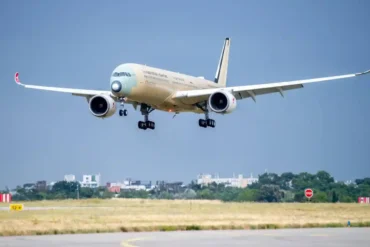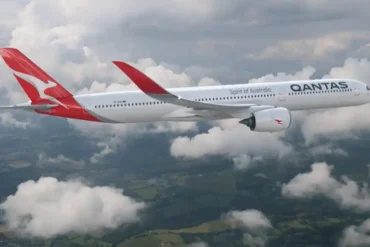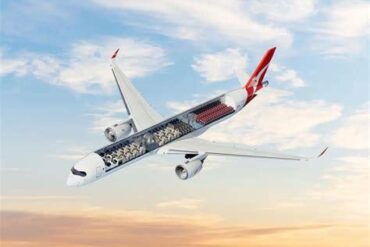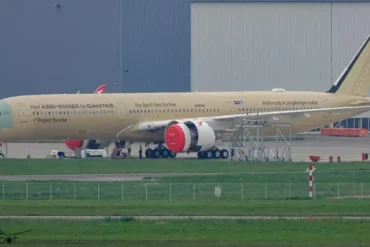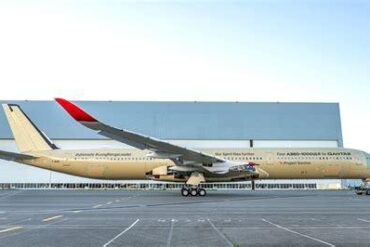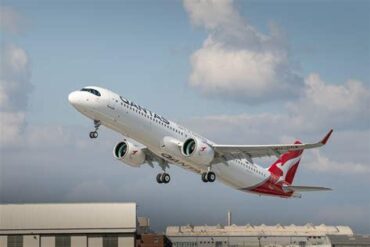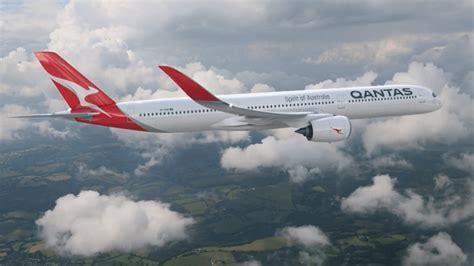
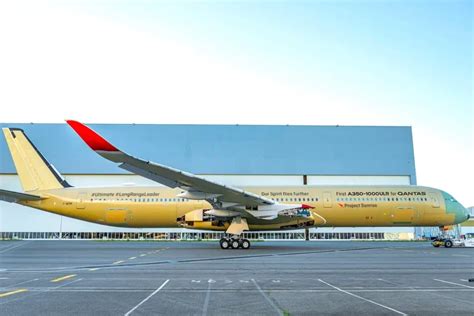
As we approach a new frontier in long-haul aviation, Qantas’ Project Sunrise emerges as a defining milestone, promising to reshape the ultra-long-haul travel landscape. The initiative aims to inaugurate nonstop commercial flights between Australia and destinations like London and New York, spanning over 17,000 kilometers and lasting up to 22 hours. At the heart of this endeavor lies the Airbus A350-1000ULR, a heavily modified variant designed to sustain human endurance and mechanical performance across the longest distances ever scheduled for commercial air travel.
Pushing the Boundaries of Range and Performance
The A350-1000ULR is not merely a stretched jet with bigger tanks. Airbus and Qantas have collaborated to extend the aircraft’s maximum takeoff weight (MTOW), optimize aerodynamic efficiency, and tweak systems to support continuous operation beyond 20 hours. However, operating such ultra-long-range (ULR) flights introduces significant technical trade-offs, particularly regarding fuel economy and payload management.
A frequent claim supporting ULR efficiency is that avoiding intermediate takeoffs and climbs saves approximately 25% in fuel per journey. This assertion holds true—up to a point. For routes under 3,000 nautical miles, the elimination of fuel-intensive takeoff and climb phases results in measurable savings. Yet, beyond this threshold, the sheer volume of fuel required to fly ultra-long legs begins to negate the initial efficiency gains. Fuel must be carried to burn fuel, leading to compounding weight penalties.
Comparative data indicates that per-mile fuel burn increases from approximately 29 lb/NM at 3,000 nm to 31 lb/NM at 7,000 nm—a rise of nearly 10%. In aviation economics, such a margin cannot be overlooked, especially as reduced passenger capacity further dilutes profitability per kilogram lifted.
Engineering a Cabin for 22 Hours in the Sky
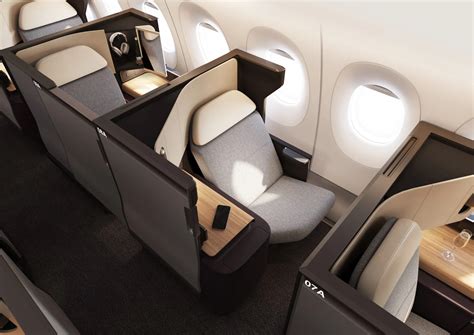
To justify these long durations, Qantas has made unprecedented investments in cabin configuration and human factors research. The airline conducted over 150 hours of live flight simulations, measuring everything from melatonin production to cognitive alertness among volunteer passengers and crew. The findings informed a bespoke cabin layout that aims to combat physical and psychological fatigue.
The Project Sunrise-configured A350-1000ULR will carry 238 passengers—a lower density compared to other long-haul layouts. This includes:
- 6 First Class suites, offering full beds and privacy pods.
- 52 Business Class seats, designed for extended recline and personal storage.
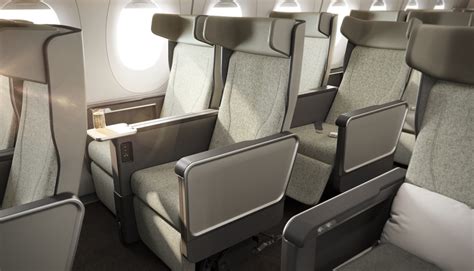
- 40 Premium Economy seats, with more generous recline and legroom.
- 140 Economy seats, laid out in a 3-3-3 format with 33-inch pitch—above industry average.
Critically, Qantas plans to introduce an onboard “Wellness Zone”, a space dedicated to light exercise, stretching, and hydration. While still subject to weight and cost feasibility, the zone could mark a revolutionary step in cabin ergonomics, inspired in part by Japanese capsule hotels and space-efficient design principles.
The Passenger Experience: Will Nonstop Win Hearts?
From a consumer perspective, a 22-hour direct flight may sound daunting—but for many, it’s a godsend. Current alternatives between Sydney and London or New York involve 25–30 hours of travel, punctuated by airport transfers, layovers, and security bottlenecks. Qantas’ data suggest strong demand, particularly among Australian travelers weary of international transits.
The convenience premium—knowing your bag is checked once, your seat is yours for the duration, and jet lag is possibly reduced by fewer timezone shocks—is compelling. Yet this comes at a human cost.
Economy passengers especially face the psychological and physical strain of remaining seated for such long durations. Critics argue that even with added legroom, ultra-long flights in economy are verging on intolerable without opportunities for meaningful breaks. The absence of scenery changes or walking time during a transit also eliminates an essential reset mechanism for long-haul passengers.
Comparative Models: Lessons from Singapore Airlines
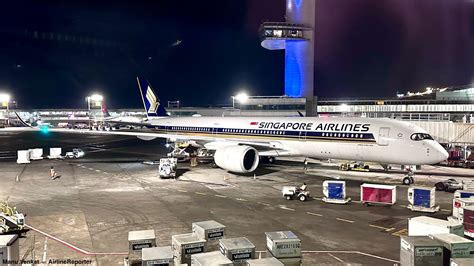
Singapore Airlines offers a glimpse into ULR viability through its A350-900ULR service between Singapore and New York JFK, a nearly 18-hour flight. The carrier’s decision to exclude economy class entirely, opting only for Business and Premium Economy, reflects a strategic focus on comfort and yield per seat.
This configuration aligns with a premium traveler demographic and reduces in-flight load factors that strain crew and systems. However, Qantas is taking a broader market approach by maintaining an economy class, albeit with enhancements, signaling its belief in ULR as a mass-market evolution, not a niche luxury.
Economics and the Ultra-Long-Haul Gamble
The economics of Project Sunrise remain precarious. On the one hand, high revenue potential from business and first-class travelers is real. Corporate customers value time more than cost, and the ability to fly nonstop from Australia to Europe or North America is a unique selling point.
On the other hand, fuel efficiency erosion, crew duty hours, and weight-driven operational limits create narrow profit margins. Any turbulence in jet fuel prices or passenger demand could tip the equation unfavorably.
Qantas must also consider the opportunity cost of allocating its newest widebodies to a limited number of city pairs. A Project Sunrise aircraft cannot easily be reassigned or rotated due to its mission-specific design. The cost of idle aircraft during off-peak demand or geopolitical route disruptions could be immense.
Historic Leap: From Piston Engines to the Edge of the World
The achievement of Project Sunrise cannot be fully appreciated without recalling where we began. Less than a century ago, crossing the Atlantic involved multiple stops, unreliable weather forecasting, and rudimentary cabins. The thought of flying halfway around the globe without pause, at jet speeds, and in a controlled, pressurized cabin, would have seemed science fiction.
Now, as we prepare to witness the first flights under Project Sunrise, we are not just observing a new airline product—we are witnessing the physical and mental boundaries of commercial air travel being redrawn. Qantas, Airbus, and their teams have pushed engineering to its current apex, integrating aerodynamics, physiology, psychology, and economics into a single, coherent offering.
Conclusion: Is the World Ready for 22 Hours Aloft?
While Qantas’ Project Sunrise promises unmatched convenience and a marvel of engineering execution, it also raises new questions about human limits, comfort, and sustainability. The aviation industry must grapple with whether extreme-duration flights represent the future of long-haul travel—or a technological outlier designed for prestige more than practicality.
What is clear is that passenger expectations are evolving, and Qantas is betting that the market is ready to follow them to the ends of the Earth—literally. Whether measured in nautical miles or disrupted routines, the impact of Project Sunrise will be felt far beyond its Sydney runway.