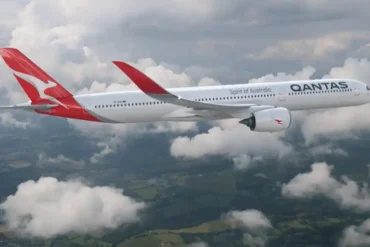
The ambitious vision behind Project Sunrise, a flagship initiative by Qantas to redefine ultra-long-haul travel, has encountered yet another setback. The airline’s highly customized fleet of Airbus A350-1000 Ultra Long Range (ULR) jets will now arrive later than planned, with delivery timelines slipping into early 2027. The delay, attributed to persistent “supply chain issues” by Airbus, underscores the fragile recovery of global aerospace manufacturing even as demand for international travel surges.
For Qantas, the stakes extend far beyond scheduling inconvenience. Project Sunrise represents a bold attempt to reshape global connectivity by enabling nonstop flights from Sydney to both London and New York—routes that would rank among the longest ever operated commercially. Each delay not only postpones a technological milestone but also shifts competitive dynamics in a rapidly evolving aviation market.
A Decade-Long Dream Grounded by Global Disruptions
The roots of Project Sunrise stretch back more than ten years, conceived as a response to growing demand for direct, time-saving international travel. Yet the timeline has been repeatedly disrupted, first by the seismic shock of the COVID-19 pandemic and now by lingering supply chain instability that continues to ripple through the aerospace sector.
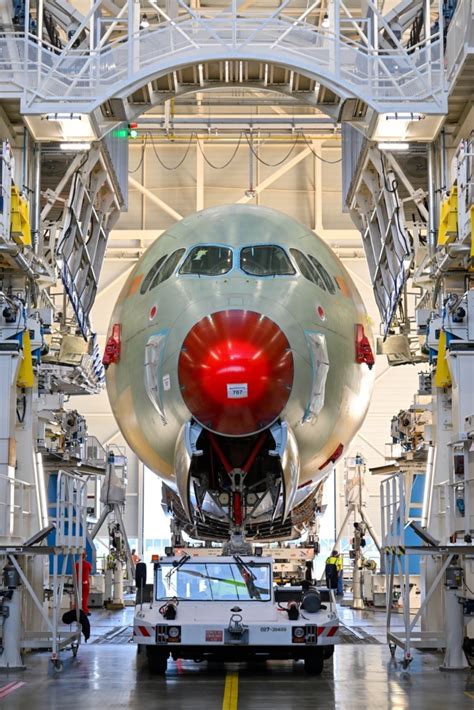
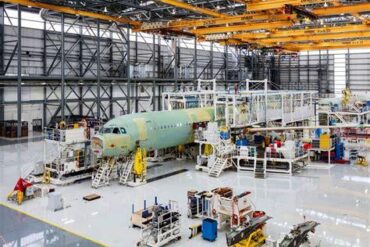
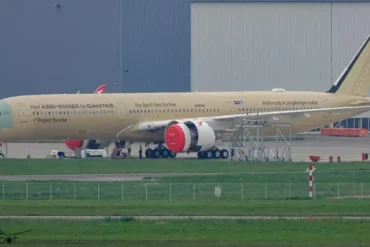
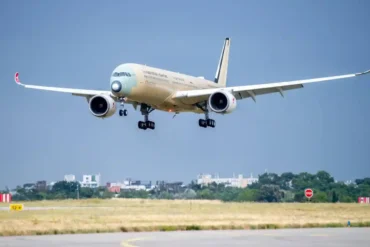
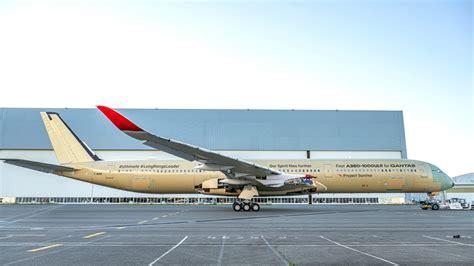
While the first functional A350-1000ULR has already rolled out of Airbus’ Toulouse facility, the journey from prototype to passenger-ready aircraft remains complex. Certification processes, component availability, and production bottlenecks all intersect in ways that make precise delivery forecasting increasingly difficult. Even as Airbus works to stabilize output, the intricate nature of ultra-long-range aircraft production leaves little margin for error.
Qantas, however, remains publicly confident. The airline is targeting a fleet of five A350-1000ULRs by late 2027, with operations expected to begin once at least three aircraft are delivered and fully certified. This cautious rollout reflects both regulatory realities and the operational complexity of launching flights that will exceed 20 hours in duration.
Why the A350-1000ULR Is Unlike Any Aircraft Before It
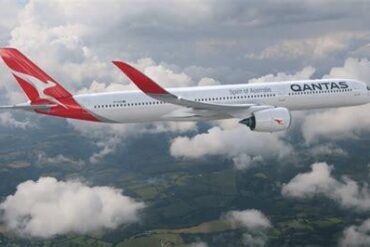
At the heart of Project Sunrise lies a machine engineered to push the boundaries of endurance, efficiency, and passenger comfort. The A350-1000ULR is not merely an extended-range variant—it is a comprehensive redesign of what long-haul flight can be.
Unlike traditional widebody aircraft, the ULR configuration balances increased fuel capacity with reduced payload. By limiting passenger numbers and cargo weight, the aircraft can carry enough fuel to sustain flights exceeding 22 hours. This trade-off is central to making routes like Sydney to London viable without refueling stops.
Technologically, the aircraft benefits from advanced aerodynamics and next-generation engines that maximize fuel efficiency. Its composite fuselage allows for higher cabin pressurization, reducing the effective cabin altitude to around 6,000 feet—significantly lower than older aircraft. This seemingly small adjustment has a profound impact on passenger well-being, mitigating fatigue, dehydration, and jet lag during ultra-long journeys.
Inside the Cabin: Redefining Long-Haul Comfort
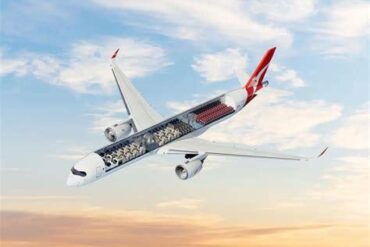
The passenger experience aboard Qantas’ A350-1000ULR is being meticulously curated to address the physical and psychological challenges of ultra-long-haul travel. Rather than maximizing capacity, the airline has opted for a dramatically reduced seat count—just 238 passengers compared to the typical 300+ configuration.
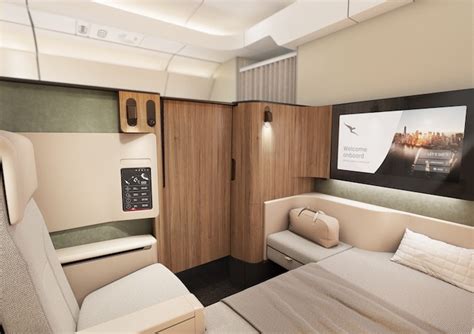
This decision enables a spacious, premium-heavy layout that prioritizes comfort over density. First-class passengers will have access to fully enclosed suites designed to resemble private hotel rooms, while business class travelers will enjoy lie-flat pods with sliding doors, ambient lighting, and expanded personal space.
Even economy passengers benefit from unusually generous seat pitch, set at approximately 33 inches. Beyond seating, the cabin introduces a novel “wellbeing zone”—a communal area designed to encourage movement, stretching, and hydration. This space reflects growing recognition within the aviation industry that passenger health is a critical factor in long-duration flights.
Strategic Pressure and Market Implications
The delay arrives at a moment when Qantas is actively seeking to strengthen its position in the premium long-haul market. Operating costs across the aviation industry remain elevated, driven by fluctuating fuel prices and geopolitical uncertainties. Recent tensions in the Middle East have further complicated cost forecasting, with energy markets reacting sharply to each diplomatic development.
Despite these challenges, investor sentiment toward Qantas has shown resilience, buoyed by broader optimism surrounding potential geopolitical stabilization. The airline’s commitment to Project Sunrise signals confidence in the long-term profitability of ultra-long-haul routes, particularly among high-yield business and premium leisure travelers.
However, the competitive landscape is intensifying. Other carriers have already demonstrated the viability of ultra-long-haul operations, most notably through routes connecting Singapore and New York. Qantas’ vision goes further, but delays risk narrowing its first-mover advantage in a segment where timing can be as critical as innovation.
Engineering Ambition Meets Industrial Reality
The recurring delays highlight a broader truth about modern aviation: cutting-edge aircraft are as much products of global industrial ecosystems as they are feats of engineering. The A350-1000ULR relies on a vast network of suppliers, each contributing specialized components that must meet exacting standards. When even one link in this chain falters, the consequences cascade across production timelines.
For Airbus, resolving these bottlenecks is essential not only for Qantas but for maintaining credibility across its order book. For Qantas, patience is a strategic necessity—rushing deployment could compromise the very experience that Project Sunrise aims to elevate.
The Long View: A New Era Still on the Horizon
Despite the setbacks, Project Sunrise remains one of the most compelling developments in contemporary aviation. Its promise lies not just in breaking distance records but in fundamentally altering how travelers perceive time and connectivity. A nonstop flight from Sydney to London transforms what was once a multi-leg journey into a single, continuous experience—one that redefines convenience for global travelers.
Delays, while frustrating, do not diminish the transformative potential of the program. Instead, they serve as a reminder that innovation at this scale demands both ambition and resilience. When the first A350-1000ULR finally enters service, it will carry more than passengers—it will carry the culmination of years of engineering, strategy, and persistence.
And when it does take to the skies, the world will be watching.