Airbus has entered 2026 carrying strong delivery momentum and equally heavy structural pressures, a reality its new Commercial Aircraft CEO, Lars Wagner, has acknowledged with unusual candor. Speaking at the Airline Economics Conference, Wagner admitted that Airbus’ effort to increase production is constrained by unresolved technical and industrial problems, even as global demand for new aircraft remains historically strong. His remarks offer a revealing look inside an aerospace ecosystem struggling to move faster than its weakest links.
The European manufacturer closed 2025 with 793 aircraft deliveries, a notable recovery from the post-pandemic slump and an average of 67 handovers per month. That performance exceeded Airbus’ revised annual target but still fell short of the 863 jets delivered in 2019. The gap highlights a central tension facing Airbus today: airlines want more aircraft immediately, while production systems are still stabilizing after years of disruption.
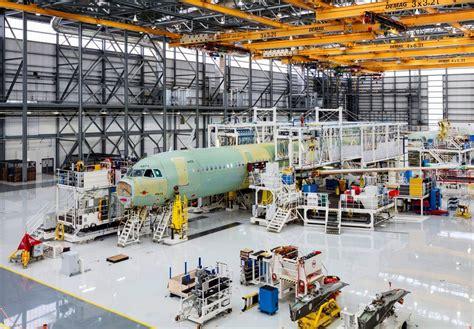
Wagner, who assumed his role on January 1, framed the challenge bluntly. The issue is no longer market demand or order books, but the resilience of the entire industrial chain, from raw materials to final assembly. According to him, accelerating output without first resolving durability and quality problems would only amplify downstream disruptions for airlines already coping with tight fleets and operational volatility.
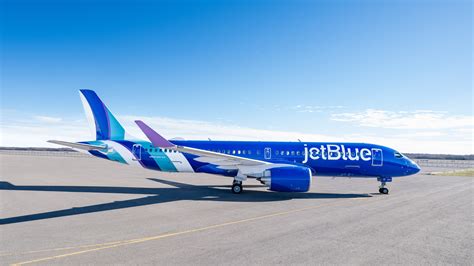
The pressure is most visible in the narrowbody segment, where Airbus’ A320neo family anchors its production strategy and profitability. Any disturbance in that program ripples through airline schedules worldwide, making reliability concerns impossible to sidestep.
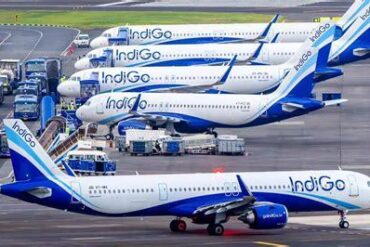
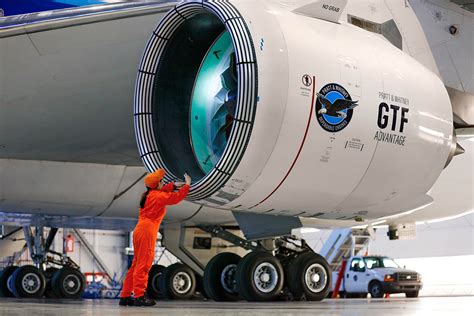
At the heart of the current slowdown sits the Pratt & Whitney geared turbofan engine crisis, a problem Wagner identified as the first obstacle Airbus must clear before pushing production rates higher. A defect in powdered metal used for high-pressure turbine discs has forced widespread inspections and premature engine removals, grounding aircraft across multiple fleets. Operators such as Wizz Air and IndiGo have been particularly exposed, with disruptions expected to persist well into 2026.
For Airbus, the implications go beyond delayed deliveries. Engine durability issues undermine airline confidence in fleet planning, complicate leasing strategies, and strain Airbus’ relationships with customers who depend on predictable aircraft availability. Wagner’s emphasis on solving durability first signals a strategic pause: production growth will be incremental, not aggressive, until propulsion reliability improves.
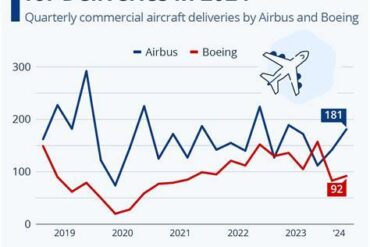
These constraints have not prevented Airbus from outperforming its main rival in 2025. While Airbus delivered 793 aircraft, Boeing closed the year at 600 units, its best result since 2018 and a clear sign of recovery after years of crisis. Yet the comparison masks different challenges. Boeing’s rebound is driven by internal stabilization, while Airbus is constrained by supplier bottlenecks and engine shortages rather than factory capacity alone.
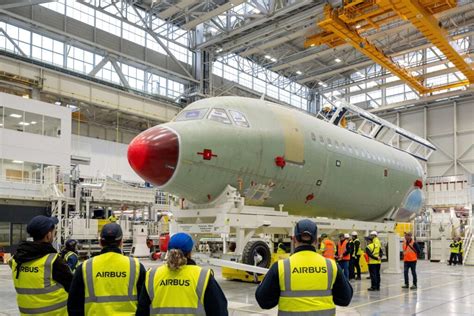
Airbus’ own delivery mix illustrates the imbalance. Of the 793 aircraft handed over, 607 were A320neo family jets, 93 were A220s, 57 A350 widebodies, and 36 A330neos. The narrowbody line remains the engine of volume, but it is also the most exposed to supplier quality issues, including fuselage panel defects that forced Airbus to cut its original 2025 guidance from 820 aircraft.
Against this backdrop, Wagner also addressed a topic that has quietly gained momentum among airlines: the possibility of a larger A220 variant, widely referred to as the A220-500. While Airbus has not committed to launching the aircraft, Wagner confirmed his personal interest in seeing the program expanded once conditions allow. The logic is compelling. A stretched A220 could seat up to 180 passengers, positioning it as a highly efficient replacement for older A320s and Boeing 737s on short- to medium-haul routes.
However, the A220 program remains a delicate balancing act. Development of the -500 was reportedly paused in 2025 due to profitability concerns, and CEO Guillaume Faury has warned that launching a new variant before the program reaches financial break-even would be risky. In an environment where supply chains are already stretched, adding complexity too early could dilute resources and slow progress elsewhere.
Wagner’s comments ultimately reflect a broader strategic recalibration. Airbus is not retreating from growth, but it is redefining what responsible growth looks like in a fragile industrial landscape. The company exceeded its delivery target in 2025, yet that success came alongside guidance cuts, supplier disruptions, and engine crises that exposed systemic vulnerabilities.
For airlines, the message is clear. Aircraft availability will improve, but not overnight, and fleet plans must account for ongoing uncertainty in production rates and engine maintenance cycles. For Airbus, the challenge is more existential: balancing record demand with the hard limits of manufacturing reality. Wagner’s openness suggests a leadership style focused less on ambitious headlines and more on rebuilding confidence, one durable component at a time.