India’s aviation landscape is undergoing a rapid transformation, and Airbus is positioning itself at the heart of this evolution. With over 1,260 aircraft deliveries prioritized to India’s largest carriers—IndiGo and Air India—the European aerospace giant is doubling down on its commitment to one of the fastest-growing air travel markets in the world. The significance of this commitment is not only a testament to India’s booming aviation sector but also a reflection of Airbus’s evolving global strategy.
India Becomes Airbus’s Top Focus Market
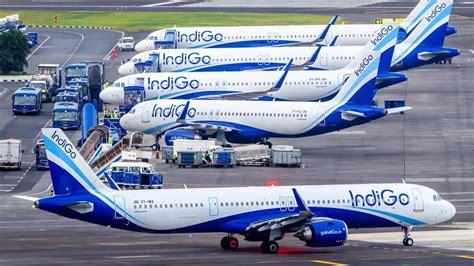
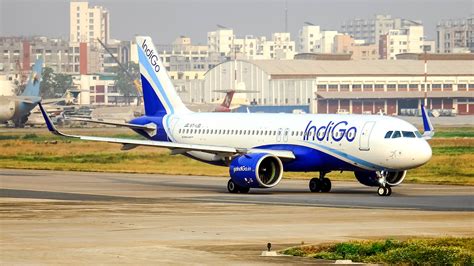
According to Benoit de Saint-Exupery, Executive Vice President for Sales and Commercial Aircraft at Airbus, IndiGo currently holds the largest delivery backlog globally, with 916 aircraft on order, while Air India, following its strategic merger with Vistara, ranks third with 344 aircraft pending delivery. Only the AirAsia Group, headquartered in Malaysia, holds a similar volume of pending aircraft orders, with 393 jets yet to be delivered.
This positioning reflects not only the ambitious fleet expansion strategies adopted by both Indian carriers but also the long-term trajectory of India’s aviation sector, where passenger traffic is expected to grow at a CAGR of 9.7% over the next decade.
IndiGo’s Dominance and Strategic Growth Path
IndiGo (6E), India’s leading low-cost carrier, is fortifying its market position with a historic aircraft acquisition strategy. The bulk of its order comprises the Airbus A320neo family, widely regarded for fuel efficiency, short turnaround time, and scalability in regional markets.
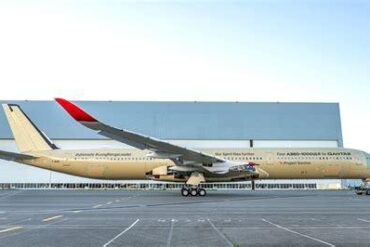
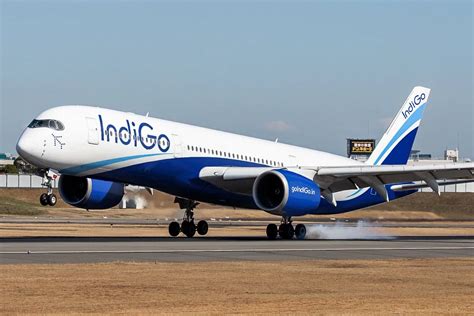
Recently, IndiGo has diversified its fleet strategy by introducing wide-body Airbus A350s, aiming to expand its medium- and long-haul capabilities. This marks a significant shift from its previous single-aisle-only policy and sets the stage for direct competition with international carriers on European and Southeast Asian routes.
Air India: A National Carrier Reinvented
Following its privatization and strategic consolidation under the Tata Group, Air India is undergoing a comprehensive fleet and service revamp. Its order of 344 Airbus aircraft, including A320neos and A321XLRs, will support its regional and domestic connectivity plans. These acquisitions complement its wide-body fleet expansion, where Airbus A350s and Boeing 787s will play key roles.
This transformation reflects the ambition to re-establish Air India as a world-class full-service carrier, capable of competing with Middle Eastern and Southeast Asian airlines across transcontinental routes. The inclusion of new-generation aircraft will also enhance operational efficiency, reduce emissions, and significantly improve passenger experience.
Supply Chain Recovery Powers New Delivery Commitments
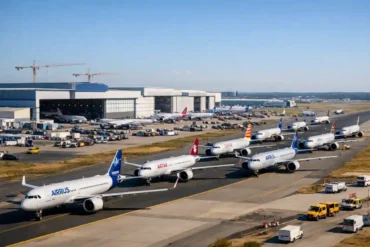
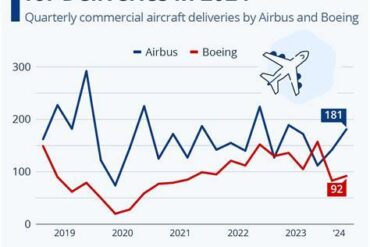
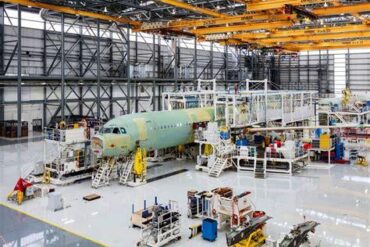
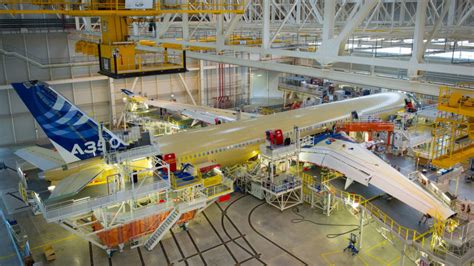
One of the most pressing issues for both airlines and manufacturers in recent years has been the disruption of the aerospace supply chain. However, Airbus has made significant progress in stabilizing its production levels. According to Saint-Exupery, the company is now producing 60 A320-family aircraft per month, matching pre-pandemic benchmarks.
The manufacturer plans to scale this rate to 75 aircraft per month by 2027, signaling confidence in the resilience of its supplier network. This improved production cadence is essential for honoring the massive order books of customers like IndiGo and Air India.
Indian Aerospace Manufacturing Rises in Global Supply Chains
While Airbus currently operates final assembly lines (FALs) for H125 helicopters and C295 military aircraft in India, Saint-Exupery clarified that the company is not actively pursuing a commercial aircraft FAL in the country. Instead, Airbus is focusing on expanding its sourcing footprint in India.
In 2020, Airbus sourced $500 million worth of components from India. This figure crossed the $1 billion mark in 2023 and has risen to $1.4 billion in 2024. The company aims to reach $2 billion in annual procurement before 2030. The growing procurement volumes reflect both India’s cost advantage and the rising technical capability of its aerospace sector.
‘Make in India’ Strategy Fuels Future Supply Security
Remi Maillard, President of Airbus India and Managing Director of the South Asia region, reiterated the company’s belief that India is no longer just a customer market—it is a strategic industrial hub. Airbus’s plans to integrate Indian-manufactured components into every aircraft it builds highlight the deeper industrial ties being formed.
This aligns directly with the Make in India initiative, which aims to build self-reliance in key industrial sectors, including aerospace. Airbus’s sourcing expansion will bolster the aerospace supplier ecosystem, supporting thousands of skilled jobs while reducing long-term supply vulnerabilities.
Challenges Ahead Despite Cautious Optimism
Although Airbus has achieved noteworthy milestones in supply chain restoration, Saint-Exupery advised caution, stressing that global uncertainties remain high. Geopolitical shifts, raw material shortages, and unexpected logistics disruptions continue to pose systemic risks to aircraft manufacturers.
Delivery delays remain a persistent issue across the industry. Airlines are being forced to adapt fleet schedules, reassign aircraft, and delay new routes, all of which affect growth plans and profitability. Airbus’s ability to maintain supply chain stability over the next few years will be critical not only for its Indian commitments but for its global customer relationships as well.
India’s Aviation Market Poised for Global Leadership
India’s rapid emergence as a key aviation hub is not incidental—it is the result of deliberate policy decisions, private sector investment, and macroeconomic momentum. With rising middle-class incomes, improved regional connectivity, and supportive government policies, India is poised to overtake traditional aviation leaders in passenger volume and fleet size.
The Airbus-IndiGo-Air India triangle represents the core of this transformation. By investing in India’s skies, Airbus is not only supporting national ambitions but securing its own strategic foothold in the Asia-Pacific region—a region forecast to account for more than 40% of new aircraft deliveries worldwide by 2040.
Conclusion: Strategic Symbiosis in Indian Skies
The synergy between Airbus and India’s leading airlines represents a strategic symbiosis—Airbus gains from India’s demand and manufacturing capabilities, while Indian carriers gain access to advanced, fuel-efficient aircraft that support ambitious growth trajectories. The 1,260+ aircraft orders are more than numbers—they signify a long-term vision rooted in operational scale, economic foresight, and technological evolution.
As India reshapes the global aviation map, Airbus is ensuring it has a front-row seat, equipped with both foresight and capacity to deliver.