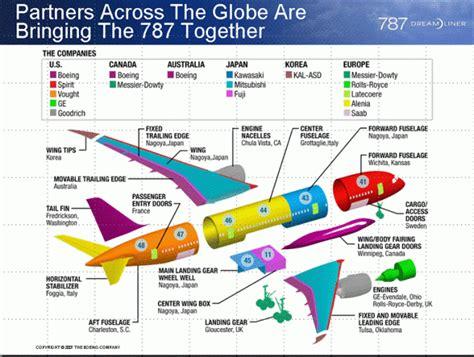
The Boeing 787 Dreamliner represents one of the most globally distributed aircraft manufacturing programs in modern aviation history. Although final assembly takes place in the United States, the aircraft that emerges from Boeing’s Everett and North Charleston facilities is the result of a worldwide industrial network stretching across four continents. Major sections of the airframe, including wings, fuselage barrels, tail structures, landing systems, and flight-control surfaces, are produced by specialized aerospace companies located in nine different countries.
Boeing designed the 787 program around a new approach to aircraft manufacturing. Instead of keeping most production activities inside its own factories, the company created a network of risk-sharing partners that would invest in development, manufacture major structures, and deliver completed sections for final integration. This strategy allowed Boeing to reduce development costs while accessing advanced manufacturing capabilities from aerospace industries around the world.
The result is an aircraft built through international cooperation on an unprecedented scale. More than 50 major suppliers contribute to the Dreamliner program, with some partners producing entire sections of the aircraft rather than individual components. The following nine countries play the most important roles in supplying the structural foundation of the Boeing 787.
Japan: The Largest International Contributor To The Boeing 787 Airframe
Japan is the most significant overseas contributor to the Boeing 787 structural program, supplying approximately 35% of the aircraft’s airframe structure. Three major Japanese aerospace manufacturers share responsibility for some of the Dreamliner’s most important components: Mitsubishi Heavy Industries, Kawasaki Heavy Industries, and Subaru Corporation.
Mitsubishi Heavy Industries produces the 787 wing boxes at its Nagoya facilities. The wing box is among the most technically demanding structures on the aircraft because it carries aerodynamic loads, supports the fuel system, and forms the primary strength element inside each wing. Unlike previous commercial aircraft that relied heavily on aluminum structures, the 787 uses carbon fiber reinforced polymer materials, allowing Boeing to create lighter and more efficient wings.
Kawasaki Heavy Industries manufactures forward fuselage sections, including sections 43 and 44, along with the main landing gear wheel well and fixed trailing-edge structures. Subaru Corporation, formerly known as Fuji Heavy Industries, produces the center wing box, the massive structural connection that joins the wings through the aircraft fuselage and manages some of the highest bending forces experienced during flight.
Japan’s involvement goes beyond traditional supplier relationships. These companies became development partners, investing significant resources into the 787 program in exchange for long-term production opportunities. This arrangement reflected the importance of Japanese aviation expertise and also strengthened Boeing’s commercial relationships with Japanese airlines, including early Dreamliner customers.
The manufacturing of composite wings introduced new challenges. Mitsubishi faced early production difficulties related to composite manufacturing processes, including issues involving wing fasteners on several aircraft. However, Japanese aerospace companies have remained central to the 787 program, providing some of the most advanced composite structures ever produced for a commercial aircraft.
Italy: Producing The Composite Center Fuselage And Horizontal Stabilizer
Italy contributes some of the Dreamliner’s largest composite structures through Leonardo, one of Europe’s leading aerospace manufacturers. Leonardo produces major center fuselage sections at its Grottaglie facility and manufactures the horizontal stabilizer at its Foggia plant.
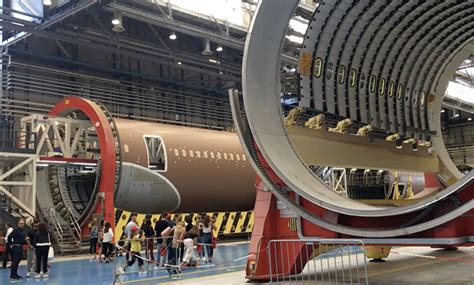
The Grottaglie factory produces large composite fuselage barrels that form the central section of the aircraft. These sections are created using a one-piece composite manufacturing method, where carbon fiber materials are shaped and cured as a single structure rather than assembled from multiple aluminum panels.
This approach provides several advantages. By reducing the number of joints and eliminating thousands of traditional fasteners, Boeing achieved a lighter fuselage design with improved fuel efficiency and greater resistance to corrosion. The composite barrel technology became one of the defining characteristics of the 787 Dreamliner.
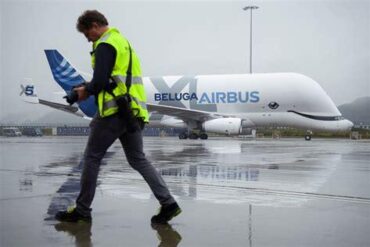
Once completed, these enormous fuselage sections are transported by sea from Italy to Boeing’s final assembly facility in South Carolina. Special shipping frames protect the structures during the approximately two-week ocean journey before they are integrated into completed aircraft.
Leonardo’s participation demonstrates how the 787 program transformed aerospace manufacturing. Instead of simply producing small components, international partners were responsible for complete aircraft sections requiring advanced engineering, quality control, and specialized logistics.
South Korea: Building The Aft Fuselage And Aerodynamic Components
South Korea became an important aerospace manufacturing partner through the development of its commercial aircraft structures industry. Two companies, Korean Air Aerospace Division and Korea Aerospace Industries, contribute components for the Boeing 787 program.
Korean Air Aerospace Division manufactures the aft fuselage section, raked wingtips, and flap support fairings. The aft fuselage forms the rear portion of the aircraft body, while the raked wingtips improve aerodynamic efficiency by reducing drag during long-distance flights.
The 787’s distinctive swept wingtips are a key part of its fuel-saving design. By improving airflow around the wing, they help reduce fuel consumption and increase range capability on international routes.
Korean Air’s aerospace division is particularly notable because it is operated by an airline rather than a traditional aircraft manufacturer. Founded in 1976, the division expanded from military and maintenance work into advanced commercial aerospace manufacturing. The 787 program helped accelerate this transformation.
South Korean engineers also developed advanced composite manufacturing techniques, including methods that reduced dependence on large autoclave equipment for curing carbon fiber structures. These innovations helped improve production efficiency and strengthened South Korea’s position as a global aerospace supplier.
United States: Final Assembly And Critical Structural Manufacturing
Although Boeing moved much of the 787 production overseas, the United States remains essential to the aircraft’s manufacturing process. American facilities produce important structures while also completing final assembly.
One of the largest US suppliers was Spirit AeroSystems, which manufactured Section 41, the forward fuselage section containing the cockpit structure, forward pressure bulkhead, and nose landing gear area. This section is among the most complex parts of the aircraft because it combines flight deck requirements, passenger cabin structure, and pressure vessel technology.
Boeing later acquired Spirit AeroSystems in 2025, bringing this production capability back under direct Boeing ownership. The decision followed years of supplier quality challenges affecting multiple aircraft programs.
Boeing also manufactures the vertical stabilizer at its Frederickson, Washington facility and produces additional aft fuselage structures in the Puget Sound region. Final assembly takes place at Boeing’s Everett facility in Washington and North Charleston facility in South Carolina.
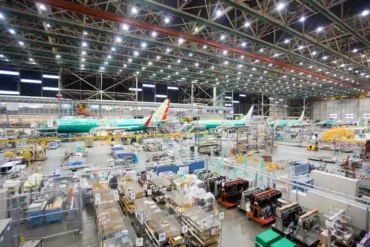
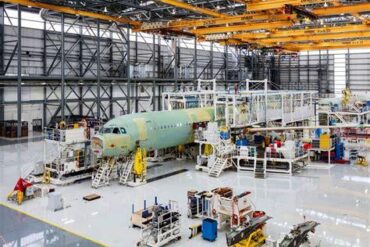
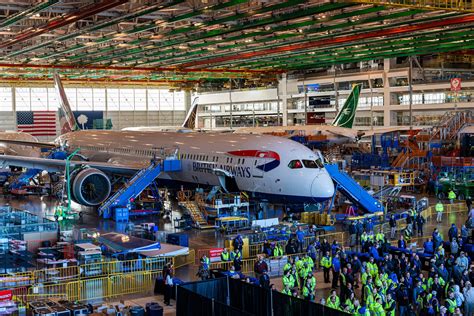
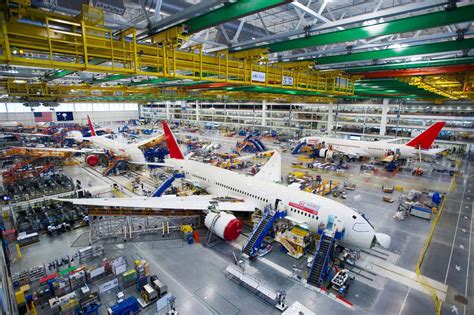
During final assembly, completed fuselage sections, wings, and tail structures from international suppliers are joined together. Engineers install aircraft systems, interiors, engines, and flight equipment before each Dreamliner undergoes testing and certification.
France: Landing Gear And Electrical Technology
France supplies specialized systems that are essential for the aircraft’s operation. Safran Landing Systems produces the 787’s main and nose landing gear assemblies, providing the structures responsible for supporting the aircraft during takeoff, landing, and ground operations.
French aerospace companies also contribute electrical technology. Thales provides important electrical power systems for the Dreamliner, which uses a highly electrified architecture compared with previous generations of commercial aircraft.
The 787’s electrical design replaced many traditional pneumatic systems with electrically powered alternatives. This approach helped reduce weight, improve efficiency, and support the aircraft’s advanced systems architecture.
United Kingdom: Rolls-Royce Trent 1000 Engine Production
The United Kingdom’s major contribution to the Boeing 787 comes through Rolls-Royce and its Trent 1000 engine program. The Trent 1000 is one of two engine options available for the Dreamliner, alongside General Electric’s GEnx engine.
Produced in Derby, England, the Trent 1000 powers a significant portion of the global 787 fleet. The engine was designed specifically for long-range twin-engine aircraft and incorporates advanced materials and high-efficiency turbine technology.
Rolls-Royce also supplies nacelle-related components from its facilities in Bristol, further expanding the United Kingdom’s role in the Dreamliner supply chain.
Sweden: Manufacturing Cargo And Access Doors
Sweden contributes specialized structural components through Saab Aerostructures. The company manufactures cargo doors and access doors for the Boeing 787 at its Linköping facility.
Although doors represent a smaller percentage of the aircraft’s overall structure, they require extremely precise engineering. They must maintain cabin pressure, withstand repeated operational cycles, and integrate perfectly with the composite fuselage.
Saab’s involvement highlights the importance of specialized aerospace manufacturing capabilities within the Dreamliner program.
Canada: Supporting Engine Nacelle Production
Canada contributes to the Boeing 787 through Boeing’s Winnipeg operation, which produces engine nacelle inlet structures. The nacelle surrounds the engine and plays an important aerodynamic role while protecting the propulsion system.
The Winnipeg facility has decades of experience producing advanced composite aerospace components. Its work on the 787 reflects Canada’s broader role in the global aviation manufacturing industry.
Australia: Producing Flight Control Surfaces
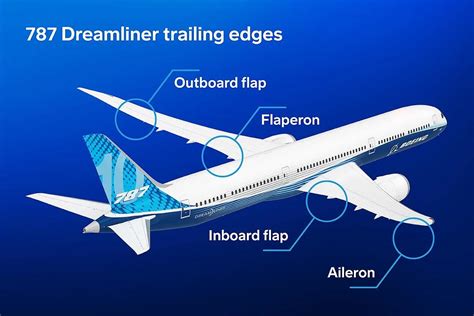
Australia completes the nine-country supply network through Boeing Aerostructures Australia in Melbourne. The facility produces trailing-edge flaps and rudders for the Dreamliner.
The trailing-edge flaps are critical during takeoff and landing because they change the wing’s aerodynamic characteristics at lower speeds. The rudder controls aircraft movement around the vertical axis and is essential for directional stability.
Australia’s contribution demonstrates how even smaller aerospace markets can participate in highly advanced aircraft programs by developing specialized manufacturing expertise.
A Truly Global Aircraft Manufacturing Program
The Boeing 787 Dreamliner is more than a commercial aircraft; it is a demonstration of modern global aerospace manufacturing. Its structure reflects decades of international cooperation between companies with specialized skills in composite materials, precision engineering, advanced systems, and large-scale logistics.
The nine countries involved each provide a unique capability. Japan delivers advanced composite wings and fuselage structures, Italy produces massive carbon fiber barrels, South Korea contributes aerodynamic components, the United States completes integration, and European, Canadian, and Australian partners supply critical systems and flight-control structures.
This international production model allowed Boeing to create an aircraft that introduced revolutionary composite technology and improved efficiency for long-haul aviation. At the same time, it created a complex supply network where coordination, quality control, and manufacturing consistency became just as important as engineering innovation.
The Boeing 787 Dreamliner’s journey from supplier factories around the world to final assembly lines in the United States represents one of the most ambitious examples of cooperation in aviation history. Every completed aircraft carries the industrial expertise of thousands of workers across nine nations, making the Dreamliner a true product of global aerospace collaboration.