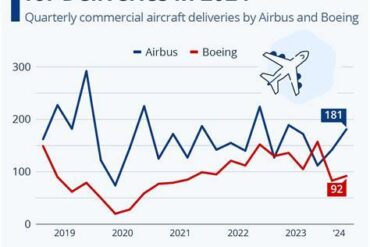
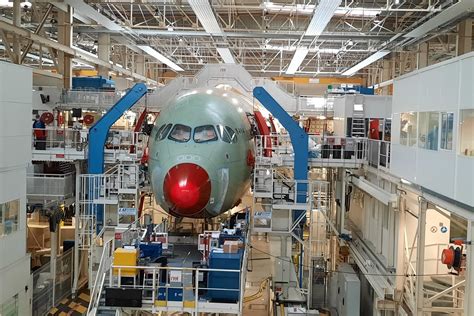
The global aerospace industry entered 2025 under the shadow of persistent supply chain disruption, labor shortages, and component quality challenges, yet Airbus emerged from the year with a performance that reshaped competitive expectations. Delivering 793 commercial aircraft to 91 customers worldwide, the European manufacturer not only surpassed its revised annual target but also widened the operational gap with its closest rival. The result underscored Airbus’ ability to convert industrial resilience into measurable output at a time when execution, not ambition, defined leadership.
The achievement carried additional weight because it was never guaranteed. Airbus began the year targeting 820 deliveries, banking on new final assembly capacity and a gradual normalization of supplier performance. Instead, unforeseen quality lapses affecting fuselage panels on the A320 family forced a late recalibration of expectations. Rather than retreat, Airbus leaned into operational discipline, closing the year with momentum that validated its long-term production strategy.
By comparison, Boeing’s expected 537 aircraft deliveries for the same period highlighted how execution consistency has become the industry’s most valuable currency. Airbus’ 4% year-on-year increase from 766 aircraft in 2024 demonstrated that incremental growth, when achieved under pressure, can carry strategic significance far beyond the raw numbers.
Supply Chain Strain Tests Airbus’ Industrial Discipline
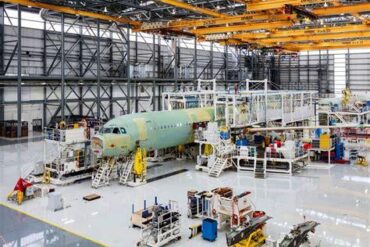
Airbus’ leadership was candid in acknowledging that 2025 tested its production system in ways few years have before. The discovery of quality issues in fuselage panels supplied for the A320 family struck late in the year, triggering inspections, rework, and delivery rescheduling. According to outgoing Commercial Aircraft CEO Christian Scherer, the decision to revise targets was driven by a non-negotiable commitment to safety and quality, even at the cost of short-term volume.
That stance proved consequential. By acting decisively, Airbus contained the disruption rather than allowing it to cascade across programs. Engines, often the industry’s most volatile constraint, were not the primary limiting factor in 2025. While powerplant deliveries arrived later than planned, they arrived in sufficient numbers to support year-end output. The more complex challenge lay in structural components, where a single supplier lapse threatened a global production rhythm.
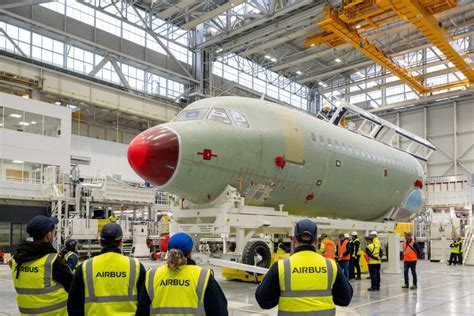
The episode reinforced a broader lesson shaping Airbus’ industrial philosophy: production rate increases must be matched by supplier maturity. As Airbus pushes toward 75 A320 family aircraft per month by 2027, quality assurance and supplier oversight are no longer supporting functions but central pillars of strategy.
December’s Delivery Surge Redefines Year-End Execution
Airbus’ recovery narrative crystallized in December, when the manufacturer delivered 136 aircraft, marking its second-highest monthly total on record. Only December 2019, with 138 deliveries, stands higher. This late surge was not merely symbolic; it was mathematically essential. To exceed the revised annual goal of 790 aircraft, Airbus needed to sustain a delivery pace few manufacturers can achieve under ideal conditions.
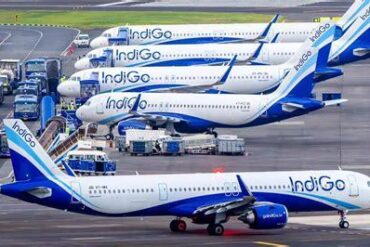
The A320 family dominated the month, accounting for 97 aircraft, including a remarkable 65 A321neo deliveries. This performance validated Airbus’ decision to make all final assembly lines A321-capable, reflecting sustained airline demand for higher-capacity narrowbodies optimized for range and fuel efficiency. December also saw solid contributions from widebody programs, ensuring that year-end results reflected balanced execution rather than narrow program dependence.
A220 Program Quietly Delivers a Breakthrough Year
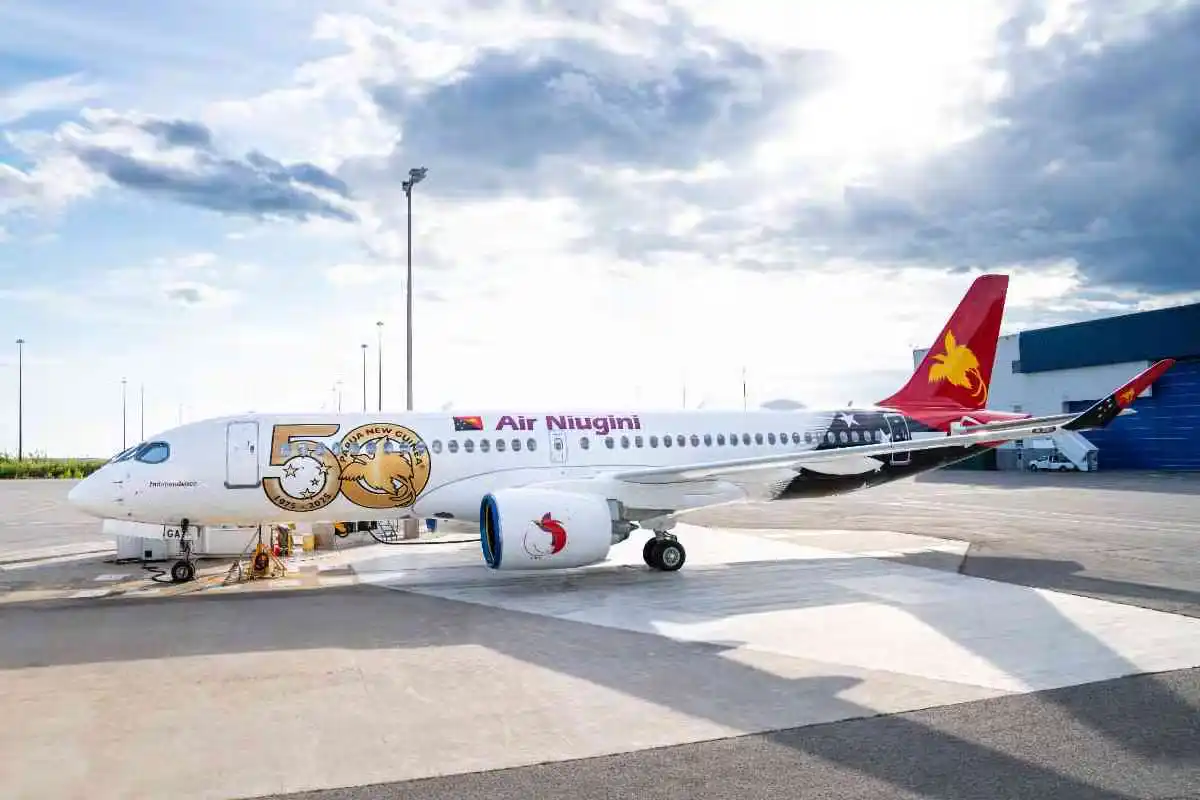
While headlines often gravitate toward the A320neo and A350 families, 2025 marked a pivotal year for the Airbus A220. The program delivered 93 aircraft, a 24% increase over the previous year, with December alone seeing 17 deliveries, surpassing the long-term monthly target of 15 for the first time.
This progress signaled more than volume growth. Major customers including Delta Air Lines, JetBlue, and Breeze Airways continued to integrate the A220 into fleet strategies focused on right-sizing capacity without sacrificing passenger comfort or range. For Airbus, the A220’s maturation strengthens its lower narrowbody segment, insulating the company against cyclical shifts in single-aisle demand.
Widebody Momentum Strengthens Airbus’ Strategic Balance
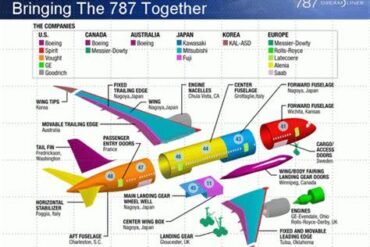
On the commercial front, Airbus’ widebody portfolio delivered a year that reshaped market perception. The manufacturer closed 2025 with a record widebody backlog of 1,124 aircraft, supported by a standout performance from the A330neo, which secured 102 orders during the year. This success came amid intense competition from Boeing’s 787 program, which enjoyed a politically and commercially robust order cycle.
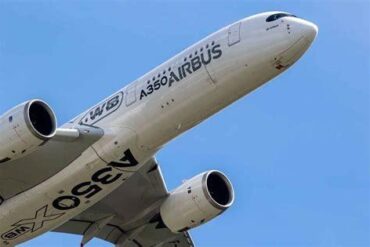
Airbus executives framed the competitive dynamic with confidence rather than defensiveness. The message was clear: sustained demand for Airbus widebodies is rooted in product reliability, operating economics, and long-term support, not short-term geopolitical alignment. Deliveries reflected this balance, with 57 A350s and 36 A330neos handed over during the year, reinforcing Airbus’ credibility across long-haul and medium-haul segments.
Airbus vs Boeing: A Widening Operational Divide
The contrast between Airbus and Boeing in 2025 extended beyond headline delivery totals. Airbus’ ability to absorb shocks, recalibrate targets, and still outperform expectations highlighted a structural advantage built over years of incremental industrial investment. Boeing, still navigating recovery from earlier production and certification crises, remained constrained in its ability to translate demand into delivered aircraft.
This divergence matters because airlines increasingly plan fleets around delivery certainty, not just catalog performance. Airbus’ consistent output strengthens customer confidence, feeds aftermarket growth, and reinforces supplier alignment, creating a virtuous cycle that compounds over time.
2026 and Beyond: Scaling Without Compromising Stability
Looking ahead, Airbus has positioned 2026 as a year of continued ramp-up, with delivery targets to be announced alongside full financial results. The roadmap is ambitious yet deliberately phased. The A220 is expected to reach 14 aircraft per month by late 2026, while the A320 family progresses toward its 75-per-month objective. Widebody programs remain disciplined, with the A330 steady at four per month and the A350 targeting 12 per month by 2028.
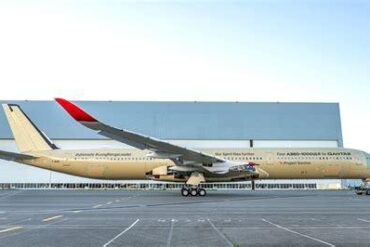
Beyond production rates, strategic milestones loom. The upcoming A350F first flight and the highly anticipated A350-1000ULR delivery to Qantas represent technological and commercial statements. As the backbone of Project Sunrise, the ultra-long-range A350 will enable nonstop flights exceeding 22 hours, redefining long-haul travel economics and passenger experience.
In delivering 793 aircraft amid persistent industry headwinds, Airbus did more than close a strong year. It demonstrated that resilience, when engineered into production systems and decision-making culture, can convert uncertainty into competitive advantage.