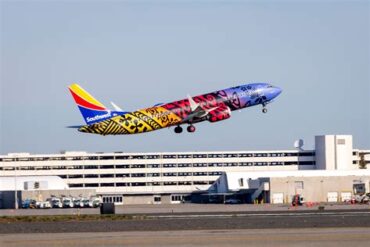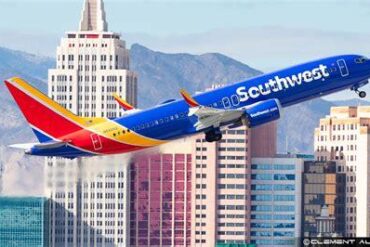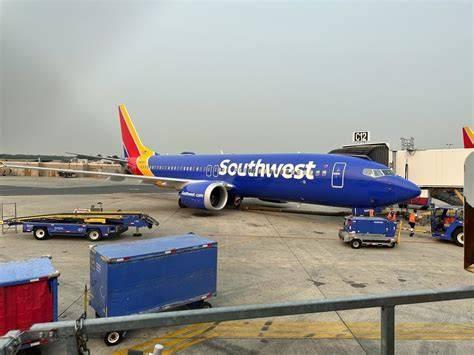
Southwest Airlines is expanding its network with four new nonstop routes launching in August 2026, adding more travel options between California and key destinations across the western United States and Hawaii. The new services arrive during the peak summer travel season, a period when airlines typically introduce only a limited number of route changes.
According to Cirium Diio data, Southwest Airlines will operate approximately 3,817 daily movements in August, including both departures and arrivals. That represents a modest increase from 3,761 daily movements during the same month a year earlier, but the growth comes from an already extensive operation. The airline’s schedule now includes 906 routes, consisting of 844 domestic services and 62 international connections.
The four new routes were originally announced in November and all involve California on at least one side of the journey. Two services will depart from Long Beach Airport (LGB), one of the most restricted airports in the Los Angeles region because of limited slots and strict operating conditions related to surrounding communities.
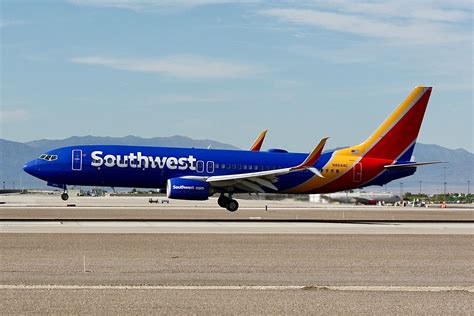
Southwest Launches Four New Routes Starting This Week
Southwest’s latest expansion includes three routes beginning on August 4, 2026, followed by a new Hawaii service launching on August 8. The routes strengthen the airline’s presence in California while reconnecting markets that have lacked nonstop service for several years.
The new routes are:
- Long Beach (LGB) to Portland International Airport (PDX) — operating six times weekly before increasing to daily service, using Boeing 737 MAX 8, 737-700, and 737-800 aircraft.
- Long Beach (LGB) to Seattle-Tacoma International Airport (SEA) — launching six weekly flights before moving to daily operations with Boeing 737-700, 737 MAX 8, and 737-800 aircraft.
- San Diego International Airport (SAN) to Santa Barbara Municipal Airport (SBA) — operating daily with Boeing 737-700, 737-800, and 737 MAX 8 aircraft.
- Hollywood Burbank Airport (BUR) to Honolulu International Airport (HNL) — starting with weekly service before increasing to three weekly flights, operated by the Boeing 737 MAX 8.
The additions reflect Southwest’s strategy of using its large Boeing 737 fleet to connect underserved city pairs while taking advantage of demand patterns in important leisure and business markets.
Long Beach Becomes a Key Growth Airport for Southwest
Long Beach Airport has historically been a challenging location for airlines because available slots are extremely limited. Noise restrictions and local regulations have prevented carriers from freely increasing flights, making every available slot strategically valuable.
Southwest has gradually expanded its position at Long Beach as opportunities have become available. The airline’s two new routes from LGB to Portland and Seattle represent a significant effort to capture passengers who previously traveled through larger Los Angeles-area airports.
The Portland route is particularly interesting because Southwest has operated it before, although only briefly during 2023 and 2024. During that period, the route recorded a relatively weak 65% seat load factor, according to US Department of Transportation data. However, Southwest expects stronger results this time as it targets passengers who prefer the convenience of Long Beach over alternative airports.
Passenger demand exists despite previous challenges. In the 12 months ending April 2026, approximately 22,400 round-trip passengers traveled indirectly between Long Beach and Portland. That figure does not include travelers who used other Los Angeles-area airports such as Los Angeles International Airport, Hollywood Burbank, Ontario International, or John Wayne Airport.
Southwest is aiming to capture part of this hidden demand by offering a nonstop option closer to many travelers in Southern California.
Southwest and Alaska Airlines Prepare for Long Beach Seattle Competition
The Long Beach to Seattle route is expected to become one of the most competitive additions in Southwest’s new schedule. The market previously had service from airlines including JetBlue Airways and Alaska Airlines, but nonstop flights disappeared in 2020.
JetBlue operated the route for approximately 12 years before ending service, while Alaska Airlines previously served Long Beach during multiple periods, including operations with regional aircraft. Alaska will return to the market on September 8, 2026, shortly after Southwest begins flying the route.
The timing highlights growing competition between the two airlines. Alaska Airlines currently has a much stronger presence between Southern California and the Pacific Northwest, controlling a significant share of available departures. Southwest’s entry from Long Beach to Seattle represents an attempt to establish a stronger foothold in a market where Alaska has traditionally been dominant.
Alaska plans to operate twice-daily flights using larger Boeing 737-900ER aircraft, offering a different product compared with Southwest’s mix of 737 variants.
Southwest Expands California Connectivity and Hawaii Service
The new San Diego to Santa Barbara route provides another example of Southwest focusing on regional connectivity. While California already has extensive air service, smaller city pairs can attract travelers who want to avoid long drives between airports.
The route links two important California destinations with a daily service operated by Southwest’s mainline Boeing 737 fleet. It also demonstrates the airline’s willingness to use larger aircraft on shorter domestic routes when demand supports additional capacity.
Meanwhile, the new Burbank to Honolulu route expands Southwest’s Hawaii network from the Los Angeles metropolitan area. Burbank offers travelers an alternative to larger airports such as Los Angeles International Airport, especially for passengers located in the northern part of the Los Angeles region.
The Hawaii expansion follows Southwest’s broader strategy of increasing leisure-focused flying with the Boeing 737 MAX 8, an aircraft well suited for longer routes because of its improved fuel efficiency and range.
Southwest Airlines Maintains a Large Summer 2026 Network
Beyond the four new routes, Southwest continues to operate one of the largest domestic networks in the United States. During August 2026, the airline will serve 120 airports, including 106 locations within the US and its Caribbean territories.
The carrier has added several destinations compared with the previous year, including Anchorage, Knoxville, Santa Rosa, St. Maarten, and St. Thomas. At the same time, Southwest has ended service to some airports, including Chicago O’Hare and Washington Dulles, as it adjusts capacity toward markets with stronger demand.
The airline’s busiest airport remains Denver International Airport, with an average of 491 daily movements in August. Las Vegas follows with 459 daily movements, while Chicago Midway ranks third with 422 daily movements.
Southwest’s four new nonstop routes demonstrate the airline’s continued focus on strategic growth rather than simply adding capacity. By targeting restricted airports like Long Beach and strengthening links between California, the Pacific Northwest, and Hawaii, Southwest is positioning itself for continued competition in key leisure and business markets.